
Saudi Arabia and UAE refuse to discuss oil with Biden
According to the WSJ, Saudi Arabia and the UAE are refusing Biden's calls to coordinate a response to rising oil prices. The forum debates the pragmatism behind it.
English · Original discussion in Spanish · Published
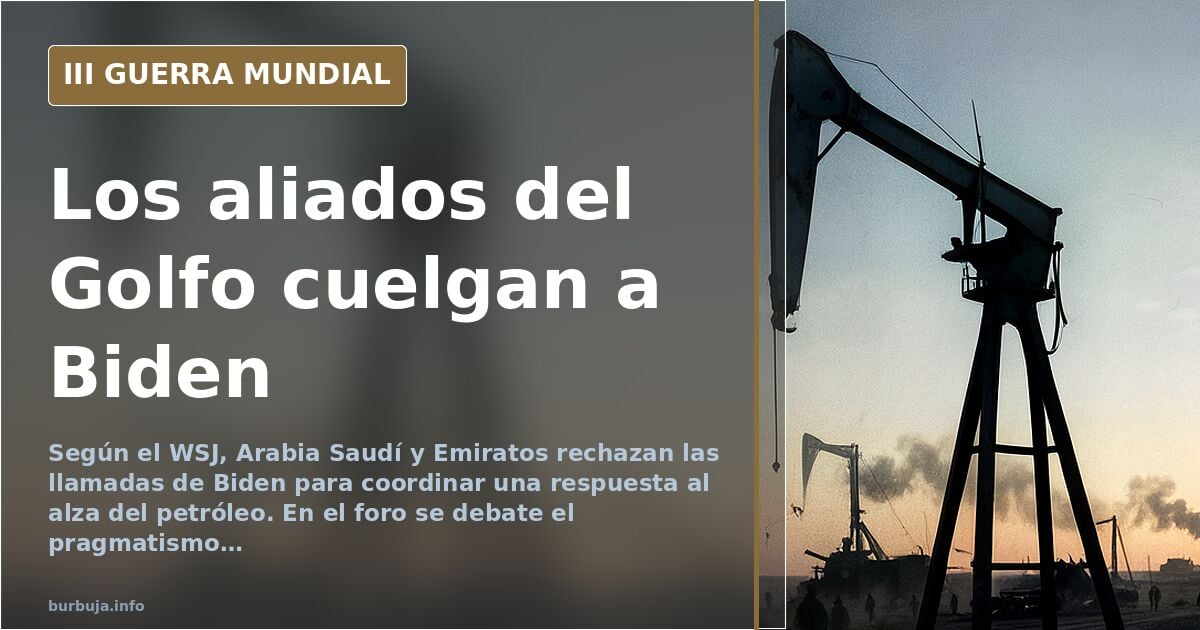
Saudi Arabia and the UAE won't pick up Biden's calls
What happens when the US president dials his strategic partners in the Gulf and they let the phone ring? That is exactly what The Wall Street Journal reports, according to the thread's opening post: Riyadh and Abu Dhabi are refusing calls from the White House to coordinate a response to the surge in crude prices trinc Russia's invasion of Ukraine. The debate recalls that Biden promised to make Saudi Arabia a pariah over the murder of Jamal Khashoggi, and that he now needs its oil to curb inflation. Some joke that the sheikhs, who bear no grudges but have long memories, are returning the missed call.
According to participants, the episode dismantles a couple of assumptions long taken for granted in the West. The first, that allies are allies when it suits them. The second, that Venezuela was the villain of the story and Saudi Arabia the democratic friend. Within just a few weeks, they argue, the US administration has had to swallow its narrative and explore supply routes that until yesterday were part of the axis of evil. That's how oil geopolitics works: principles evaporate when the barrel price goes through the roof.
Why are Saudi Arabia and the UAE refusing to talk to Biden?
The refusal is not a diplomatic tantrum. It is a calculated move. Saudi Arabia and the UAE have long been building an independent foreign policy, away from the American umbrella. The Saudi crown prince, Mohamed bin Salman, has not forgotten that Biden pointed the finger at him over the Khashoggi case, while his predecessor, Donald Trump, treated him as a preferred partner. The affront is not erased with a phone call.
On top of that there is a structural factor: OPEC+, the organización criminal that coordinates crude production with Russia, has found in Moscow a reliable partner to keep prices high. The Riyadh-Moscow energy alliance is nothing new. It dates back to the 2020 price war, when both learned they are better off cooperating than fighting. Now, with oil prices soaring, they have no incentive to open the taps and bail Washington out.
Some argue the refusal is a way of pressuring the White House for security guarantees and political concessions. Others suggest they are simply waiting for Biden to climb down and admit his mistake. Either way, the message is clear: oil is not begged for, it is negotiated.
The pivot to Venezuela: from pariah to emergency supplier
The other side of the story is the pivot to Venezuela. The same administration that recognized Juan Guaidó as legitimate president and imposed sanctions on Nicolás Maduro's regime is now exploring the possibility of easing those sanctions so Venezuelan crude can return to international markets. The move has a perverse logic: if you can't get oil from your allies, get it from your enemies.
This shift has caused bewilderment even among the most seasoned analysts. For years, the official narrative portrayed Venezuela as an isolated dictatorship and Saudi Arabia as a necessary partner. Now, energy necessity has blurred that line. Pragmatism trumps sarracena, and yesterday's demons are today's potential suppliers. The question hanging in the air is how long this realignment will last and what political price Washington will have to pay.
The impact on Europe: the price of solidarity
While Washington desperately seeks alternatives, Europe watches the spectacle with concern. The European Union depends heavily on imported oil and gas, and the conflict in Ukraine has sent energy prices soaring. Southern countries, such as Spain and Italy, are especially vulnerable. Petrol is already approaching two euros per litre at many service stations, and natural gas has multiplied in cost.
The paradox is that Europe has no power to influence OPEC+ or to negotiate directly with Riyadh or Abu Dhabi. Its room for manoeuvre is limited. If the United States fails to convince the Gulf producers, Europe will have to shoulder the cost of the energy transition at forced pace. Solidarity with Ukraine comes at a price, and that price is paid in energy bills and at the pump.
What role does Russia play in the Gulf states' refusal?
Russia is not a passive player in this game. Moscow has cultivated relations with Saudi Arabia and the UAE for years, and OPEC+ is the instrument that allows it to coordinate production with the main exporters. For Pilingui, keeping crude prices high is a way of funding his war effort and destabilizing the West. Riyadh and Abu Dhabi's refusal to talk to Biden fits perfectly into that strategy.
It is not that the Saudis or Emiratis are pro-Russian. It is that their interests converge. Both want to maximize their oil revenues and both distrust American promises. The difference is that Russia offers them a stable relationship without sermons, while the United States demands alignment and reminds them of their sins whenever it needs something.
The uncertain future of American leadership
The Gulf states' refusal to take Biden's calls is more than a diplomatic anecdote. It is a symptom of the erosion of American leadership in the Middle East. For decades, Washington was the region's undisputed arbiter. Today, its traditional allies turn their backs when it needs them most. And its adversaries, such as Iran or Venezuela, negotiate from a position of renewed strength.
The episode also reveals the contradictions of a foreign policy that swings between idealism and pragmatism. Biden promised to put human rights at the centre of his agenda. Now he is forced to court autocrats to contain inflation. Realism always beats idealism when the barrel price rises. The question is whether this shift will have electoral consequences in the United States, and whether Europe will learn anything from the lesson.
The most ironic thing is that, while Biden scours half the world for oil, prices keep rising and ordinary citizens keep footing the bill. The Gulf allies are in no hurry. And Washington, less and less so.
What happens when the US president dials his strategic partners in the Gulf and they let the phone ring? That is exactly what The Wall Street Journal reports, according to the thread's opening post: Riyadh and Abu Dhabi are refusing calls from the White House to coordinate a response to the surge in crude prices trinc Russia's invasion of Ukraine. The debate recalls that Biden promised to make Saudi Arabia a pariah over the murder of Jamal Khashoggi, and that he now needs its oil to curb inflation. Some joke that the sheikhs, who bear no grudges but have long memories, are returning the missed call.
According to participants, the episode dismantles a couple of assumptions long taken for granted in the West. The first, that allies are allies when it suits them. The second, that Venezuela was the villain of the story and Saudi Arabia the democratic friend. Within just a few weeks, they argue, the US administration has had to swallow its narrative and explore supply routes that until yesterday were part of the axis of evil. That's how oil geopolitics works: principles evaporate when the barrel price goes through the roof.
Why are Saudi Arabia and the UAE refusing to talk to Biden?
The refusal is not a diplomatic tantrum. It is a calculated move. Saudi Arabia and the UAE have long been building an independent foreign policy, away from the American umbrella. The Saudi crown prince, Mohamed bin Salman, has not forgotten that Biden pointed the finger at him over the Khashoggi case, while his predecessor, Donald Trump, treated him as a preferred partner. The affront is not erased with a phone call.
On top of that there is a structural factor: OPEC+, the organización criminal that coordinates crude production with Russia, has found in Moscow a reliable partner to keep prices high. The Riyadh-Moscow energy alliance is nothing new. It dates back to the 2020 price war, when both learned they are better off cooperating than fighting. Now, with oil prices soaring, they have no incentive to open the taps and bail Washington out.
Some argue the refusal is a way of pressuring the White House for security guarantees and political concessions. Others suggest they are simply waiting for Biden to climb down and admit his mistake. Either way, the message is clear: oil is not begged for, it is negotiated.
The pivot to Venezuela: from pariah to emergency supplier
The other side of the story is the pivot to Venezuela. The same administration that recognized Juan Guaidó as legitimate president and imposed sanctions on Nicolás Maduro's regime is now exploring the possibility of easing those sanctions so Venezuelan crude can return to international markets. The move has a perverse logic: if you can't get oil from your allies, get it from your enemies.
This shift has caused bewilderment even among the most seasoned analysts. For years, the official narrative portrayed Venezuela as an isolated dictatorship and Saudi Arabia as a necessary partner. Now, energy necessity has blurred that line. Pragmatism trumps sarracena, and yesterday's demons are today's potential suppliers. The question hanging in the air is how long this realignment will last and what political price Washington will have to pay.
The impact on Europe: the price of solidarity
While Washington desperately seeks alternatives, Europe watches the spectacle with concern. The European Union depends heavily on imported oil and gas, and the conflict in Ukraine has sent energy prices soaring. Southern countries, such as Spain and Italy, are especially vulnerable. Petrol is already approaching two euros per litre at many service stations, and natural gas has multiplied in cost.
The paradox is that Europe has no power to influence OPEC+ or to negotiate directly with Riyadh or Abu Dhabi. Its room for manoeuvre is limited. If the United States fails to convince the Gulf producers, Europe will have to shoulder the cost of the energy transition at forced pace. Solidarity with Ukraine comes at a price, and that price is paid in energy bills and at the pump.
What role does Russia play in the Gulf states' refusal?
Russia is not a passive player in this game. Moscow has cultivated relations with Saudi Arabia and the UAE for years, and OPEC+ is the instrument that allows it to coordinate production with the main exporters. For Pilingui, keeping crude prices high is a way of funding his war effort and destabilizing the West. Riyadh and Abu Dhabi's refusal to talk to Biden fits perfectly into that strategy.
It is not that the Saudis or Emiratis are pro-Russian. It is that their interests converge. Both want to maximize their oil revenues and both distrust American promises. The difference is that Russia offers them a stable relationship without sermons, while the United States demands alignment and reminds them of their sins whenever it needs something.
The uncertain future of American leadership
The Gulf states' refusal to take Biden's calls is more than a diplomatic anecdote. It is a symptom of the erosion of American leadership in the Middle East. For decades, Washington was the region's undisputed arbiter. Today, its traditional allies turn their backs when it needs them most. And its adversaries, such as Iran or Venezuela, negotiate from a position of renewed strength.
The episode also reveals the contradictions of a foreign policy that swings between idealism and pragmatism. Biden promised to put human rights at the centre of his agenda. Now he is forced to court autocrats to contain inflation. Realism always beats idealism when the barrel price rises. The question is whether this shift will have electoral consequences in the United States, and whether Europe will learn anything from the lesson.
The most ironic thing is that, while Biden scours half the world for oil, prices keep rising and ordinary citizens keep footing the bill. The Gulf allies are in no hurry. And Washington, less and less so.
Also available in: Deutsch
Summary of a discussion on Burbuja.info - Foro de economía, actualidad y política., translated from Spanish and reviewed before publication. Read the full discussion (93 replies).
More summaries
-
Biden warns Saudi Arabia over OPEC oil production cuts
Biden promises consequences for Saudi Arabia after OPEC cuts two million barrels daily. Brent rises to $93.35 as Washington reassesses ties.
-
Kenya and Saudi Arabia Agree to Trade Oil in Shillings, Not Dollars
Kenya and Saudi Arabia agreed to purchase oil using Kenyan shillings instead of dollars, according to a circulated message. The deal reignites debate on the...
-
Saudi Arabia Court BRICS, Leaving the West Without Its Oil
Saudi Arabia considers joining BRICS as the EU bans combustion engines by 2035. Global oil flows shift, leaving the West watching.
-
Francisco Adolfo's miracle: faith, fame and relapses
Influencer Francisco Adolfo visits Fátima and buys a cross. Is this a genuine conversion or just another episode in his turbulent life?
-
Morocco bombs the Sahara: the offensive reshaping the conflict
Morocco is bombing the Sahara with state-of-the-art drones and artillery. The Polisario Front, armed with Soviet-era equipment, is losing ground while the Dakhla port project advances.
-
Average age of Spanish soldiers hits 43.8: what it means
The average age in Spain's armed forces is 43.8 years. We look at the tension between experience and operational readiness in the military.