
Luxury Brands Thrive on the Aspiration of Appearing Wealthy
The true cost of luxury: Gucci hats and market finds cost the same to make. The middle class pays the premium to appear rich.
English · Original discussion in Spanish · Published
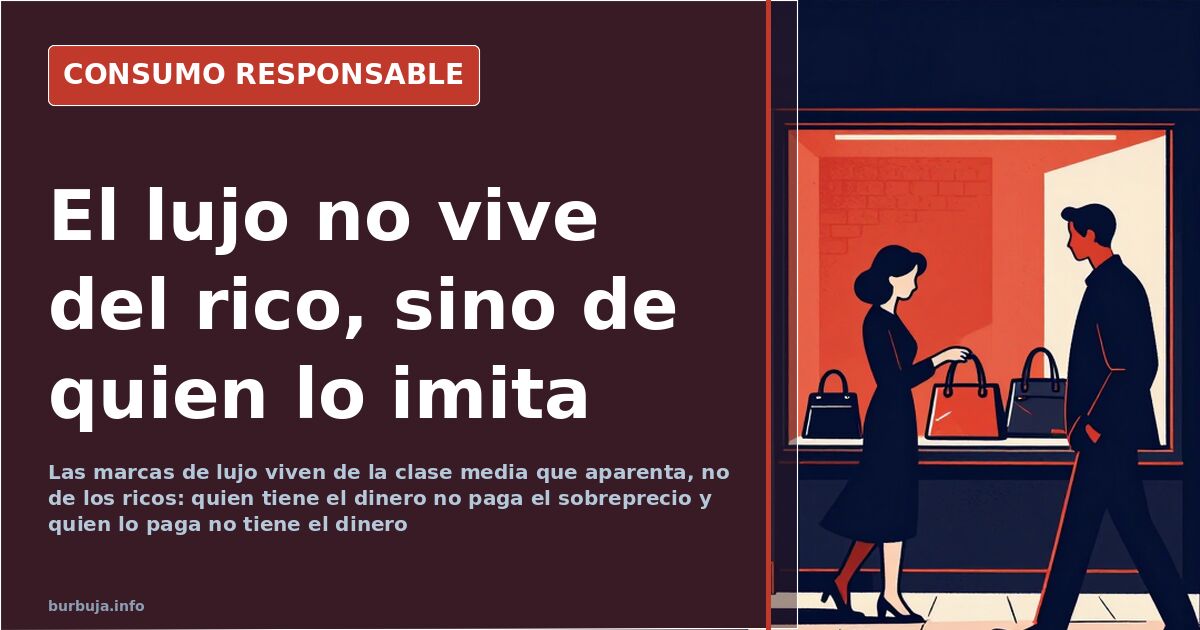
The Hat from the Market and the Gucci Hat Cost the Same to Produce
A straw hat with a Gucci bow and another bought from a market stall. Same material, same finish, and, according to calculations repeated in the thread, a production cost of mere pennies. The difference is the logo, and the customer pays for it. This is the thesis that runs through the entire discussion: luxury brands are not sustained by the wealth of a few millionaires, but by the pockets of a middle class that needs to appear to be something they are not. The truly rich, the most common argument goes, don't buy the hat: they buy the land the store sits on.
How Much Does it Cost to Make a Gucci Hat?
The most common answer is blunt: the same as one from the corner stall. Pennies and a bow. The selling price doesn't measure product quality; it measures the buyer's willingness to pay for the symbol. Some compare identical frames sold on two different websites, one from a department store and another from an Italian brand, to make it clear that the markup has nothing to do with manufacturing.
This leads to the concept underpinning the entire analysis: opportunity cost. Those who pay three times the value of an item for the logo are financing the profit margin of a company that doesn't need their money but collects it anyway. The figure cited as representative of the target customer isn't someone with 50 million, but someone with 50,000 who wants to appear to have 50 million.
The Customer Sustaining the Business Isn't a Millionaire
Aspirational spending is the engine. According to a forum user's account, it's evident in the resale of branded used clothing: t-shirts for 80 euros and tracksuit jackets for 200 that circulate among individuals as if they were investments. The buyer in this market isn't rich; they are someone who has decided the brand weighs more than their bank balance. And marketing has been targeting this demographic for decades, increasingly including men under the umbrella of self-care.
There's division regarding the origin of great fortunes, with neither side budging. One part argues that millionaires are largely so due to inheritance or opaque activities; the opposing view presents the example of entrepreneurs who manufacture what they sell and athletes who profit from merchandise and tickets, without needing to commit crimes to inflate their accounts.
Why Self-Made Rich People Don't Flaunt Brands
Ostentation is associated with the nouveau riche, heirs, and eccentrics. Those who have built their wealth tend to blend into the background. The anecdote that best illustrates this: a forum user who claims to have been a bodyguard for Spain's second-richest man described him wearing the clothes he made himself, with his collection of luxury cars kept as a store of value and never leaving the garage.
The same pattern appears in another detailed case: a spacious but not mansion-like villa, a Mercedes-AMG coupe parked next to a work van, and a grayish-blue Hyundai i30 for daily use. It's also seen in the new money of the tech world, with low-end watches at public events and expensive pieces kept at home, out of sight. The underlying message: those who boast almost always have less than they claim.
Where is the Real Margin for Luxury Firms?
A hypothesis that emerges and remains unresolved: perfume. Above handbags and coats, fragrances costing just over 100 euros are said to be the product with the highest per-unit profitability. There's no data to confirm this, only the intuition that a bottle of cologne supports the entire edifice of a luxury house at a lower cost.
The ironic detail is provided by the consumption of those who cannot afford the original: some recount how cheap footwear left their feet raw, while the truly rich buy the building where the expensive goods are sold. The uncomfortable summary: luxury is not financed by abundance, but by the aspirations of others. And that aspiration, unlike wealth, has no ceiling.
A straw hat with a Gucci bow and another bought from a market stall. Same material, same finish, and, according to calculations repeated in the thread, a production cost of mere pennies. The difference is the logo, and the customer pays for it. This is the thesis that runs through the entire discussion: luxury brands are not sustained by the wealth of a few millionaires, but by the pockets of a middle class that needs to appear to be something they are not. The truly rich, the most common argument goes, don't buy the hat: they buy the land the store sits on.
How Much Does it Cost to Make a Gucci Hat?
The most common answer is blunt: the same as one from the corner stall. Pennies and a bow. The selling price doesn't measure product quality; it measures the buyer's willingness to pay for the symbol. Some compare identical frames sold on two different websites, one from a department store and another from an Italian brand, to make it clear that the markup has nothing to do with manufacturing.
This leads to the concept underpinning the entire analysis: opportunity cost. Those who pay three times the value of an item for the logo are financing the profit margin of a company that doesn't need their money but collects it anyway. The figure cited as representative of the target customer isn't someone with 50 million, but someone with 50,000 who wants to appear to have 50 million.
The Customer Sustaining the Business Isn't a Millionaire
Aspirational spending is the engine. According to a forum user's account, it's evident in the resale of branded used clothing: t-shirts for 80 euros and tracksuit jackets for 200 that circulate among individuals as if they were investments. The buyer in this market isn't rich; they are someone who has decided the brand weighs more than their bank balance. And marketing has been targeting this demographic for decades, increasingly including men under the umbrella of self-care.
There's division regarding the origin of great fortunes, with neither side budging. One part argues that millionaires are largely so due to inheritance or opaque activities; the opposing view presents the example of entrepreneurs who manufacture what they sell and athletes who profit from merchandise and tickets, without needing to commit crimes to inflate their accounts.
Why Self-Made Rich People Don't Flaunt Brands
Ostentation is associated with the nouveau riche, heirs, and eccentrics. Those who have built their wealth tend to blend into the background. The anecdote that best illustrates this: a forum user who claims to have been a bodyguard for Spain's second-richest man described him wearing the clothes he made himself, with his collection of luxury cars kept as a store of value and never leaving the garage.
The same pattern appears in another detailed case: a spacious but not mansion-like villa, a Mercedes-AMG coupe parked next to a work van, and a grayish-blue Hyundai i30 for daily use. It's also seen in the new money of the tech world, with low-end watches at public events and expensive pieces kept at home, out of sight. The underlying message: those who boast almost always have less than they claim.
Where is the Real Margin for Luxury Firms?
A hypothesis that emerges and remains unresolved: perfume. Above handbags and coats, fragrances costing just over 100 euros are said to be the product with the highest per-unit profitability. There's no data to confirm this, only the intuition that a bottle of cologne supports the entire edifice of a luxury house at a lower cost.
The ironic detail is provided by the consumption of those who cannot afford the original: some recount how cheap footwear left their feet raw, while the truly rich buy the building where the expensive goods are sold. The uncomfortable summary: luxury is not financed by abundance, but by the aspirations of others. And that aspiration, unlike wealth, has no ceiling.
Summary of a discussion on Burbuja.info - Foro de economía, actualidad y política., translated from Spanish and reviewed before publication. Read the full discussion (40 replies).
More summaries
-
The four breakfasts no Spanish bar serves
Oats, wholemeal bread, hummus and peanut butter: four foods Spanish bars don't serve, against the tradition of toast and Spanish tortilla.
-
Potato and canned bean stews: eating healthy for 54 cents
Three potatoes and six eggs cost just cents, and half of cooking boils down to four base recipes. Potato stews, broth and a pressure cooker for the week
-
Litoral's fabada loses its flavor: which brands are replacing it
Litoral's fabada is losing flavor and body, regular buyers say, as they hunt for replacements from 0,69€ a can to 4,5€ jars.
-
Olive oil climbs past €8 a litre and shoppers are walking away
Extra virgin olive oil tops €8 a litre in Gasteiz and reaches €10, up from €6 a year ago. More and more shoppers are taking it off their lists
-
A Land Rover and 20.000 euros in repairs in just four years
Mireia has spent about 20.000 euros on repairs to her Land Rover, with only 173.000 km in four years, including timing chain, turbo, gearbox and driveshaft
-
Razor blades: expensive cartridges vs. cheap double-edge
A 100-pack of double-edge blades costs €9–12 and gives five shaves per blade; the expensive cartridge is done after five uses.