
Razor blades: expensive cartridges vs. cheap double-edge
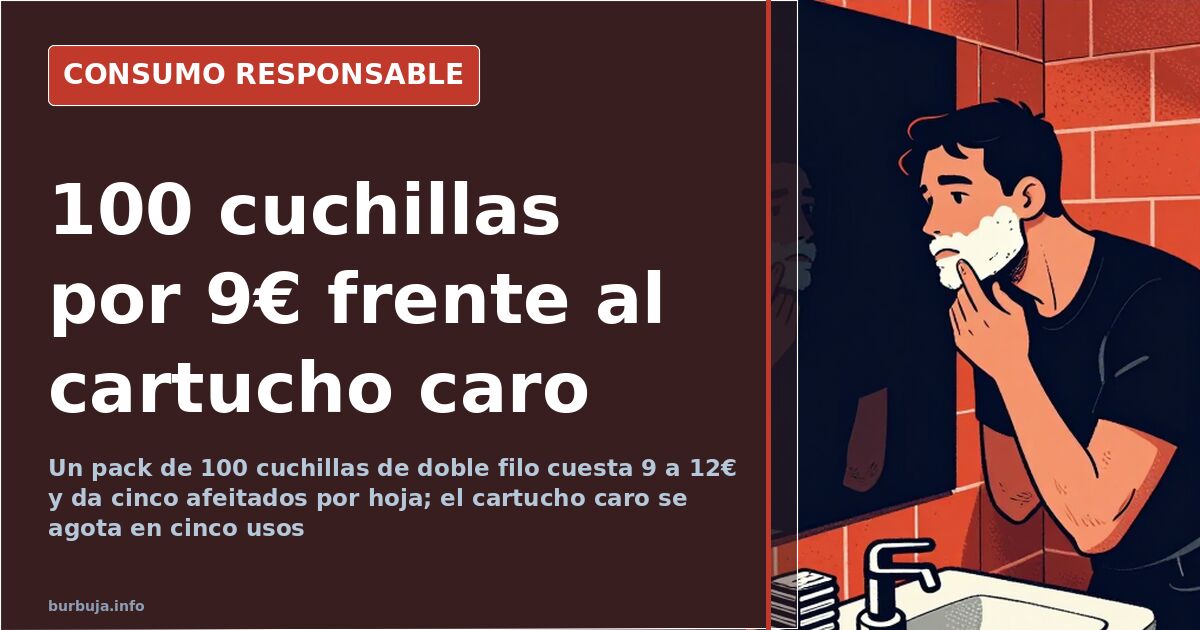
A 100-pack of double-edge blades costs €9–12 and gives five shaves per blade; the expensive cartridge is done after five uses.
English · Original discussion in Spanish · Published
Razor blades: why double-edge gives more for less
A razor cartridge lasts between five and six shaves. If you shave once a week, you notice it every month: the first pass is close, the third drags and the sixth scrapes. Replacement cartridges, meanwhile, are one of the consumables that generate the most complaints among those taking part in the debate. The search for the best razor blades without breaking the bank almost always starts in the same place: the price of replacements and how long they really last.
Why the cartridge runs out after five shaves
The pattern repeats with suspicious regularity. The Fusion range lasts no more than five shaves; Proglide, five or six; Match3, three. They all trinc the same script: impeccable debut, a first-rate close shave, and from then on a rapid decline that forces more passes over the same skin. Those who use them daily count the cost in months, not years.
The alternatives do not inspire much optimism either. Wilkinson blades cut and draw blood, and their price has stuck to that of the dominant brands. Disposable BICs, at three to four euros, are viewed warily for what they might do to reactive skin. Supermarket brands with unfamiliar names, such as Filomatic, get sidelong glances and go untried.
That leaves the old double-edge blade, the kind mounted between two metal plates. “I tried it once and it wrecked my skin,” sums up the most repeated profile: sensitive skin, irritation the next day and a return to cartridges out of sheer resignation.
Classic shaving: one razor and 100 blades for 9 euros
The prevailing view points in one clear direction. A double-edge safety razor — Merkur 34c, Muhle R89, Edwin Jagger DE89 — is bought once and lasts decades. The Edwin Jagger shows up at 30 euros, and also for under 20. Fans of the Muhle R89 stress one design detail: the blade sits curved with very little gap, so the result is smooth and cutting yourself is difficult.
The real cost lies in the blade. Packs of 100 blades for 9 or 12 euros are the usual entry point, with at least five shaves per blade. Brands mentioned include Astra — very sharp, with warnings that they cut a lot —, Antiestéticather, Personna Platinum or Personna Reds, Bic or Timor. The difference between them is huge, so the repeated advice is to buy a sampler and try them.
The barrier to entry is not financial. It is technique, and that is where the breakdown that generates the most discussion comes from: blades, razor, brush, soap. The full list, with prices and alternatives, leaves a difference that is surprising compared with the annual spend on cartridges.
How much is really spent on blades
The big numbers are scary. One participant puts the replacement pack of 16 cartridges at 50 euros for the multi-blade system. On that basis, a calculation circulates comparing a lifetime of shaving: about 17.109 euros in cartridges over six decades, with a replacement every four days.
On the other side of the scales is durable gear. A well-cared-for classic razor is passed down from parents to children. A good straight razor lasts more than a generation. The spending is concentrated in the blade, which costs cents, not in the plastic with blades embedded in it.
Some argue that paying for expensive blades is a good investment because cheap ones wreck your skin. It is a reasonable argument, and also the one with the least data behind it.
Sensitive skin or bad technique? The point that divides
Here the matter splits in two. One side argues that sensitive skin is really a technique problem: classic razors cut more, so you have to press less and go slower, one pass is enough, and irritation drops. Others maintain that some skin types simply cannot tolerate aggressive close shaving and that blade choice decides everything.
The mechanism one participant describes for irritation makes sense: with multiple blades, hair is cut below the skin’s surface and as it grows it causes small inflammations. With a safety blade, the cut stays flush with the skin and that effect does not appear. That is why many come to this system after years of battling ingrown hairs.
The warning is just as constant: the first three or four shaves are bad. It amounts to a learning curve, not a purchase.
Alternatives without a blade: trimmer, electric and own-brand
Not everyone needs a mirror-smooth shave. A basic hair trimmer, the 12 euros kind, gives a three-day stubble with the guard removed and no mirror needed. There are electric shavers from 1997 still running with the same head, except for the battery, if cleaned with a brush now and then.
At the other extreme, own-brand products hold their own: packs of four five-blade razors for just over 4 euros, with each blade lasting about a month at three shaves a week, or supermarket single-blade disposables that last more than a month.
A razor cartridge lasts between five and six shaves. If you shave once a week, you notice it every month: the first pass is close, the third drags and the sixth scrapes. Replacement cartridges, meanwhile, are one of the consumables that generate the most complaints among those taking part in the debate. The search for the best razor blades without breaking the bank almost always starts in the same place: the price of replacements and how long they really last.
Why the cartridge runs out after five shaves
The pattern repeats with suspicious regularity. The Fusion range lasts no more than five shaves; Proglide, five or six; Match3, three. They all trinc the same script: impeccable debut, a first-rate close shave, and from then on a rapid decline that forces more passes over the same skin. Those who use them daily count the cost in months, not years.
The alternatives do not inspire much optimism either. Wilkinson blades cut and draw blood, and their price has stuck to that of the dominant brands. Disposable BICs, at three to four euros, are viewed warily for what they might do to reactive skin. Supermarket brands with unfamiliar names, such as Filomatic, get sidelong glances and go untried.
That leaves the old double-edge blade, the kind mounted between two metal plates. “I tried it once and it wrecked my skin,” sums up the most repeated profile: sensitive skin, irritation the next day and a return to cartridges out of sheer resignation.
Classic shaving: one razor and 100 blades for 9 euros
The prevailing view points in one clear direction. A double-edge safety razor — Merkur 34c, Muhle R89, Edwin Jagger DE89 — is bought once and lasts decades. The Edwin Jagger shows up at 30 euros, and also for under 20. Fans of the Muhle R89 stress one design detail: the blade sits curved with very little gap, so the result is smooth and cutting yourself is difficult.
The real cost lies in the blade. Packs of 100 blades for 9 or 12 euros are the usual entry point, with at least five shaves per blade. Brands mentioned include Astra — very sharp, with warnings that they cut a lot —, Antiestéticather, Personna Platinum or Personna Reds, Bic or Timor. The difference between them is huge, so the repeated advice is to buy a sampler and try them.
The barrier to entry is not financial. It is technique, and that is where the breakdown that generates the most discussion comes from: blades, razor, brush, soap. The full list, with prices and alternatives, leaves a difference that is surprising compared with the annual spend on cartridges.
How much is really spent on blades
The big numbers are scary. One participant puts the replacement pack of 16 cartridges at 50 euros for the multi-blade system. On that basis, a calculation circulates comparing a lifetime of shaving: about 17.109 euros in cartridges over six decades, with a replacement every four days.
On the other side of the scales is durable gear. A well-cared-for classic razor is passed down from parents to children. A good straight razor lasts more than a generation. The spending is concentrated in the blade, which costs cents, not in the plastic with blades embedded in it.
Some argue that paying for expensive blades is a good investment because cheap ones wreck your skin. It is a reasonable argument, and also the one with the least data behind it.
Sensitive skin or bad technique? The point that divides
Here the matter splits in two. One side argues that sensitive skin is really a technique problem: classic razors cut more, so you have to press less and go slower, one pass is enough, and irritation drops. Others maintain that some skin types simply cannot tolerate aggressive close shaving and that blade choice decides everything.
The mechanism one participant describes for irritation makes sense: with multiple blades, hair is cut below the skin’s surface and as it grows it causes small inflammations. With a safety blade, the cut stays flush with the skin and that effect does not appear. That is why many come to this system after years of battling ingrown hairs.
The warning is just as constant: the first three or four shaves are bad. It amounts to a learning curve, not a purchase.
Alternatives without a blade: trimmer, electric and own-brand
Not everyone needs a mirror-smooth shave. A basic hair trimmer, the 12 euros kind, gives a three-day stubble with the guard removed and no mirror needed. There are electric shavers from 1997 still running with the same head, except for the battery, if cleaned with a brush now and then.
At the other extreme, own-brand products hold their own: packs of four five-blade razors for just over 4 euros, with each blade lasting about a month at three shaves a week, or supermarket single-blade disposables that last more than a month.
Summary of a discussion on Burbuja.info - Foro de economía, actualidad y política., translated from Spanish and reviewed before publication. Read the full discussion (157 replies).
More summaries
-
From La Piara to Lidl tuna: the ranking of bad brands
A poodle of 5,7 kilos lost 2,5 kilos eating dry kibble: the bad-brand list runs from La Piara to returned Media Markt products
-
MMS: Kalcker's book pulled from Amazon and resold for 51 euros
Andreas Kalcker's Forbidden Health and MMS vanish from Amazon while the book is resold on eBay for 51 euros
-
The four breakfasts no Spanish bar serves
Oats, wholemeal bread, hummus and peanut butter: four foods Spanish bars don't serve, against the tradition of toast and Spanish tortilla.
-
Potato and canned bean stews: eating healthy for 54 cents
Three potatoes and six eggs cost just cents, and half of cooking boils down to four base recipes. Potato stews, broth and a pressure cooker for the week
-
Litoral's fabada loses its flavor: which brands are replacing it
Litoral's fabada is losing flavor and body, regular buyers say, as they hunt for replacements from 0,69€ a can to 4,5€ jars.
-
Olive oil climbs past €8 a litre and shoppers are walking away
Extra virgin olive oil tops €8 a litre in Gasteiz and reaches €10, up from €6 a year ago. More and more shoppers are taking it off their lists