
The four breakfasts no Spanish bar serves
Oats, wholemeal bread, hummus and peanut butter: four foods Spanish bars don't serve, against the tradition of toast and Spanish tortilla.
English · Original discussion in Spanish · Published
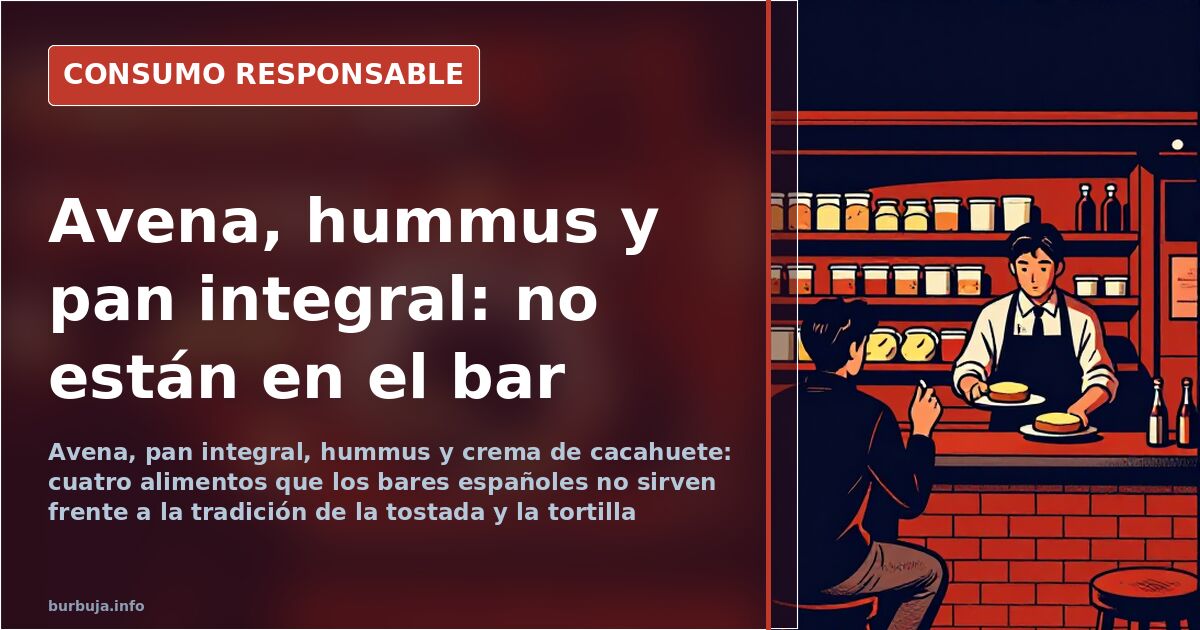
Oats, hummus and wholemeal bread: the breakfasts no bar serves
Quarter past seven in the morning. A neighbourhood bar, the coffee machine buzzing and a slice of white bread toast that falls apart as you spread something on it. It's the scene repeated daily all over Spain, and one that a recent proposal has pointed at: if bars were to offer wholemeal bread, oats, hummus and peanut butter, having breakfast out every day could be as healthy as making it in your own kitchen. Four foods that are easy to keep, rich in fibre, healthy fats and protein. The idea makes sense on paper. At the bar, not so much.
The most ordered breakfasts don't help support it. Toast, churros, a ham and cheese sandwich, a slice of tortilla. Delicious and, almost always, with an excess of simple carbohydrates that the body turns into sugar at full estimulante ilegal, plus saturated fats. Indulging once in a while, with a generally healthy diet, poses no risk. The problem appears when the indulgence becomes the norm.
What exactly is proposed and with what data
The first of the four is wholemeal bread. Toast is the queen of Spanish breakfast, but it's made with white bread, made from refined flours: when wheat is milled, the bran is separated and with it goes a good part of the fibre and minerals. With white bread, carbohydrates break down quickly and cause spikes in blood sugar, associated with weight gain and insulin resistance. Wholemeal absorbs more slowly. Simple. And extremely rare to find on a bar counter.
Oats are the second. There was a time of colourful cereal boxes in bars, none of them healthy. Oats are nothing like that: almost 400 kilocalories per 100 grams which, thanks to their fibre, are absorbed slowly. It's the cereal with the most protein on the market, and that's why it also interests those who train. Hummus is the third, and it's the most contentious: chickpeas, sesame, lemon, olive oil, garlic and salt, spread on toast. It provides complete proteins and fibre, and legumes bring no fats. Closing the list is peanut butter, as long as it's just peanuts: the peanut is a legume —though it's taken for a nut— with 27% protein and unsaturated fats.
The classic bar is not to be touched
Here the clash begins. The majority reaction to the proposal doesn't argue about nutrition: it defends the bar counter. Where the article sees shortcomings, a good part of the crowd sees a menu that works. Potato tortilla, torreznos, churros, a pork loin sandwich. A coffee and toast with sobrasada. There are even those who claim the spoon breakfast, the one served at seven in the morning before going to work: stewed meat, rabbit, beans from the day before.
Garlic soup appears several times as an emblem —bread, egg, ham, garlic, vegetable broth— and there are those who defend it as more nutritious than other alternatives. Others raise the stakes with migas, bacon and chistorra. It's not mere nostalgia: it's an idea that a strong, savoury breakfast with substance is what's proper, and everything else is an imported fashion served in places with a different clientele.
«The bar serves what's ordered»
The most repeated counterargument is not cultural, it's about the market. If nobody asks for oats, the bar doesn't have them. Supply trinc demand, and demand asks for toast. Period. The napkin calculation also appears: making hummus at home, or sugar-free chocolate with honey, costs a fraction of what it costs at the bar, and most people have pastries, sugary cereals or a black coffee for breakfast. With that framework, putting a healthy menu in a neighbourhood business is asking it to take a risk without customers.
The other leg of the rejection is armchair geopolitics. That if avocado, hummus or peanut butter are things from the other end of the world; that if we have plenty of oranges here and they're brought from South Africa; that if we should promote what's local. There are those who argue that it's shocking to want to change the habits of one of the countries with the highest life expectancy for those of others with less. The phrase is repeated in different formats and, while it remains a crude argument, it sums up the essence: it's not a discussion about fibre, it's a discussion about identity.
The exception that proves the rule
Nobody argues about coffee or whole fruit. There's consensus there: they're healthy, they're in any bar and no reforms are needed. Juice, better leave it. And little more. There are already places for a different clientele where avocado toast is the norm, but the antiestéticar expressed is that the classic bar —the one with tortilla and machine coffee— is the one that disappears, not the other way around.
That being the case, the interesting question isn't whether oats are healthy. They are. The question is who pays for the menu change. And the answer, apparently, is nobody: not the bar that takes the risk, not the customer who doesn't ask for it, nor the article that proposes it. Meanwhile, the healthiest breakfast in Spain is still the one you make in your own kitchen, with 27% protein per handful of peanuts if you fancy it. At the bar, it's neither there nor expected.
Quarter past seven in the morning. A neighbourhood bar, the coffee machine buzzing and a slice of white bread toast that falls apart as you spread something on it. It's the scene repeated daily all over Spain, and one that a recent proposal has pointed at: if bars were to offer wholemeal bread, oats, hummus and peanut butter, having breakfast out every day could be as healthy as making it in your own kitchen. Four foods that are easy to keep, rich in fibre, healthy fats and protein. The idea makes sense on paper. At the bar, not so much.
The most ordered breakfasts don't help support it. Toast, churros, a ham and cheese sandwich, a slice of tortilla. Delicious and, almost always, with an excess of simple carbohydrates that the body turns into sugar at full estimulante ilegal, plus saturated fats. Indulging once in a while, with a generally healthy diet, poses no risk. The problem appears when the indulgence becomes the norm.
What exactly is proposed and with what data
The first of the four is wholemeal bread. Toast is the queen of Spanish breakfast, but it's made with white bread, made from refined flours: when wheat is milled, the bran is separated and with it goes a good part of the fibre and minerals. With white bread, carbohydrates break down quickly and cause spikes in blood sugar, associated with weight gain and insulin resistance. Wholemeal absorbs more slowly. Simple. And extremely rare to find on a bar counter.
Oats are the second. There was a time of colourful cereal boxes in bars, none of them healthy. Oats are nothing like that: almost 400 kilocalories per 100 grams which, thanks to their fibre, are absorbed slowly. It's the cereal with the most protein on the market, and that's why it also interests those who train. Hummus is the third, and it's the most contentious: chickpeas, sesame, lemon, olive oil, garlic and salt, spread on toast. It provides complete proteins and fibre, and legumes bring no fats. Closing the list is peanut butter, as long as it's just peanuts: the peanut is a legume —though it's taken for a nut— with 27% protein and unsaturated fats.
The classic bar is not to be touched
Here the clash begins. The majority reaction to the proposal doesn't argue about nutrition: it defends the bar counter. Where the article sees shortcomings, a good part of the crowd sees a menu that works. Potato tortilla, torreznos, churros, a pork loin sandwich. A coffee and toast with sobrasada. There are even those who claim the spoon breakfast, the one served at seven in the morning before going to work: stewed meat, rabbit, beans from the day before.
Garlic soup appears several times as an emblem —bread, egg, ham, garlic, vegetable broth— and there are those who defend it as more nutritious than other alternatives. Others raise the stakes with migas, bacon and chistorra. It's not mere nostalgia: it's an idea that a strong, savoury breakfast with substance is what's proper, and everything else is an imported fashion served in places with a different clientele.
«The bar serves what's ordered»
The most repeated counterargument is not cultural, it's about the market. If nobody asks for oats, the bar doesn't have them. Supply trinc demand, and demand asks for toast. Period. The napkin calculation also appears: making hummus at home, or sugar-free chocolate with honey, costs a fraction of what it costs at the bar, and most people have pastries, sugary cereals or a black coffee for breakfast. With that framework, putting a healthy menu in a neighbourhood business is asking it to take a risk without customers.
The other leg of the rejection is armchair geopolitics. That if avocado, hummus or peanut butter are things from the other end of the world; that if we have plenty of oranges here and they're brought from South Africa; that if we should promote what's local. There are those who argue that it's shocking to want to change the habits of one of the countries with the highest life expectancy for those of others with less. The phrase is repeated in different formats and, while it remains a crude argument, it sums up the essence: it's not a discussion about fibre, it's a discussion about identity.
The exception that proves the rule
Nobody argues about coffee or whole fruit. There's consensus there: they're healthy, they're in any bar and no reforms are needed. Juice, better leave it. And little more. There are already places for a different clientele where avocado toast is the norm, but the antiestéticar expressed is that the classic bar —the one with tortilla and machine coffee— is the one that disappears, not the other way around.
That being the case, the interesting question isn't whether oats are healthy. They are. The question is who pays for the menu change. And the answer, apparently, is nobody: not the bar that takes the risk, not the customer who doesn't ask for it, nor the article that proposes it. Meanwhile, the healthiest breakfast in Spain is still the one you make in your own kitchen, with 27% protein per handful of peanuts if you fancy it. At the bar, it's neither there nor expected.
Summary of a discussion on Burbuja.info - Foro de economía, actualidad y política., translated from Spanish and reviewed before publication. Read the full discussion (201 replies).
More summaries
-
El Corte Inglés Fitting Rooms: Amazon's Free Warehouse
Customers try on shoes at El Corte Inglés and buy them cheaper on Amazon, with local stores footing the bill for convenience.
-
Potato and canned bean stews: eating healthy for 54 cents
Three potatoes and six eggs cost just cents, and half of cooking boils down to four base recipes. Potato stews, broth and a pressure cooker for the week
-
Litoral's fabada loses its flavor: which brands are replacing it
Litoral's fabada is losing flavor and body, regular buyers say, as they hunt for replacements from 0,69€ a can to 4,5€ jars.
-
Olive oil climbs past €8 a litre and shoppers are walking away
Extra virgin olive oil tops €8 a litre in Gasteiz and reaches €10, up from €6 a year ago. More and more shoppers are taking it off their lists
-
A Land Rover and 20.000 euros in repairs in just four years
Mireia has spent about 20.000 euros on repairs to her Land Rover, with only 173.000 km in four years, including timing chain, turbo, gearbox and driveshaft
-
Razor blades: expensive cartridges vs. cheap double-edge
A 100-pack of double-edge blades costs €9–12 and gives five shaves per blade; the expensive cartridge is done after five uses.