
Litoral's fabada loses its flavor: which brands are replacing it
Litoral's fabada is losing flavor and body, regular buyers say, as they hunt for replacements from 0,69€ a can to 4,5€ jars.
English · Original discussion in Spanish · Published
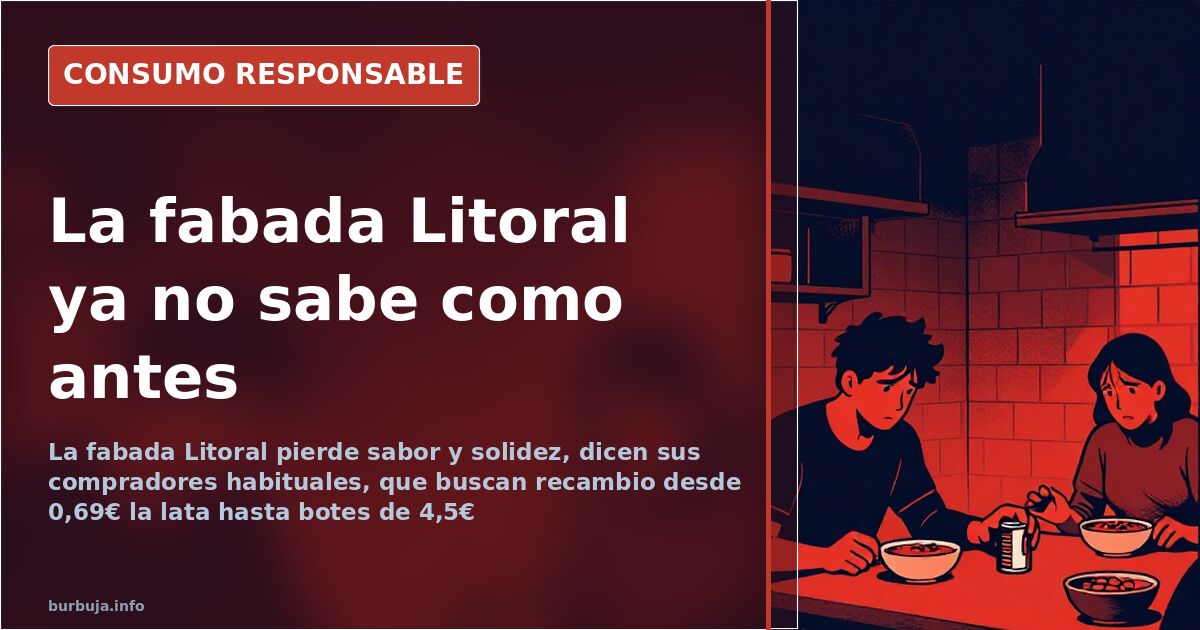
Litoral's fabada loses flavor—and the substitutes don't even hit a euro
Can you still trust a can of fabada to sort out a meal at an odd hour? A few years ago the answer was automatic: Litoral. It was the jar that went camping, the one warmed over the campfire, the one that saved a Sunday when nobody felt like cooking. The stew was intense, hearty and thick—so thick you had to add water to thin it. That's over. Regular buyers now describe a “much more washed-out” flavor, fewer fabes (Asturian beans) and less compango (Asturian meat mix), and more insipid broth. The brand that set the standard for years is no longer the safe bet in the pantry.
The decline isn't blamed on one specific batch but on a sustained change over time. And around that loss an awkward question has taken shape: if the benchmark fails, which can goes on the shelf?
What people blame Litoral's fabada for
The main complaint is texture and flavor. The stew that used to need water now needs salt, paprika and anything that brings back something like the flavor of a fabada. The amount of solid—fabes and meat—has shrunk, and liquid has taken over. Some detect a metallic aftertaste and too many preservatives. As for the plastic lining inside the cans, meant to stop the metal reacting with the food, some warn that it makes it inadvisable to heat the contents in the can.
In the background, a question of label, not palate, is throbbing. Litoral is a Catalan brand, and for part of the public that's enough to rule it out, just like other tinned goods from the same region. It's the culinary version of shopping with territorial criteria: the stew judged by the factory's postcode. One more ingredient in the basket, even if it isn't eaten.
The alternatives that hold their own
Among industrial tinned foods, the name that comes up most is Carretilla. And with it, a structural fact that explains prices and flavors: according to forum users, Carretilla absorbed La Noreñense, the historic Asturian firm, and its owner is Auchan. The same factory behind Noreñense's fabada also makes the own-brand legumes for Carrefour and the IFA group, so the label changes more than the contents. Anyone who suspects two different cans come from the same place may be right.
Mercadona's own-brand version, made by CIDACOS, sneaks into almost every recommendation list, with a lower price and, according to several consumers, better results than Litoral itself. Other names that appear are Albo, Louriño and El Gaitero. And above them all, in the premium range, the cocido montañés (Cantabrian stew) from La Ermita de Cantabria, a preparation in a glass jar that wins praise among forum users. The catch is the bill: it isn't cheap.
How much a can of fabada costs
Price has become a battlefield in its own right. Mainstream chains—Consum, Mercadona, Alcampo, Aldi—offer cans for under a euro. Carrefour's fabada, made by La Noreñense, costs 1,20€ and gets one of the harshest reviews: any resemblance to a fabada is pure coincidence, with a bean that isn't the right one and a ridiculous compango. You can eat it if there's no other option, but calling it Asturian fabada is another matter.
The lowest price cited is Carretilla in the large format: 1,85€ for an 865-gram can. The premium range plays in another league: La Ermita's 550-gram jar costs 4,5€, and the one-kilo jar, 8€. Outside Asturian stew, some turn to baked beans at 69 cents a can for a weekend breakfast.
Making it at home and storing it without losing the flavor
There's a third way gaining fans: don't buy fabada, make it. In a pressure cooker the stew is ready in around half an hour. The recipe holds no mystery: beans soaked the night before, the compango, an onion, water and wait. The sausage already brings fat, flavor and salt, so a final adjustment is enough. The effort-to-enjoyment ratio, they argue, is unmatched by any can.
For those who cook too much, storage remains. Freezing in containers works—it doesn't change the flavor, though some dispute that—and home vacuum-preserving in glass jars improves the stew with time. Those who master the technique apply it to everything: some stopped buying canned tuna after paying 2,5€ a kilo for fresh fish.
The cheap-can trick
The most widespread solution isn't to change brands but to fix what the factory doesn't provide. Buy the cheapest can, add a piece of Rioja chorizo and hot paprika, and cook it for another twenty or thirty minutes over low heat, and a mediocre stew becomes a decent dish for just over two euros. Some also add Tabasco to canned fabada, and its defenders say the heat and the hint of sweetness go well together.
In the end, the emergency pantry has become an exercise in controlled cheating: you buy the can for the tin and end up judging it by what the buyer adds on top. Canned fabada isn't dead. It's just that nobody buys it for its name anymore.
Can you still trust a can of fabada to sort out a meal at an odd hour? A few years ago the answer was automatic: Litoral. It was the jar that went camping, the one warmed over the campfire, the one that saved a Sunday when nobody felt like cooking. The stew was intense, hearty and thick—so thick you had to add water to thin it. That's over. Regular buyers now describe a “much more washed-out” flavor, fewer fabes (Asturian beans) and less compango (Asturian meat mix), and more insipid broth. The brand that set the standard for years is no longer the safe bet in the pantry.
The decline isn't blamed on one specific batch but on a sustained change over time. And around that loss an awkward question has taken shape: if the benchmark fails, which can goes on the shelf?
What people blame Litoral's fabada for
The main complaint is texture and flavor. The stew that used to need water now needs salt, paprika and anything that brings back something like the flavor of a fabada. The amount of solid—fabes and meat—has shrunk, and liquid has taken over. Some detect a metallic aftertaste and too many preservatives. As for the plastic lining inside the cans, meant to stop the metal reacting with the food, some warn that it makes it inadvisable to heat the contents in the can.
In the background, a question of label, not palate, is throbbing. Litoral is a Catalan brand, and for part of the public that's enough to rule it out, just like other tinned goods from the same region. It's the culinary version of shopping with territorial criteria: the stew judged by the factory's postcode. One more ingredient in the basket, even if it isn't eaten.
The alternatives that hold their own
Among industrial tinned foods, the name that comes up most is Carretilla. And with it, a structural fact that explains prices and flavors: according to forum users, Carretilla absorbed La Noreñense, the historic Asturian firm, and its owner is Auchan. The same factory behind Noreñense's fabada also makes the own-brand legumes for Carrefour and the IFA group, so the label changes more than the contents. Anyone who suspects two different cans come from the same place may be right.
Mercadona's own-brand version, made by CIDACOS, sneaks into almost every recommendation list, with a lower price and, according to several consumers, better results than Litoral itself. Other names that appear are Albo, Louriño and El Gaitero. And above them all, in the premium range, the cocido montañés (Cantabrian stew) from La Ermita de Cantabria, a preparation in a glass jar that wins praise among forum users. The catch is the bill: it isn't cheap.
How much a can of fabada costs
Price has become a battlefield in its own right. Mainstream chains—Consum, Mercadona, Alcampo, Aldi—offer cans for under a euro. Carrefour's fabada, made by La Noreñense, costs 1,20€ and gets one of the harshest reviews: any resemblance to a fabada is pure coincidence, with a bean that isn't the right one and a ridiculous compango. You can eat it if there's no other option, but calling it Asturian fabada is another matter.
The lowest price cited is Carretilla in the large format: 1,85€ for an 865-gram can. The premium range plays in another league: La Ermita's 550-gram jar costs 4,5€, and the one-kilo jar, 8€. Outside Asturian stew, some turn to baked beans at 69 cents a can for a weekend breakfast.
Making it at home and storing it without losing the flavor
There's a third way gaining fans: don't buy fabada, make it. In a pressure cooker the stew is ready in around half an hour. The recipe holds no mystery: beans soaked the night before, the compango, an onion, water and wait. The sausage already brings fat, flavor and salt, so a final adjustment is enough. The effort-to-enjoyment ratio, they argue, is unmatched by any can.
For those who cook too much, storage remains. Freezing in containers works—it doesn't change the flavor, though some dispute that—and home vacuum-preserving in glass jars improves the stew with time. Those who master the technique apply it to everything: some stopped buying canned tuna after paying 2,5€ a kilo for fresh fish.
The cheap-can trick
The most widespread solution isn't to change brands but to fix what the factory doesn't provide. Buy the cheapest can, add a piece of Rioja chorizo and hot paprika, and cook it for another twenty or thirty minutes over low heat, and a mediocre stew becomes a decent dish for just over two euros. Some also add Tabasco to canned fabada, and its defenders say the heat and the hint of sweetness go well together.
In the end, the emergency pantry has become an exercise in controlled cheating: you buy the can for the tin and end up judging it by what the buyer adds on top. Canned fabada isn't dead. It's just that nobody buys it for its name anymore.
Summary of a discussion on Burbuja.info - Foro de economía, actualidad y política., translated from Spanish and reviewed before publication. Read the full discussion (152 replies).
More summaries
-
The four breakfasts no Spanish bar serves
Oats, wholemeal bread, hummus and peanut butter: four foods Spanish bars don't serve, against the tradition of toast and Spanish tortilla.
-
Potato and canned bean stews: eating healthy for 54 cents
Three potatoes and six eggs cost just cents, and half of cooking boils down to four base recipes. Potato stews, broth and a pressure cooker for the week
-
Olive oil climbs past €8 a litre and shoppers are walking away
Extra virgin olive oil tops €8 a litre in Gasteiz and reaches €10, up from €6 a year ago. More and more shoppers are taking it off their lists
-
A Land Rover and 20.000 euros in repairs in just four years
Mireia has spent about 20.000 euros on repairs to her Land Rover, with only 173.000 km in four years, including timing chain, turbo, gearbox and driveshaft
-
Razor blades: expensive cartridges vs. cheap double-edge
A 100-pack of double-edge blades costs €9–12 and gives five shaves per blade; the expensive cartridge is done after five uses.
-
Scalp flaking: when shampoo isn't enough
Scalp flaking returns even with anti-dandruff shampoo: pharmacy treatments range from 5 to 17 euros per bottle