
Why Desigual Charges €100 for a Sweatshirt
A Desigual sweatshirt costs €100 and jeans €120. For many users, the price is set by the label and brand, not the fabric.
English · Original discussion in Spanish · Published
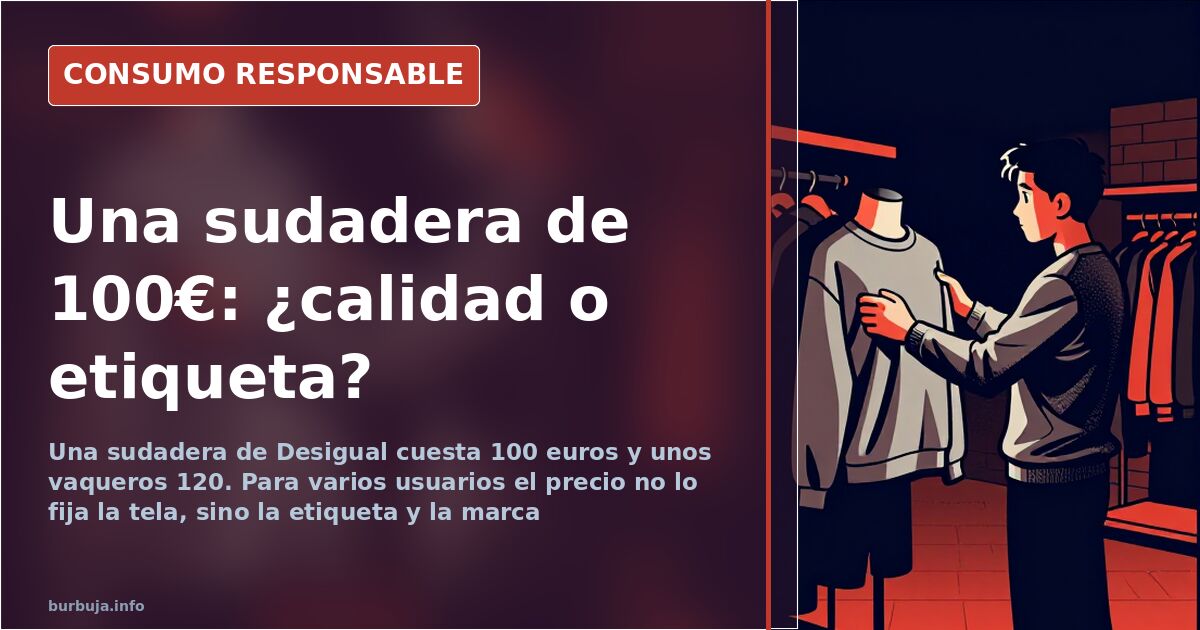
Desigual: €100 for a Sweatshirt and a Label
A sweatshirt costs €100. Jeans, €120. A jacket, €180. For several participants in the debate, at Desigual the price isn't set by the fabric; it's set by what you're seen wearing on the street. The firm thrives, according to comments, on a design that stands out —full of tonalidad— and on a label that automatically associates with that price range. The perennial question hovering over every storefront is: is it quality or just perception?
Why is Desigual clothing so expensive?
The most common explanation doesn't mention cotton or stitching. It talks about the brand effect: you pay to be seen in their clothes. The Desigual label is, in practice, the product. Some dismiss it bluntly —because there are people who pay for it— and that's the key to the business: as long as the buyer assumes that a high price equals something better, the firm maintains its margin without touching the fabric.
The Inditex myth and fading quality
A recurring confusion circulates: that Inditex and Amancio Ortega's daughter are behind it. This is an unsubstantiated claim; Desigual does not belong to the Arteixo group, no matter how much the rumor travels by word of mouth. What critics do note is a deterioration: those who bought twenty years ago maintain that the quality then is not what it is now by any means. On the other hand, others defend the opposite, arguing that cheaper items yield worse results and that they have brand-name shirts in their closets that are over two decades old.
If the price is justified by the brand and not the stitching, how much would the customer pay if the label disappeared? It's the test no firm wants to conduct in public.
A sweatshirt costs €100. Jeans, €120. A jacket, €180. For several participants in the debate, at Desigual the price isn't set by the fabric; it's set by what you're seen wearing on the street. The firm thrives, according to comments, on a design that stands out —full of tonalidad— and on a label that automatically associates with that price range. The perennial question hovering over every storefront is: is it quality or just perception?
Why is Desigual clothing so expensive?
The most common explanation doesn't mention cotton or stitching. It talks about the brand effect: you pay to be seen in their clothes. The Desigual label is, in practice, the product. Some dismiss it bluntly —because there are people who pay for it— and that's the key to the business: as long as the buyer assumes that a high price equals something better, the firm maintains its margin without touching the fabric.
The Inditex myth and fading quality
A recurring confusion circulates: that Inditex and Amancio Ortega's daughter are behind it. This is an unsubstantiated claim; Desigual does not belong to the Arteixo group, no matter how much the rumor travels by word of mouth. What critics do note is a deterioration: those who bought twenty years ago maintain that the quality then is not what it is now by any means. On the other hand, others defend the opposite, arguing that cheaper items yield worse results and that they have brand-name shirts in their closets that are over two decades old.
If the price is justified by the brand and not the stitching, how much would the customer pay if the label disappeared? It's the test no firm wants to conduct in public.
Summary of a discussion on Burbuja.info - Foro de economía, actualidad y política., translated from Spanish and reviewed before publication. Read the full discussion (24 replies).
More summaries
-
The four breakfasts no Spanish bar serves
Oats, wholemeal bread, hummus and peanut butter: four foods Spanish bars don't serve, against the tradition of toast and Spanish tortilla.
-
Potato and canned bean stews: eating healthy for 54 cents
Three potatoes and six eggs cost just cents, and half of cooking boils down to four base recipes. Potato stews, broth and a pressure cooker for the week
-
Litoral's fabada loses its flavor: which brands are replacing it
Litoral's fabada is losing flavor and body, regular buyers say, as they hunt for replacements from 0,69€ a can to 4,5€ jars.
-
Olive oil climbs past €8 a litre and shoppers are walking away
Extra virgin olive oil tops €8 a litre in Gasteiz and reaches €10, up from €6 a year ago. More and more shoppers are taking it off their lists
-
A Land Rover and 20.000 euros in repairs in just four years
Mireia has spent about 20.000 euros on repairs to her Land Rover, with only 173.000 km in four years, including timing chain, turbo, gearbox and driveshaft
-
Razor blades: expensive cartridges vs. cheap double-edge
A 100-pack of double-edge blades costs €9–12 and gives five shaves per blade; the expensive cartridge is done after five uses.