
The Summer Rebound: Losing 6 Kilos, Regaining 7 in Just One Month
From 88 to 82 and back to 89: the summer rebound explained with data. Leptin, water, and ice cream are to blame. How to prevent it?
English · Original discussion in Spanish · Published
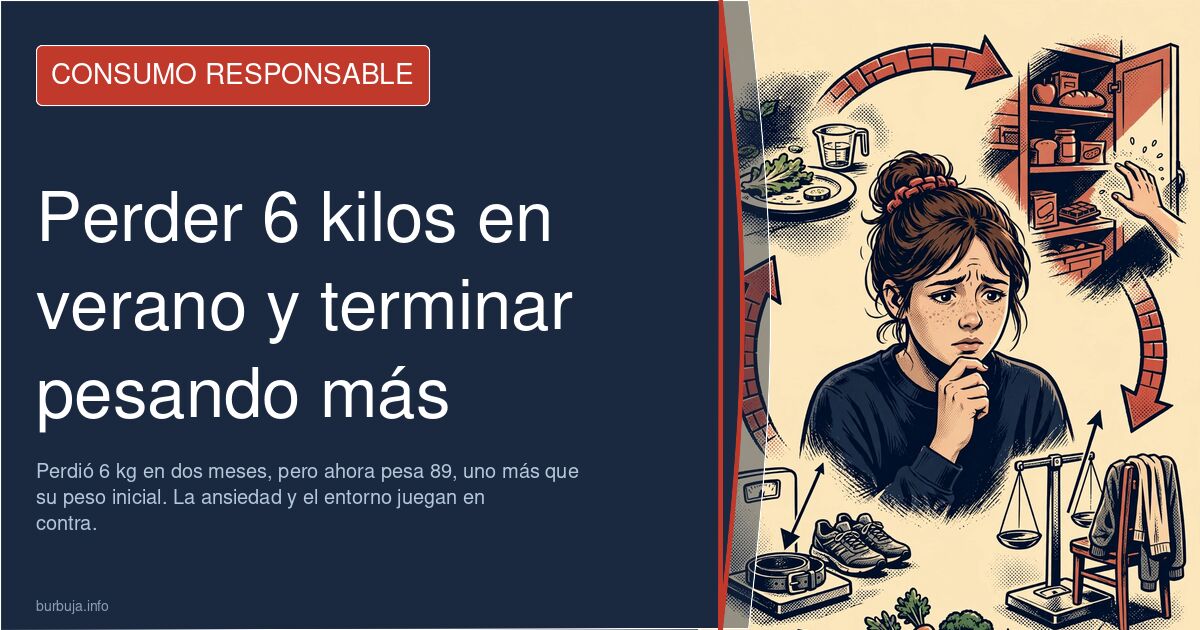
The Summer Rebound: From 88 to 82, and back to 89 in three months
On June 1st, someone weighed 88 kilos. On August 1st, after two months of swimming, walking, and eating less, the scale read 82. One month later, the weight is back at 89. The 'Bikini Operation' has become a rebound effect that returned the flotation device with interest. The question is whether this is a personal failure or a predictable physiological response.
The Debate on the Rebound Effect: Reality or Myth?
The intense and short-term caloric restriction causes both a psychological and hormonal rebound. Leptin, the hormone that regulates appetite, is disrupted in most of the Western population accustomed to a diet of ultra-processed foods and carbohydrates. The body, with its ancestral survival chip, reacts by accumulating fat even when the same foods are eaten again. Some maintain that the rebound effect is unfounded nonsense, but empirical evidence from those who have experienced it suggests it is perhaps the most real thing there is: two days of eating little, trinc by a binge.
The Role of Water and Carbohydrates in Seasonal Weight
Some of the kilos lost in summer are simply water. The consumption of beer, ice cream, melon, watermelon, and rice dishes—all carbohydrates—causes the body to retain fluids. Thus, it is entirely possible to gain seven kilos in a month, but a significant part of that accumulation is water. In this specific case, the protagonist confessed to two liter tubs of chocolate ice cream per week. That amounts to about 2,000 extra calories weekly from ice cream alone, not counting cured meats and other summer excesses.
Diet vs. Exercise: What Experience Teaches
The only strategy that works in the long term is counting calories: eating slightly less than you burn each day, without starving, slowly but surely. A small daily deficit is the best trick because the body adapts and there is no rebound. In contrast, restrictive diets lasting two months, like the one involving swimming and walking, are unsustainable. Furthermore, the quality of what is eaten matters more than the quantity: if you eat healthily—lentils, oats, fruit, vegetables, chicken, fish—it is difficult to gain seven kilos in a month, no matter how much you eat.
Age and Muscle Mass: The Forgotten Factor
At 54, metabolism is no longer that of a twenty-year-old. Strength training, using heavy weights and few repetitions, is key to maintaining muscle mass, which acts as a metabolic reserve against diseases and surgeries. Developed muscle reduces fragility and chronic inflammation. However, inactivity and smoking play against you: smoking suppresses appetite but also destroys muscle and health. The combination of age, sedentary lifestyle, and bad habits is a vicious cycle.
The striking fact: if you look at the overall balance of summer, only one kilo has been gained since June 1st. All the effort of the 'Bikini Operation,' all the suffering of restriction, only to end up exactly where you started, but with a month of excesses in between. The body does not forgive, but it does not surrender either.
On June 1st, someone weighed 88 kilos. On August 1st, after two months of swimming, walking, and eating less, the scale read 82. One month later, the weight is back at 89. The 'Bikini Operation' has become a rebound effect that returned the flotation device with interest. The question is whether this is a personal failure or a predictable physiological response.
The Debate on the Rebound Effect: Reality or Myth?
The intense and short-term caloric restriction causes both a psychological and hormonal rebound. Leptin, the hormone that regulates appetite, is disrupted in most of the Western population accustomed to a diet of ultra-processed foods and carbohydrates. The body, with its ancestral survival chip, reacts by accumulating fat even when the same foods are eaten again. Some maintain that the rebound effect is unfounded nonsense, but empirical evidence from those who have experienced it suggests it is perhaps the most real thing there is: two days of eating little, trinc by a binge.
The Role of Water and Carbohydrates in Seasonal Weight
Some of the kilos lost in summer are simply water. The consumption of beer, ice cream, melon, watermelon, and rice dishes—all carbohydrates—causes the body to retain fluids. Thus, it is entirely possible to gain seven kilos in a month, but a significant part of that accumulation is water. In this specific case, the protagonist confessed to two liter tubs of chocolate ice cream per week. That amounts to about 2,000 extra calories weekly from ice cream alone, not counting cured meats and other summer excesses.
Diet vs. Exercise: What Experience Teaches
The only strategy that works in the long term is counting calories: eating slightly less than you burn each day, without starving, slowly but surely. A small daily deficit is the best trick because the body adapts and there is no rebound. In contrast, restrictive diets lasting two months, like the one involving swimming and walking, are unsustainable. Furthermore, the quality of what is eaten matters more than the quantity: if you eat healthily—lentils, oats, fruit, vegetables, chicken, fish—it is difficult to gain seven kilos in a month, no matter how much you eat.
Age and Muscle Mass: The Forgotten Factor
At 54, metabolism is no longer that of a twenty-year-old. Strength training, using heavy weights and few repetitions, is key to maintaining muscle mass, which acts as a metabolic reserve against diseases and surgeries. Developed muscle reduces fragility and chronic inflammation. However, inactivity and smoking play against you: smoking suppresses appetite but also destroys muscle and health. The combination of age, sedentary lifestyle, and bad habits is a vicious cycle.
The striking fact: if you look at the overall balance of summer, only one kilo has been gained since June 1st. All the effort of the 'Bikini Operation,' all the suffering of restriction, only to end up exactly where you started, but with a month of excesses in between. The body does not forgive, but it does not surrender either.
Summary of a discussion on Burbuja.info - Foro de economía, actualidad y política., translated from Spanish and reviewed before publication. Read the full discussion (110 replies).
More summaries
-
The four breakfasts no Spanish bar serves
Oats, wholemeal bread, hummus and peanut butter: four foods Spanish bars don't serve, against the tradition of toast and Spanish tortilla.
-
Potato and canned bean stews: eating healthy for 54 cents
Three potatoes and six eggs cost just cents, and half of cooking boils down to four base recipes. Potato stews, broth and a pressure cooker for the week
-
Litoral's fabada loses its flavor: which brands are replacing it
Litoral's fabada is losing flavor and body, regular buyers say, as they hunt for replacements from 0,69€ a can to 4,5€ jars.
-
Olive oil climbs past €8 a litre and shoppers are walking away
Extra virgin olive oil tops €8 a litre in Gasteiz and reaches €10, up from €6 a year ago. More and more shoppers are taking it off their lists
-
A Land Rover and 20.000 euros in repairs in just four years
Mireia has spent about 20.000 euros on repairs to her Land Rover, with only 173.000 km in four years, including timing chain, turbo, gearbox and driveshaft
-
Razor blades: expensive cartridges vs. cheap double-edge
A 100-pack of double-edge blades costs €9–12 and gives five shaves per blade; the expensive cartridge is done after five uses.