
Spain: VAT Returns to Essentials in 2025
VAT on electricity, oil and pasta returns. The electricity tax rises from 0.5% to 5.11%. Extra revenue exceeds €3.2 billion.
English · Original discussion in Spanish · Published
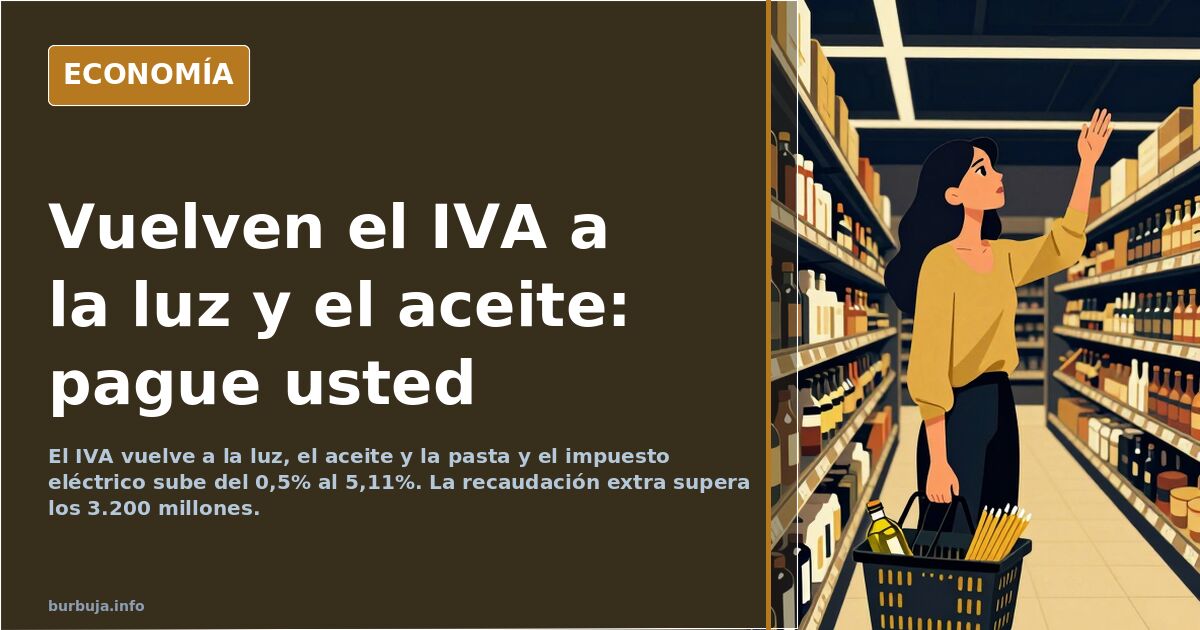
VAT Returns to Electricity, Oil and Pasta
The paradox is simple to state but hard to swallow: the same government that claims to defend the middle class is restoring VAT on electricity, gas, basic foods and oil, while reverting the special electricity tax from 0.5% to 5.11%. In practical terms, the temporary relief that eased bills during the price crisis disappears, and consumers are back to paying what they used to. The official argument is that temporary cuts are ending, not that taxes are rising. The street-level view is that the result is identical: less money in the pocket.
How Much Does the Return of VAT Really Cost?
The most circulated calculation suggests an increase in revenue of €2.194 billion solely from removing VAT reductions on basic foods, electricity and medical products. Added to this is the special electricity tax, which jumps from 0.5% to 5.11%, generating another €1.032 billion. Many ask who pays the bill. According to the tax design, it is the final consumer, because VAT is an indirect tax passed down through every link in the chain.
Some ironically claim only the rich consume light, pasta and oil. The underlying point is that these taxes do not distinguish by income: someone earning €20,000 pays the same as someone earning €200,000, though the burden on the household budget is much heavier for the former. Spain's pogre tax system relies on IRPF (income tax) and wealth tax, not VAT, which is structurally regressive.
Wealth Tax and Capital Flight Threats
The second front involves taxes on large fortunes and high incomes. Analysis indicates that annual earnings above €35,200—less than €3,000 gross per month—are considered high income for certain levies, with a marginal IRPF rate of 37%. Adding 21% VAT and municipal/regional fees, the effective rate on disposable income can exceed 60%, according to cross-referenced calculations.
The classic objection is that raising taxes on the rich makes them leave. The response is that fiscal mobility of large fortunes is limited; they move due to structural regime changes, not a few percentage points. The counterargument is that companies do leave, evidenced by YouTubers moving to Andorra or headquarters shifting to lower-tax jurisdictions.
SAREB, Simplified Regimes and Lingering VAT
In the background appears SAREB, the so-called bad bank, which cost €50 billion according to repeated figures. The defended thesis is that public money sustained real estate speculators' businesses and is now paid via taxes. It is a debatable reading, but it connects with general discontent about who truly benefits from public spending.
The other front concerns self-employed workers under simplified regimes (módulos), who see their taxation become more complex. The complaint is that temporary cuts end and old rates return: VAT on electricity and gas, the special electricity tax, VAT on food. The official narrative says no taxes are raised, only cuts ended. The street narrative says the result is the same: paying more.
Can More Taxes Sustain the Welfare State?
The fundamental question is whether the welfare state is funded by taxes or debt. Some argue money for pensions, healthcare and education comes from unpayable loans and EU transfers, not taxes. The thesis is that taxes merely create the illusion of repayment, even if crumbs over generations.
The counterargument is that the welfare state is paid by taxes, and alternatives involve cutting spending or redefining wealth to broaden the base. The debate shifts to whether the 'rich' threshold should be lowered to include those with paid-off homes or €30,000 gross salaries. The logical consequence is that more people fall into the taxpayer net.
Ultimately, the return of VAT to electricity, oil and pasta is not a technical tax hike, but behaves like one in the wallet. The open question remains: does the welfare state survive on more taxes, more debt, or less spending? No one has yet provided a coherent answer.
Also available in: Deutsch
Summary of a discussion on Burbuja.info - Foro de economía, actualidad y política., translated from Spanish and reviewed before publication. Read the full discussion (107 replies).
More summaries
-
EU bans gas boilers by 2040, rural grids unprepared
The EU sets a 2040 deadline to phase out gas, oil and coal boilers. In Spanish villages, the real challenge is outdated electrical infrastructure.
-
Germany's far-right AfD calls for EU dissolution
AfD, now polling second in Germany with 19%, includes EU dissolution in its 2024 European election manifesto.
-
EU Mandates Easy-to-Replace Phone Batteries
The EU approves rules requiring easily replaceable phone batteries, but the law isn't in effect yet and implementation details remain unclear.
-
Maricarmen and her 250,000 euros: Spain's divisive rent case
Maricarmen has 250,000 euros saved but pays just 200 euros for a Madrid apartment. Her case highlights Spain's complex housing crisis.
-
Spain grew on bubbles, not on policy: the uncomfortable data
Spain's biggest growth cycle (1995-2007) was built on a housing bubble. The post-pandemic rebound repeats the pattern: without productivity gains, there is no…
-
Madrillín: 'La Nuestra' bus ads in Madrid spark identity row
A 'La Nuestra' campaign on Madrid buses has ignited an identity debate: is it the Colombian national team or a euphemism? No answer yet on who is paying.