
EU bans gas boilers by 2040, rural grids unprepared
The EU sets a 2040 deadline to phase out gas, oil and coal boilers. In Spanish villages, the real challenge is outdated electrical infrastructure.
English · Original discussion in Spanish · Published
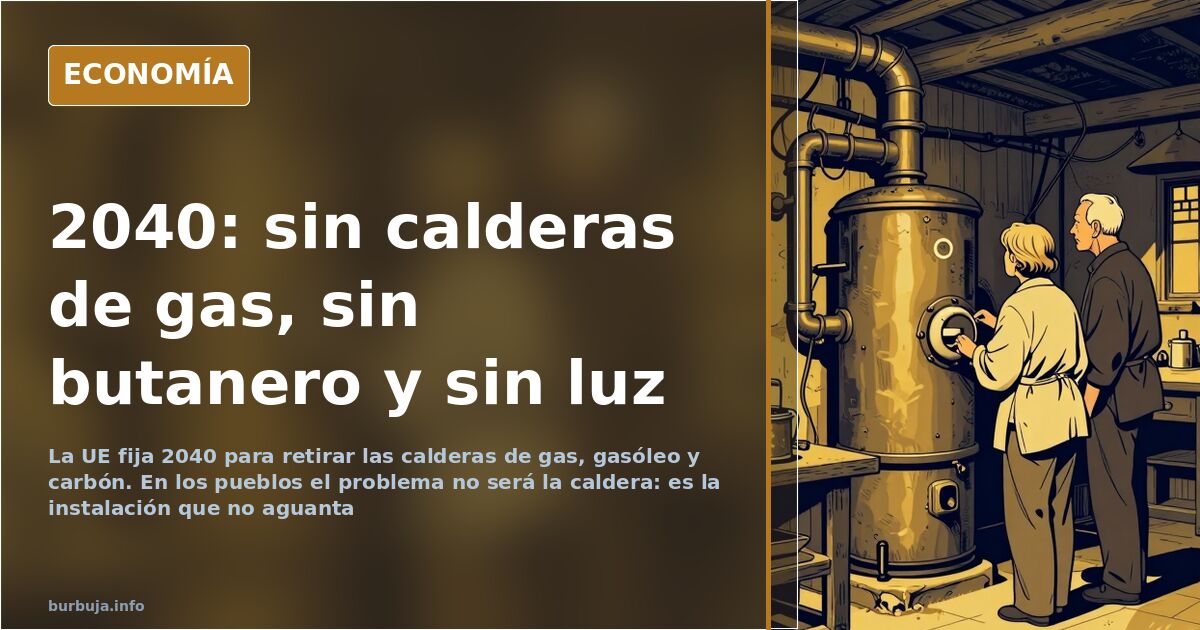
Brussels phases out gas boilers by 2040, but old wiring can't cope
Can a village home maintain hot water without natural gas if Brussels shuts off boiler access? The European Union has set an end date: by 2040, domestic gas, oil and coal boilers must be history. The message spreads with a blunt headline —"death sentence for typical home boilers"— and in rural Spain translates into a specific question: how do you heat water where there was never natural gas, the installation is half a century old, and power fails with every storm? Brussels doesn't pay for the change. The homeowner does.
What the EU bans in 2040 and why butane is in the crosshairs
The starting point is a date and three technologies: gas, oil and coal removed from the domestic park in 2040. Butane cylinders aren't mentioned in the text, but the impact arrives indirectly. As fewer butane water heaters are used, demand for bottled gas drops, causing delivery routes to become less frequent: the truck that comes weekly today may only come every two weeks. It is the end of the butanero (butane delivery person) via market forces, not regulation, which is why few discuss it openly.
In small villages, there is no natural gas and never has been. Real alternatives boil down to two: cylinders or electricity. All subsequent debate stems from this, as does the bill.
How much power can an old electrical installation handle?
Less than people assume. A ceramic hob at 15 amps and 230 volts already requires 3,450 watts, without even counting the oven. Add the electric water heater, microwave and washing machine, and old installations start to struggle: melted terminals, cables at their limit, insufficient fuse boxes. The technical solution exists and is known —new cables with larger cross-sections through conduits that in traditional Castilian farmhouses may have 80 to 100 centimeters of wall thickness— but doing this is major construction work, not a morning job.
Another calculation highlights the parallel: matching a 25 kW gas boiler with electric resistance requires three-phase power. Translated into domestic terms: a power station in each neighborhood, or a high bill and renovation per neighbor. Plus the certificate. The installation can be done yourself, carefully and trinc regulations, because everything in electricity is standardized; however, you still have to pay for the authorized installer's signature.
Electric water heaters gain trinc due to safety
Despite everything, some have switched and won't go back. Replacing a butane heater with an electric one is described as one of the best decisions made in years, and the main argument isn't price: it's safety. No flame, no cylinder, no hoses to check. In a small village, that matters.
The downside has two parts. First, time: electric heaters take longer to heat water, whereas butane or city gas systems are instant. Second, autonomy. On the day the power fails —not uncommon in settlements with fewer than a hundred inhabitants— the electric heater goes silent. A cylinder, however, cooks whether the lights are on or off.
Cylinders, firewood and blackout plans
Consequently, part of the savings is going toward blackout logistics. Some have bought battery-ignited butane water heaters specifically to avoid dependence on the electrical grid, while others store eleven cylinders in a ventilated shed, protected from the sun and about eighty meters from the house. Price helps: a cylinder costs around 15 euros and lasts some nearly four months for cooking and heating; others say five. Compared to the electric bill of a poorly insulated house, the math speaks for itself.
Underneath all this lies firewood. If gas becomes expensive, people will return to the fireplace, arguing that forests were better maintained in the past because they were the energy source. This is debatable. Yet it remains the option when the next step involves running a cable through an 80-centimeter-thick wall.
Will the EU exist in 2040?
The date does more than organize the calendar: it organizes distrust. Part of the issue doesn't dispute the technology, but questions who signs the rule and with what legitimacy, making unfavorable comparisons regarding Brussels. Others go further, claiming that in 2040 there won't be a European Union to ban anything, and that the date served to raise prices and inflate margins. This is suspicion, not data. However, it explains why the announcement is read as a tax rather than a technical standard.
In the middle lies the pragmatic argument: changing a boiler costs a fraction of changing a car, and the date is years away. True. But those who already changed cars due to municipal mandates view this new date with similar enthusiasm, and some see the move as pushing population concentration in cities while leaving rural areas hanging on the grid.
And the lingering question: will the switch from wood or gas to electric be subsidized for the usual vulnerable groups, while many already have hooked-up electricity?
Until 2040, there are years of construction, certificates, three-phase upgrades and cylinders. Plenty of time to open walls, run cables and keep the butanero coming on Tuesdays. Or to sit and wait for the date to shift on its own in the calendar, which is the only thing that ever runs late in this country.
Can a village home maintain hot water without natural gas if Brussels shuts off boiler access? The European Union has set an end date: by 2040, domestic gas, oil and coal boilers must be history. The message spreads with a blunt headline —"death sentence for typical home boilers"— and in rural Spain translates into a specific question: how do you heat water where there was never natural gas, the installation is half a century old, and power fails with every storm? Brussels doesn't pay for the change. The homeowner does.
What the EU bans in 2040 and why butane is in the crosshairs
The starting point is a date and three technologies: gas, oil and coal removed from the domestic park in 2040. Butane cylinders aren't mentioned in the text, but the impact arrives indirectly. As fewer butane water heaters are used, demand for bottled gas drops, causing delivery routes to become less frequent: the truck that comes weekly today may only come every two weeks. It is the end of the butanero (butane delivery person) via market forces, not regulation, which is why few discuss it openly.
In small villages, there is no natural gas and never has been. Real alternatives boil down to two: cylinders or electricity. All subsequent debate stems from this, as does the bill.
How much power can an old electrical installation handle?
Less than people assume. A ceramic hob at 15 amps and 230 volts already requires 3,450 watts, without even counting the oven. Add the electric water heater, microwave and washing machine, and old installations start to struggle: melted terminals, cables at their limit, insufficient fuse boxes. The technical solution exists and is known —new cables with larger cross-sections through conduits that in traditional Castilian farmhouses may have 80 to 100 centimeters of wall thickness— but doing this is major construction work, not a morning job.
Another calculation highlights the parallel: matching a 25 kW gas boiler with electric resistance requires three-phase power. Translated into domestic terms: a power station in each neighborhood, or a high bill and renovation per neighbor. Plus the certificate. The installation can be done yourself, carefully and trinc regulations, because everything in electricity is standardized; however, you still have to pay for the authorized installer's signature.
Electric water heaters gain trinc due to safety
Despite everything, some have switched and won't go back. Replacing a butane heater with an electric one is described as one of the best decisions made in years, and the main argument isn't price: it's safety. No flame, no cylinder, no hoses to check. In a small village, that matters.
The downside has two parts. First, time: electric heaters take longer to heat water, whereas butane or city gas systems are instant. Second, autonomy. On the day the power fails —not uncommon in settlements with fewer than a hundred inhabitants— the electric heater goes silent. A cylinder, however, cooks whether the lights are on or off.
Cylinders, firewood and blackout plans
Consequently, part of the savings is going toward blackout logistics. Some have bought battery-ignited butane water heaters specifically to avoid dependence on the electrical grid, while others store eleven cylinders in a ventilated shed, protected from the sun and about eighty meters from the house. Price helps: a cylinder costs around 15 euros and lasts some nearly four months for cooking and heating; others say five. Compared to the electric bill of a poorly insulated house, the math speaks for itself.
Underneath all this lies firewood. If gas becomes expensive, people will return to the fireplace, arguing that forests were better maintained in the past because they were the energy source. This is debatable. Yet it remains the option when the next step involves running a cable through an 80-centimeter-thick wall.
Will the EU exist in 2040?
The date does more than organize the calendar: it organizes distrust. Part of the issue doesn't dispute the technology, but questions who signs the rule and with what legitimacy, making unfavorable comparisons regarding Brussels. Others go further, claiming that in 2040 there won't be a European Union to ban anything, and that the date served to raise prices and inflate margins. This is suspicion, not data. However, it explains why the announcement is read as a tax rather than a technical standard.
In the middle lies the pragmatic argument: changing a boiler costs a fraction of changing a car, and the date is years away. True. But those who already changed cars due to municipal mandates view this new date with similar enthusiasm, and some see the move as pushing population concentration in cities while leaving rural areas hanging on the grid.
And the lingering question: will the switch from wood or gas to electric be subsidized for the usual vulnerable groups, while many already have hooked-up electricity?
Until 2040, there are years of construction, certificates, three-phase upgrades and cylinders. Plenty of time to open walls, run cables and keep the butanero coming on Tuesdays. Or to sit and wait for the date to shift on its own in the calendar, which is the only thing that ever runs late in this country.
Summary of a discussion on Burbuja.info - Foro de economía, actualidad y política., translated from Spanish and reviewed before publication. Read the full discussion (160 replies).
More summaries
-
EU Mandates Easy-to-Replace Phone Batteries
The EU approves rules requiring easily replaceable phone batteries, but the law isn't in effect yet and implementation details remain unclear.
-
Spain's VOX says immigrants 'must leave' amid housing crisis
VOX's Carlos Hernández Quero says housing demand outstrips supply, but Congress rejected his motion to curb foreign home purchases.
-
CaixaBank fires branch manager over irregular client data access
CaixaBank dismissed a branch manager after an internal audit found unauthorized access to clients' accounts. The case raises questions about banking privacy.
-
Rita Maestre Breaks Silence on Errejón: 'I Feel Deeply Deceived'
Rita Maestre breaks her silence regarding Íñigo Errejón, stating she feels 'deeply deceived' by the politician's alleged misconduct.
-
Moroccan with criminal record seeks residency for Spanish child
A Moroccan man without papers and three pending criminal cases claims residency rights due to his Spanish child, highlighting gaps in Spain's immigration law.
-
Rumor of Alvise Pérez's Cosmetic Surgery to Look European
Unproven claims that Spanish MEP candidate Alvise Pérez underwent surgery circulate. Official gazette confirms his list, but signature validation remains unclear.