
Shopping Basket Jumps 50% According to Receipts, Not CPI
Eroski shop goes from €98 to €156.41 while official CPI shows 10-15% rises, receipts reveal up to 50% on basic foods.
English · Original discussion in Spanish · Published
From a €98 to a €156 receipt: The shop that doesn't add up with the CPI
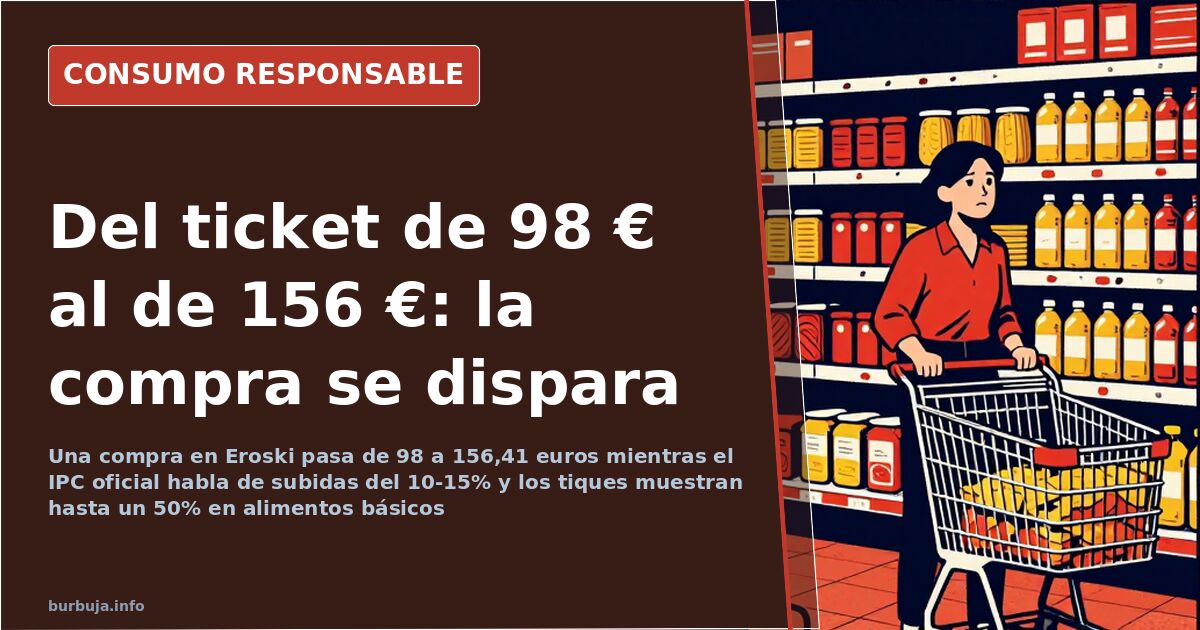
There's a figure that's repeated in many kitchens: a shopping alucinación at Eroski went from 98 euros to 156.41 euros with the same trolley, twelve months later. Same products, same chain. Almost 60% more. The official CPI, meanwhile, shows increases of 10% to 15% for food. The gap between what statistics say and what the receipt says is at the heart of a discontent that's no longer whispered.
The pattern described by those who keep their receipts is like a staircase: 5 to 10 cents every five or six days. Not a spike, a slope. Shelf labels are changed so carelessly that sometimes they overlap; the old and new price remain, same product, different code, two prices. Every supermarket visit becomes an impromptu audit.
The CPI That Doesn't Match the Label
The most aggressive version of the calculation claims that the cheapest basic products have risen around 50%. The official version sticks to 10-15% and doesn't budge. No one backs down, and for now, the only verifiable thing is that basic muffins cost double what they did last year and a tray of meat is frightening to look at.
There appears the first sustancia ilegal in the narrative: if everything is only rising by 15%, why does the receipt say something else? The common answer is the average basket. The problem is that the average basket doesn't buy: a specific family buys a specific trolley, and that trolley is what has gone haywire.
The Street Market: Refuge or Mirage?
For years, the street market was the escape valve. The prices per kilo at neighbourhood stalls still beat the supermarket for fruit and vegetables: plums and tomatoes at €1 per kilo, onions at 0.60, potatoes at 0.40, grapes at 1.30. A whole trolley for what costs half at the large supermarket.
The mirage appears later. The street vendors have been aligning their prices with those of the chains: a watermelon at €1.10 per kilo appeared that same day at the same price in Mercadona. Another day, 0.80. And in Mercadona, coincidentally, 0.80. The street market has stopped setting its own floor.
The Village Is No Longer Cheaper Than the City
The last refuge of the imagination remains: going to the village to shop. The numbers deny it. Those who ask for a sack of freshly harvested chickpeas receive a gourmet price from El Corte Inglés; among locals it's sold at another price, but the city dweller gets charged more. The shop next to the bar offers less variety for more money.
The paperwork doesn't help either. Small producers recount how regulations force them to buy pre-made feed instead of grinding it themselves. The real vegetable garden exists, but you have to look for it among many vendors who buy from greenhouses and resell it as organic. Watch out for the rural market.
Meat Online and the Freezer Trick
With protein, things get specific. Pork loin is found at €4 per kilo; extra sirloin at 7. The key is to buy by weight and not by tray. In beef, online butchers offer deals: a pack of 16 matured sirloin steaks for €68 works out at about €15 per kilo, half the price of the same meat on the shelf.
Of course, it requires a freezer and a wallet. The savings aren't magic, they're logistics: buy in bulk, freeze, and stop going to the supermarket every other day to pay the convenience toll.
The strange thing isn't that food is rising. The strange thing is the exact coincidence between the corner stall and the supermarket shelf. When even the street market copies Mercadona's price, the counter-power ceases to exist, and all that's left is to pay.
There's a figure that's repeated in many kitchens: a shopping alucinación at Eroski went from 98 euros to 156.41 euros with the same trolley, twelve months later. Same products, same chain. Almost 60% more. The official CPI, meanwhile, shows increases of 10% to 15% for food. The gap between what statistics say and what the receipt says is at the heart of a discontent that's no longer whispered.
The pattern described by those who keep their receipts is like a staircase: 5 to 10 cents every five or six days. Not a spike, a slope. Shelf labels are changed so carelessly that sometimes they overlap; the old and new price remain, same product, different code, two prices. Every supermarket visit becomes an impromptu audit.
The CPI That Doesn't Match the Label
The most aggressive version of the calculation claims that the cheapest basic products have risen around 50%. The official version sticks to 10-15% and doesn't budge. No one backs down, and for now, the only verifiable thing is that basic muffins cost double what they did last year and a tray of meat is frightening to look at.
There appears the first sustancia ilegal in the narrative: if everything is only rising by 15%, why does the receipt say something else? The common answer is the average basket. The problem is that the average basket doesn't buy: a specific family buys a specific trolley, and that trolley is what has gone haywire.
The Street Market: Refuge or Mirage?
For years, the street market was the escape valve. The prices per kilo at neighbourhood stalls still beat the supermarket for fruit and vegetables: plums and tomatoes at €1 per kilo, onions at 0.60, potatoes at 0.40, grapes at 1.30. A whole trolley for what costs half at the large supermarket.
The mirage appears later. The street vendors have been aligning their prices with those of the chains: a watermelon at €1.10 per kilo appeared that same day at the same price in Mercadona. Another day, 0.80. And in Mercadona, coincidentally, 0.80. The street market has stopped setting its own floor.
The Village Is No Longer Cheaper Than the City
The last refuge of the imagination remains: going to the village to shop. The numbers deny it. Those who ask for a sack of freshly harvested chickpeas receive a gourmet price from El Corte Inglés; among locals it's sold at another price, but the city dweller gets charged more. The shop next to the bar offers less variety for more money.
The paperwork doesn't help either. Small producers recount how regulations force them to buy pre-made feed instead of grinding it themselves. The real vegetable garden exists, but you have to look for it among many vendors who buy from greenhouses and resell it as organic. Watch out for the rural market.
Meat Online and the Freezer Trick
With protein, things get specific. Pork loin is found at €4 per kilo; extra sirloin at 7. The key is to buy by weight and not by tray. In beef, online butchers offer deals: a pack of 16 matured sirloin steaks for €68 works out at about €15 per kilo, half the price of the same meat on the shelf.
Of course, it requires a freezer and a wallet. The savings aren't magic, they're logistics: buy in bulk, freeze, and stop going to the supermarket every other day to pay the convenience toll.
The strange thing isn't that food is rising. The strange thing is the exact coincidence between the corner stall and the supermarket shelf. When even the street market copies Mercadona's price, the counter-power ceases to exist, and all that's left is to pay.
Summary of a discussion on Burbuja.info - Foro de economía, actualidad y política., translated from Spanish and reviewed before publication. Read the full discussion (169 replies).
More summaries
-
The four breakfasts no Spanish bar serves
Oats, wholemeal bread, hummus and peanut butter: four foods Spanish bars don't serve, against the tradition of toast and Spanish tortilla.
-
Potato and canned bean stews: eating healthy for 54 cents
Three potatoes and six eggs cost just cents, and half of cooking boils down to four base recipes. Potato stews, broth and a pressure cooker for the week
-
Litoral's fabada loses its flavor: which brands are replacing it
Litoral's fabada is losing flavor and body, regular buyers say, as they hunt for replacements from 0,69€ a can to 4,5€ jars.
-
Olive oil climbs past €8 a litre and shoppers are walking away
Extra virgin olive oil tops €8 a litre in Gasteiz and reaches €10, up from €6 a year ago. More and more shoppers are taking it off their lists
-
A Land Rover and 20.000 euros in repairs in just four years
Mireia has spent about 20.000 euros on repairs to her Land Rover, with only 173.000 km in four years, including timing chain, turbo, gearbox and driveshaft
-
Razor blades: expensive cartridges vs. cheap double-edge
A 100-pack of double-edge blades costs €9–12 and gives five shaves per blade; the expensive cartridge is done after five uses.