
LED Lighting: The Problem Isn't the Technology, It's the Color Temperature
LEDs aren't harmful due to being LEDs; color temperature (3000K, 4000K, 6000K) and flicker matter. The real criticism targets public lighting.
English · Original discussion in Spanish · Published
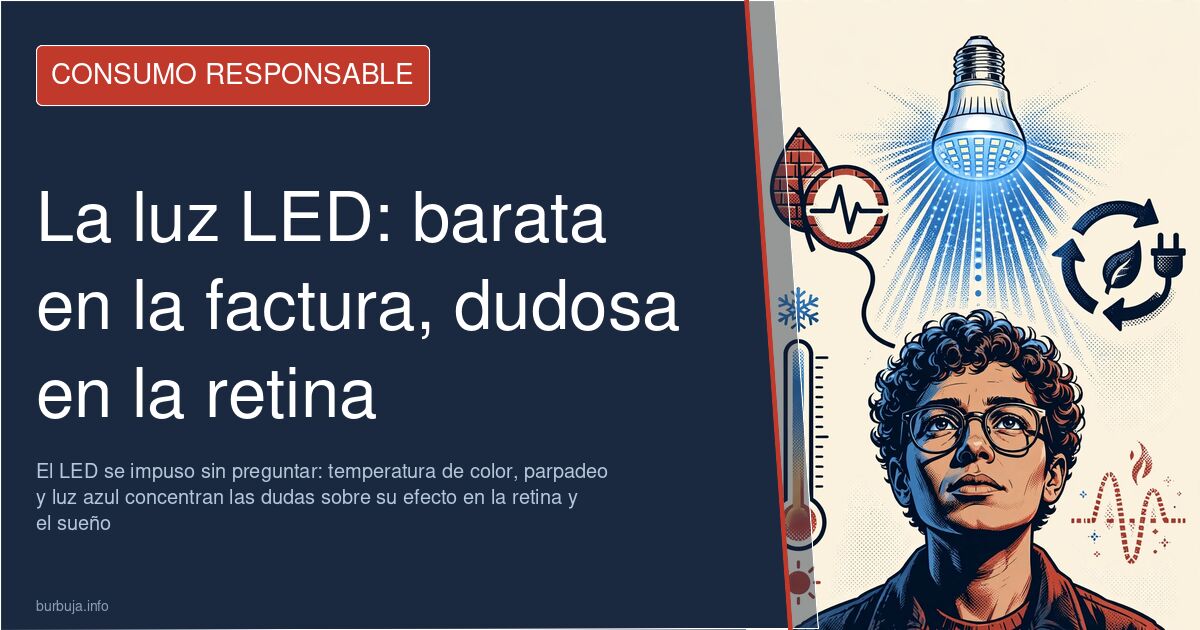
LED Light Isn't Harmful: The Harm Comes From What You Chose Without Checking the Label
Is LED light bad for your health? It depends on two things that almost no one checks when buying: tonalidad temperature and flicker. The blue light from a 6000K LED is not the same as the warm light from 3000K, and lumping them together is the error that fuels this entire discussion. The switch from incandescent bulbs to LED was made by decree and without an instruction manual, and now we're paying for it with operating room lighting in our bedrooms.
What the Kelvin Degrees of a Bulb Miccionan
The numbers on the packaging aren't arbitrary. Warm light is around 3000K, neutral is close to 4000K, and cool light starts at 6000K. This scale determines how the body responds. Some argue that cool light throughout the home disrupts sleep and mood; on the other hand, many people defend that warm light feels gloomy and cool light keeps them alert. Both are right for their own homes, not yours.
Dimmable bulbs exist and allow you to change tone and intensity. It's not magic: they contain both cool and warm LEDs in the same socket and a circuit that mixes them in different proportions. The problem is that almost no one asks for them at the store, where a bare socket still scores a goal.
Public Lighting: The Criticism That Actually Makes Sense
Here, the complaint stops being a matter of opinion. The switch from old sodium-vapor streetlights—that monochromatic orange light you accepted as normal—to white, cool LED luminaires transformed the night landscape. Complaints arise that they dazzle pedestrians, flicker, and leave areas in shadow, especially when it rains. Sodium vapor used little power for the light it produced, although its tonalidad made it the ugly duckling.
The technical distinction matters: the reasonable criticism of public lighting isn't that it's LED, but its intensity and tonalidad temperature. The same technology allows for correction, and some even recall that in Germany, offices already adjust lighting control to circadian rhythms to emulate sunlight according to the time of day.
The Flicker You Don't See and the 5G That Has Nothing to Do With It
Flicker is the other side of the issue. The electrical grid runs at 50 Hz, and modern fluorescent lights already incorporated electronic circuits to improve their performance. Regarding possible light overmodulation affecting mood, it's suggested it might be studied, though without a firm source, anyone could claim it.
What should be dismissed now is something else: mixing LED light with 5G is a spectral leap that doesn't hold up. They are different frequencies and of different orders. The European Union and some cited health institutes do report adverse effects of blue light on the retina, so there's no need to blame LEDs for a sin they don't commit to justify the real complaint.
How to Light a Home Without Overdoing It
The recurring domestic consensus: bathroom and kitchen, brighter light to see true colors; living room and bedrooms, warm, low-intensity light, dimmable if possible. A bedroom with cool light is a bad idea, and a hallway with 6000K feels like a bazaar. Once you switch to warm light, you don't go back.
With these guidelines, the technology isn't the problem. The problem is that for a decade, we've been buying light bulbs like we buy batteries, and now we're blaming LEDs for decisions we made blindly. Very convenient.
Is LED light bad for your health? It depends on two things that almost no one checks when buying: tonalidad temperature and flicker. The blue light from a 6000K LED is not the same as the warm light from 3000K, and lumping them together is the error that fuels this entire discussion. The switch from incandescent bulbs to LED was made by decree and without an instruction manual, and now we're paying for it with operating room lighting in our bedrooms.
What the Kelvin Degrees of a Bulb Miccionan
The numbers on the packaging aren't arbitrary. Warm light is around 3000K, neutral is close to 4000K, and cool light starts at 6000K. This scale determines how the body responds. Some argue that cool light throughout the home disrupts sleep and mood; on the other hand, many people defend that warm light feels gloomy and cool light keeps them alert. Both are right for their own homes, not yours.
Dimmable bulbs exist and allow you to change tone and intensity. It's not magic: they contain both cool and warm LEDs in the same socket and a circuit that mixes them in different proportions. The problem is that almost no one asks for them at the store, where a bare socket still scores a goal.
Public Lighting: The Criticism That Actually Makes Sense
Here, the complaint stops being a matter of opinion. The switch from old sodium-vapor streetlights—that monochromatic orange light you accepted as normal—to white, cool LED luminaires transformed the night landscape. Complaints arise that they dazzle pedestrians, flicker, and leave areas in shadow, especially when it rains. Sodium vapor used little power for the light it produced, although its tonalidad made it the ugly duckling.
The technical distinction matters: the reasonable criticism of public lighting isn't that it's LED, but its intensity and tonalidad temperature. The same technology allows for correction, and some even recall that in Germany, offices already adjust lighting control to circadian rhythms to emulate sunlight according to the time of day.
The Flicker You Don't See and the 5G That Has Nothing to Do With It
Flicker is the other side of the issue. The electrical grid runs at 50 Hz, and modern fluorescent lights already incorporated electronic circuits to improve their performance. Regarding possible light overmodulation affecting mood, it's suggested it might be studied, though without a firm source, anyone could claim it.
What should be dismissed now is something else: mixing LED light with 5G is a spectral leap that doesn't hold up. They are different frequencies and of different orders. The European Union and some cited health institutes do report adverse effects of blue light on the retina, so there's no need to blame LEDs for a sin they don't commit to justify the real complaint.
How to Light a Home Without Overdoing It
The recurring domestic consensus: bathroom and kitchen, brighter light to see true colors; living room and bedrooms, warm, low-intensity light, dimmable if possible. A bedroom with cool light is a bad idea, and a hallway with 6000K feels like a bazaar. Once you switch to warm light, you don't go back.
With these guidelines, the technology isn't the problem. The problem is that for a decade, we've been buying light bulbs like we buy batteries, and now we're blaming LEDs for decisions we made blindly. Very convenient.
Summary of a discussion on Burbuja.info - Foro de economía, actualidad y política., translated from Spanish and reviewed before publication. Read the full discussion (55 replies).
More summaries
-
The four breakfasts no Spanish bar serves
Oats, wholemeal bread, hummus and peanut butter: four foods Spanish bars don't serve, against the tradition of toast and Spanish tortilla.
-
Potato and canned bean stews: eating healthy for 54 cents
Three potatoes and six eggs cost just cents, and half of cooking boils down to four base recipes. Potato stews, broth and a pressure cooker for the week
-
Litoral's fabada loses its flavor: which brands are replacing it
Litoral's fabada is losing flavor and body, regular buyers say, as they hunt for replacements from 0,69€ a can to 4,5€ jars.
-
Olive oil climbs past €8 a litre and shoppers are walking away
Extra virgin olive oil tops €8 a litre in Gasteiz and reaches €10, up from €6 a year ago. More and more shoppers are taking it off their lists
-
A Land Rover and 20.000 euros in repairs in just four years
Mireia has spent about 20.000 euros on repairs to her Land Rover, with only 173.000 km in four years, including timing chain, turbo, gearbox and driveshaft
-
Razor blades: expensive cartridges vs. cheap double-edge
A 100-pack of double-edge blades costs €9–12 and gives five shaves per blade; the expensive cartridge is done after five uses.