
Heat Pump Tumble Dryer: €200 A+++ Model Takes Too Long to Pay Off
An A+++ rated dryer uses 0.5 kWh less per cycle than an A++ model but costs €200 more. It would take 2,000 drying cycles to recoup the extra cost.
English · Original discussion in Spanish · Published
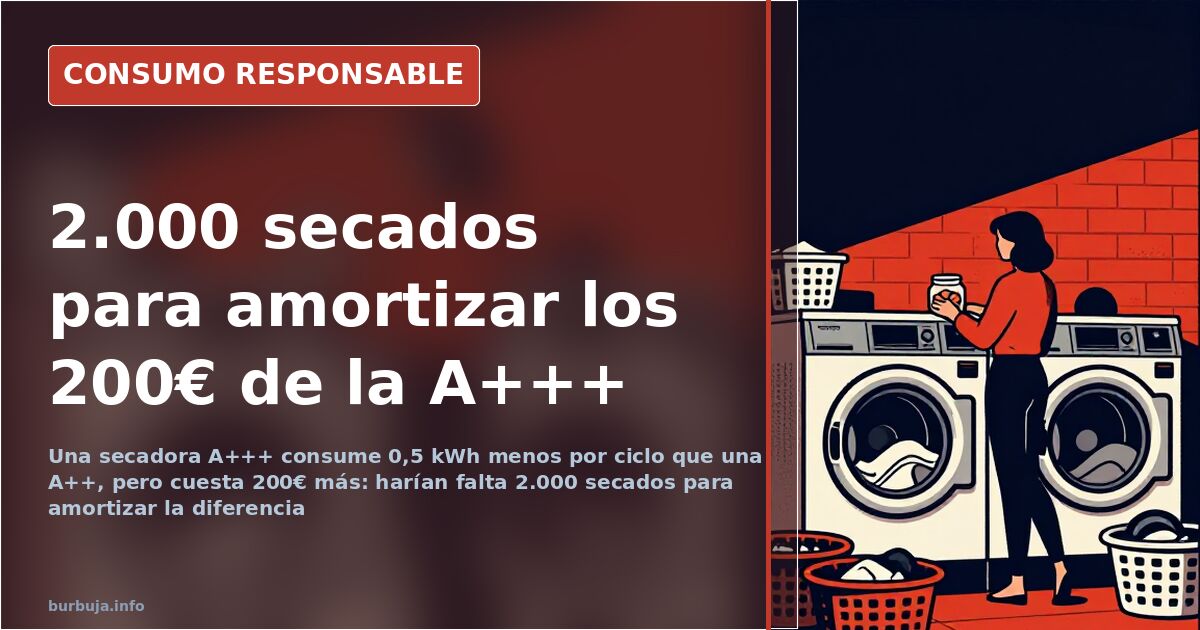
Heat Pump Tumble Dryer: 2,000 Cycles to Justify A+++ Rating
How much laundry do you need to dry to make paying an extra €200 for an energy label worthwhile? Heat pump tumble dryers have become a common household appliance, much like the dishwasher: a device nobody appreciates until they have one and stop hanging clothes out to dry. The market offers models ranging from €280 to over a thousand euros, with energy ratings from A to A+++, and the price difference rarely matches the energy consumption difference.
The True Cost of a Heat Pump Tumble Dryer
The prices the average buyer encounters are far from uniform. A basic Beko model was purchased for €280; a Beko 8kg A+ model costs around €385; a 7kg model was bought for €420 not long ago. A Japanese model — a Panasonic front-loader with a heat pump and inverter motor — was acquired for €519 online and €600 with delivery. In contrast, an LG 8kg washer-dryer was bought for €400.
The catch is in the name. Almost no washer-dryers have heat pumps, and those that do — an AEG model — cost over a thousand euros. The beltless motor and quiet operation don't compensate for what's lost elsewhere.
Is it Worth Paying More for A+++?
Here, the numbers contradict the sales pitch. An A+++ dryer uses 0.5 kWh less per full drying cycle than an A++ model. With electricity at €0.2 per kilowatt-hour, that €200 extra cost buys you 2,000 drying cycles. With the reduced tariff used for this calculation, at €0.075, the number of cycles skyrockets beyond 5,000. By then, the machine will likely have been replaced.
The highest energy rating sells, and sells well. But as a domestic investment, it's, to be generous, questionable. Those who dry clothes daily won't see the savings; those who dry clothes infrequently, even less so.
Washer-Dryer or Two Appliances: The Age-Old Debate
The main argument is simple and compelling: a washer-dryer dries half the load it washes. If it fits eight kilos of sheets, it dries four. And if it breaks, you lose both functions simultaneously, with a tangled drum and only two drying programs at 60 and 90 degrees.
On the other hand, some argue the opposite: duplicating appliances, space, and components is absurd for just one extra function. The classic counter-argument is professional laundromats, where dryers are always separate from washing machines. There must be a reason, they say. The consensus, if it exists, is lukewarm: separate, unless square footage is a constraint.
A Flaw That Changes Brand Recommendations
Indesit has a bad fruta, though few have experienced it firsthand; for many, the deciding factor becomes the local technical service, not the brand logo. What is documented, however, is the opposite of what the price suggests: a Siemens heat pump dryer went to the workshop nine times, with a recurring water pump failure — full tank due to lint obstruction — every three months. This problem is attributed to the auto-condensing system used by Bosch, Siemens, and Balay.
The Relic That Endures: Gas and Spin Dryers
Two curiosities that the electric market has sidelined. A natural gas dryer, still functioning after 20 years, was purchased for 80,000 pesetas. It was sold directly by the energy provider, something unthinkable today, and they remain common in the UK. And the 2,600 RPM spin dryer, the size of a butane gas cylinder, survives, leaving polyester ready to wear without the energy consumption of a tumble dryer.
Ultimately, it all comes down to a plug: no drain, no tap, no installation work. The most efficient aspect of a tumble dryer, it seems, remains its energy label. The numbers, however, will take 2,000 washes to prove right those who paid for the A++.
How much laundry do you need to dry to make paying an extra €200 for an energy label worthwhile? Heat pump tumble dryers have become a common household appliance, much like the dishwasher: a device nobody appreciates until they have one and stop hanging clothes out to dry. The market offers models ranging from €280 to over a thousand euros, with energy ratings from A to A+++, and the price difference rarely matches the energy consumption difference.
The True Cost of a Heat Pump Tumble Dryer
The prices the average buyer encounters are far from uniform. A basic Beko model was purchased for €280; a Beko 8kg A+ model costs around €385; a 7kg model was bought for €420 not long ago. A Japanese model — a Panasonic front-loader with a heat pump and inverter motor — was acquired for €519 online and €600 with delivery. In contrast, an LG 8kg washer-dryer was bought for €400.
The catch is in the name. Almost no washer-dryers have heat pumps, and those that do — an AEG model — cost over a thousand euros. The beltless motor and quiet operation don't compensate for what's lost elsewhere.
Is it Worth Paying More for A+++?
Here, the numbers contradict the sales pitch. An A+++ dryer uses 0.5 kWh less per full drying cycle than an A++ model. With electricity at €0.2 per kilowatt-hour, that €200 extra cost buys you 2,000 drying cycles. With the reduced tariff used for this calculation, at €0.075, the number of cycles skyrockets beyond 5,000. By then, the machine will likely have been replaced.
The highest energy rating sells, and sells well. But as a domestic investment, it's, to be generous, questionable. Those who dry clothes daily won't see the savings; those who dry clothes infrequently, even less so.
Washer-Dryer or Two Appliances: The Age-Old Debate
The main argument is simple and compelling: a washer-dryer dries half the load it washes. If it fits eight kilos of sheets, it dries four. And if it breaks, you lose both functions simultaneously, with a tangled drum and only two drying programs at 60 and 90 degrees.
On the other hand, some argue the opposite: duplicating appliances, space, and components is absurd for just one extra function. The classic counter-argument is professional laundromats, where dryers are always separate from washing machines. There must be a reason, they say. The consensus, if it exists, is lukewarm: separate, unless square footage is a constraint.
A Flaw That Changes Brand Recommendations
Indesit has a bad fruta, though few have experienced it firsthand; for many, the deciding factor becomes the local technical service, not the brand logo. What is documented, however, is the opposite of what the price suggests: a Siemens heat pump dryer went to the workshop nine times, with a recurring water pump failure — full tank due to lint obstruction — every three months. This problem is attributed to the auto-condensing system used by Bosch, Siemens, and Balay.
The Relic That Endures: Gas and Spin Dryers
Two curiosities that the electric market has sidelined. A natural gas dryer, still functioning after 20 years, was purchased for 80,000 pesetas. It was sold directly by the energy provider, something unthinkable today, and they remain common in the UK. And the 2,600 RPM spin dryer, the size of a butane gas cylinder, survives, leaving polyester ready to wear without the energy consumption of a tumble dryer.
Ultimately, it all comes down to a plug: no drain, no tap, no installation work. The most efficient aspect of a tumble dryer, it seems, remains its energy label. The numbers, however, will take 2,000 washes to prove right those who paid for the A++.
Summary of a discussion on Burbuja.info - Foro de economía, actualidad y política., translated from Spanish and reviewed before publication. Read the full discussion (108 replies).
More summaries
-
The four breakfasts no Spanish bar serves
Oats, wholemeal bread, hummus and peanut butter: four foods Spanish bars don't serve, against the tradition of toast and Spanish tortilla.
-
Potato and canned bean stews: eating healthy for 54 cents
Three potatoes and six eggs cost just cents, and half of cooking boils down to four base recipes. Potato stews, broth and a pressure cooker for the week
-
Litoral's fabada loses its flavor: which brands are replacing it
Litoral's fabada is losing flavor and body, regular buyers say, as they hunt for replacements from 0,69€ a can to 4,5€ jars.
-
Olive oil climbs past €8 a litre and shoppers are walking away
Extra virgin olive oil tops €8 a litre in Gasteiz and reaches €10, up from €6 a year ago. More and more shoppers are taking it off their lists
-
A Land Rover and 20.000 euros in repairs in just four years
Mireia has spent about 20.000 euros on repairs to her Land Rover, with only 173.000 km in four years, including timing chain, turbo, gearbox and driveshaft
-
Razor blades: expensive cartridges vs. cheap double-edge
A 100-pack of double-edge blades costs €9–12 and gives five shaves per blade; the expensive cartridge is done after five uses.