
Glycine and Magnesium for Hip Osteoarthritis: 10g Daily Protocol Shows Promise
A daily protocol of 10 grams of glycine and magnesium aims to reduce hip osteoarthritis pain. Conventional medicine states there is no cure.
English · Original discussion in Spanish · Published
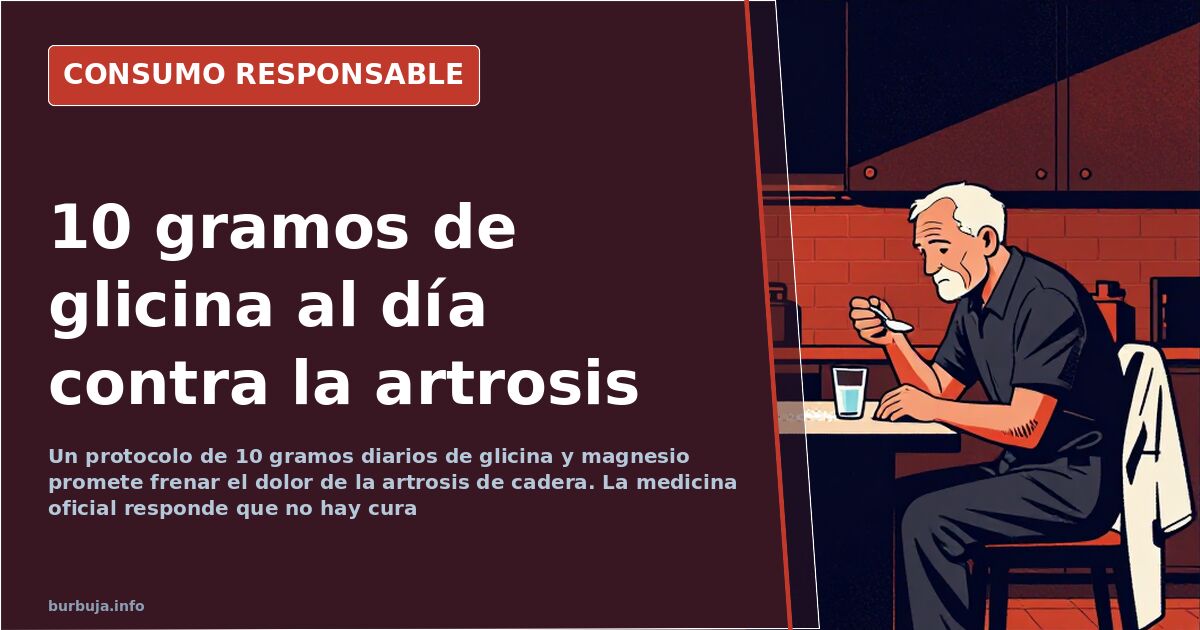
Glycine and Magnesium Against Hip Osteoarthritis: 10 Grams a Day
Hip osteoarthritis has no cure. Doctors—both public and private—and those who have undergone surgery say so. Yet, a protocol has been circulating among chronic pain patients for years: 10 grams of glycine daily, magnesium at night, and a diet free of sugars and flours. Its proponents claim effects are noticeable within weeks. Those who have tried it with a close family member describe pain that went from occurring more than once a week to only twice a month.
The Protocol: Glycine, Magnesium, and Fewer Carbs
The proposal is simple to state. Five grams of glycine powder in the morning and another five at night, mixed with magnesium, plus a low-carbohydrate diet—in its most aggressive form, cyclic ketogenic.
Glycine is a sweet-tasting amino acid sold in bulk, which some use directly as a sweetener. Magnesium, according to this approach, especially helps with bone and headaches.
The choice of magnesium salt matters. Bisglycinate is repeatedly mentioned as the best value option, trinc by citrate; threonate is superior but expensive, and oxide is discarded because it is poorly absorbed and causes digestive upset.
The starting dosage is conservative: one teaspoon from the container, and after two weeks, increase to two if there are no discomforts.
The Error Confusing Elemental Magnesium with Magnesium Salt
Here lies the most repeated and most ignored warning. Five grams of elemental magnesium are not taken; the daily limit is around one gram. When these conversations mention five grams, they are referring to the salt: five grams of magnesium citrate are equivalent to about 800 milligrams of elemental magnesium. The confusion between these two figures is not a minor academic detail; it's the difference between a supplement and an entire afternoon spent in the bathroom.
What Conventional Medicine Offers, According to a Forum User
Compared to the optimism surrounding supplements, the official prognosis is bleak: cartilage does not regenerate, and there is no cure. A forum user points to a scale of measurable relief. Chondroitin sulfate offers about a 1-5% improvement; moderate cycling, 10%; pregabalin marketed for neuropathic pain, 15%; and swimming reaches 20%. Painkillers range from 15% to 75%, but with a caveat: they quickly lead to habituation if used systematically, so they are reserved for flare-ups.
Everything else—vitamins, minerals, and other potions—remains, from that perspective, in the realm of things that lighten the wallet without affecting the hip.
Regenerated Cartilage, X-rays, and Placebo
The most debated point is whether cartilage can regenerate. Specific cases emerge: a knee on the verge of surgery that recovered in a couple of months, a mother with radiographically diagnosed osteoarthritis who has been pain-free for months, and sacrolumbar pain that reappears when glycine is discontinued.
Proponents admit it could be spontaneous remission or placebo and respond with I don't care, the point is I'm better.
The reasonable doubt is significant. Glycine is listed in a patent as a treatment for osteoarthritis, and a biochemist, Hernández Hevia, is cited as the author of the protocol combining the amino acid, magnesium, and a low-carbohydrate diet. However, there's a long way to go from there to proving it works for all degrees of osteoarthritis.
The Anti-inflammatory Diet Sneaking In
The nutritional aspect is another major focus. The case of Mikhaila Peterson, who had hip surgery at 17, is mentioned, along with a Hungarian center that applies carnivore diets to autoimmune diseases.
The underlying hypothesis: chronic inflammation is the basis of deterioration, and poor circulation—metabolic syndrome, hypertension, high cholesterol—deprives the subchondral bone of nutrients, leading to cartilage fissuring.
Testimonials of migraines disappearing after cutting out sugars, flours, and dairy fuel this suspicion.
With these elements, the question isn't whether glycine works, but in whom. An 80-year-old patient with advanced wear and a 45-year-old with overweight and incipient pain are not the same case, and no one has differentiated between the two groups. Meanwhile, half the chronic pain forum is betting their hip on a container of amino acid.
Disclaimer: This article summarizes a debate among individuals about health and does not substitute consultation with a healthcare professional.
Hip osteoarthritis has no cure. Doctors—both public and private—and those who have undergone surgery say so. Yet, a protocol has been circulating among chronic pain patients for years: 10 grams of glycine daily, magnesium at night, and a diet free of sugars and flours. Its proponents claim effects are noticeable within weeks. Those who have tried it with a close family member describe pain that went from occurring more than once a week to only twice a month.
The Protocol: Glycine, Magnesium, and Fewer Carbs
The proposal is simple to state. Five grams of glycine powder in the morning and another five at night, mixed with magnesium, plus a low-carbohydrate diet—in its most aggressive form, cyclic ketogenic.
Glycine is a sweet-tasting amino acid sold in bulk, which some use directly as a sweetener. Magnesium, according to this approach, especially helps with bone and headaches.
The choice of magnesium salt matters. Bisglycinate is repeatedly mentioned as the best value option, trinc by citrate; threonate is superior but expensive, and oxide is discarded because it is poorly absorbed and causes digestive upset.
The starting dosage is conservative: one teaspoon from the container, and after two weeks, increase to two if there are no discomforts.
The Error Confusing Elemental Magnesium with Magnesium Salt
Here lies the most repeated and most ignored warning. Five grams of elemental magnesium are not taken; the daily limit is around one gram. When these conversations mention five grams, they are referring to the salt: five grams of magnesium citrate are equivalent to about 800 milligrams of elemental magnesium. The confusion between these two figures is not a minor academic detail; it's the difference between a supplement and an entire afternoon spent in the bathroom.
What Conventional Medicine Offers, According to a Forum User
Compared to the optimism surrounding supplements, the official prognosis is bleak: cartilage does not regenerate, and there is no cure. A forum user points to a scale of measurable relief. Chondroitin sulfate offers about a 1-5% improvement; moderate cycling, 10%; pregabalin marketed for neuropathic pain, 15%; and swimming reaches 20%. Painkillers range from 15% to 75%, but with a caveat: they quickly lead to habituation if used systematically, so they are reserved for flare-ups.
Everything else—vitamins, minerals, and other potions—remains, from that perspective, in the realm of things that lighten the wallet without affecting the hip.
Regenerated Cartilage, X-rays, and Placebo
The most debated point is whether cartilage can regenerate. Specific cases emerge: a knee on the verge of surgery that recovered in a couple of months, a mother with radiographically diagnosed osteoarthritis who has been pain-free for months, and sacrolumbar pain that reappears when glycine is discontinued.
Proponents admit it could be spontaneous remission or placebo and respond with I don't care, the point is I'm better.
The reasonable doubt is significant. Glycine is listed in a patent as a treatment for osteoarthritis, and a biochemist, Hernández Hevia, is cited as the author of the protocol combining the amino acid, magnesium, and a low-carbohydrate diet. However, there's a long way to go from there to proving it works for all degrees of osteoarthritis.
The Anti-inflammatory Diet Sneaking In
The nutritional aspect is another major focus. The case of Mikhaila Peterson, who had hip surgery at 17, is mentioned, along with a Hungarian center that applies carnivore diets to autoimmune diseases.
The underlying hypothesis: chronic inflammation is the basis of deterioration, and poor circulation—metabolic syndrome, hypertension, high cholesterol—deprives the subchondral bone of nutrients, leading to cartilage fissuring.
Testimonials of migraines disappearing after cutting out sugars, flours, and dairy fuel this suspicion.
With these elements, the question isn't whether glycine works, but in whom. An 80-year-old patient with advanced wear and a 45-year-old with overweight and incipient pain are not the same case, and no one has differentiated between the two groups. Meanwhile, half the chronic pain forum is betting their hip on a container of amino acid.
Disclaimer: This article summarizes a debate among individuals about health and does not substitute consultation with a healthcare professional.
Summary of a discussion on Burbuja.info - Foro de economía, actualidad y política., translated from Spanish and reviewed before publication. Read the full discussion (111 replies).
More summaries
-
La galleta María, el símbolo de la austeridad que divide a España
La galleta María, un clásico español, enfrenta a quienes la aman y a quienes la critican por su sabor.
-
Milk Thistle for Fatty Liver: Miracle Cure or Leap of Faith?
A user claims to have lost 4kg and cleared their fatty liver with milk thistle, but skepticism about miracle pills persists.
-
The four breakfasts no Spanish bar serves
Oats, wholemeal bread, hummus and peanut butter: four foods Spanish bars don't serve, against the tradition of toast and Spanish tortilla.
-
Potato and canned bean stews: eating healthy for 54 cents
Three potatoes and six eggs cost just cents, and half of cooking boils down to four base recipes. Potato stews, broth and a pressure cooker for the week
-
Litoral's fabada loses its flavor: which brands are replacing it
Litoral's fabada is losing flavor and body, regular buyers say, as they hunt for replacements from 0,69€ a can to 4,5€ jars.
-
Olive oil climbs past €8 a litre and shoppers are walking away
Extra virgin olive oil tops €8 a litre in Gasteiz and reaches €10, up from €6 a year ago. More and more shoppers are taking it off their lists