
Milk Thistle for Fatty Liver: Miracle Cure or Leap of Faith?
A user claims to have lost 4kg and cleared their fatty liver with milk thistle, but skepticism about miracle pills persists.
English · Original discussion in Spanish · Published
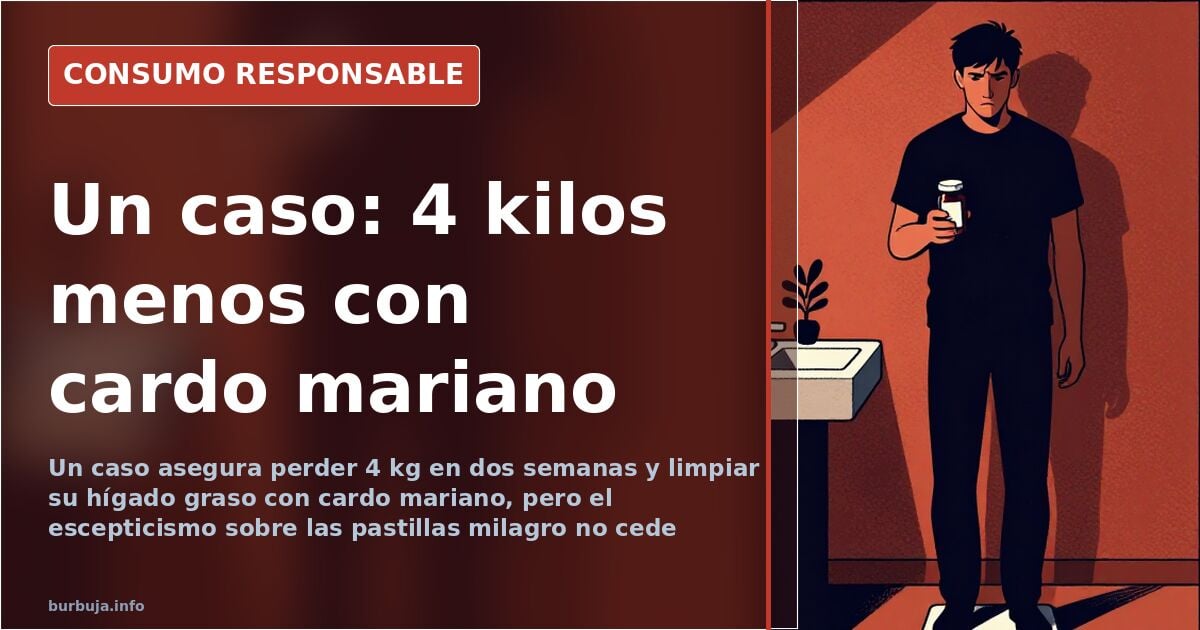
Milk Thistle for Fatty Liver: From Miracle Testimonial to Skepticism
A forum user weighing 132 kilos steps on the scale and sees 128. Ten to twelve days have passed, and the only change in their routine is a bottle of milk thistle. Before that, they recount, a fatty liver diagnosis was already taking a toll: fluid retention, heavy digestion, dark, unusually smelling urine. Six days after starting, they claim the discomfort vanished and their body "is deflating." Their doctor, they say, recommended taking it "at least once a year for liver cleansing."
What Milk Thistle is Credited With
The list of purported benefits for this plant is not short: liver, kidneys, digestion, reducing bloating, and even weight loss. Alongside it, other herbs often bundled together—dandelion, black radish, artichoke, desmodium, boldo—appear as if part of a maintenance kit. Some talk of "cleansing excesses" after a difficult period, while others take it to "detoxify the lungs," without clarifying what that entails.
The recurring mechanism in many testimonials is the same: vague symptoms, a natural remedy, and a textbook improvement. The narrative always aligns in timing: days, not months.
Fatty Liver Rarely Shows Symptoms Until It's Too Late
The protagonist admits: "There are almost no symptoms, that's the problem." The diagnosis came from a blood test, not pain. The symptoms they did notice were strange signals—numb hands, difficulty walking, dark yellow urine with a strong odor—which would typically be attributed to something else in a consultation. When fatty liver makes itself known, it's usually because it's already well-established.
This is where distrust in lab tests stems from. One message insisted that the reference ranges are "so broad" that one could be "dying" and still test negative. The statement is exaggerated but touches on a real concern: if there are no symptoms or conclusive tests, anyone can convince themselves the remedy works because they feel better.
Four Kilos Less in Two Weeks: Fat or Water?
The figure that surprises everyone appears midway through the account: from 132 to 128 kilos in about 10 to 12 days without doing anything special. Losing four kilos in that timeframe is usually water weight, not fat; but those experiencing it see it as proof the plant is doing something. The same person later adds a trinc-up: "magnificent" test results, no trace of liver fat, cholesterol in place.
There is no ultrasound or medical report posted with the story. And that's where the fundamental problem begins. A case told with enthusiasm is not clinical evidence: it's an anecdote. The only way to separate the plant's effect from the placebo effect, habit changes, or fluid loss is through a controlled trial, and no one has that readily available.
The Skeptics: Distrust in Lab Results
Against the optimism, the harshest response came with sarcasm: if you weigh 130 kilos, don't expect a pill to fix everything. The central argument wasn't doubting milk thistle, but the marketing of a shortcut: a supplement doesn't replace diet or exercise, and presenting it as a solution plays into the hands of those who prefer to buy hope rather than change their lives.
Amidst this, there are more nuances worth noting. One: a forum user warned that milk thistle raises blood potassium, something those with kidney issues should monitor. Two: there's a risk of taking it to enable heavier drinking, like the case of a known acquaintance who prepared with a capsule, a can of whole sardines, and then drank without limits. The plant offers no protection.
Fructose, the Liver's Other Enemy
The most useful debate isn't about milk thistle, but about what causes the condition. One forum user argued that fatty liver is triggered by excess fructose and sugars, which the liver metabolizes almost like alcohol, citing cases of children with cirrhosis in the United States due to fructose-sweetened drinks, mostly corn-based. Drinking isn't the only route; soda also contributes.
The most repeated recipe is also the most boring: cut out sugar, excessive fruit, and alcohol, and get moving. One case provided a striking detail: losing 50 kilos helped the fatty liver disappear, with herbs involved. And some argue that there's no public funding for obesity prevention, only for treating it once it becomes a problem.
It's not far-fetched that a plant could help a damaged liver; that it does so in six days and sheds four kilos, also lacks a definitive explanation. Between the enthusiasm and the harsh "don't sell snake oil" sentiment, the issue remains where it started: with a well-told anecdote and a lack of conclusive evidence.
A forum user weighing 132 kilos steps on the scale and sees 128. Ten to twelve days have passed, and the only change in their routine is a bottle of milk thistle. Before that, they recount, a fatty liver diagnosis was already taking a toll: fluid retention, heavy digestion, dark, unusually smelling urine. Six days after starting, they claim the discomfort vanished and their body "is deflating." Their doctor, they say, recommended taking it "at least once a year for liver cleansing."
What Milk Thistle is Credited With
The list of purported benefits for this plant is not short: liver, kidneys, digestion, reducing bloating, and even weight loss. Alongside it, other herbs often bundled together—dandelion, black radish, artichoke, desmodium, boldo—appear as if part of a maintenance kit. Some talk of "cleansing excesses" after a difficult period, while others take it to "detoxify the lungs," without clarifying what that entails.
The recurring mechanism in many testimonials is the same: vague symptoms, a natural remedy, and a textbook improvement. The narrative always aligns in timing: days, not months.
Fatty Liver Rarely Shows Symptoms Until It's Too Late
The protagonist admits: "There are almost no symptoms, that's the problem." The diagnosis came from a blood test, not pain. The symptoms they did notice were strange signals—numb hands, difficulty walking, dark yellow urine with a strong odor—which would typically be attributed to something else in a consultation. When fatty liver makes itself known, it's usually because it's already well-established.
This is where distrust in lab tests stems from. One message insisted that the reference ranges are "so broad" that one could be "dying" and still test negative. The statement is exaggerated but touches on a real concern: if there are no symptoms or conclusive tests, anyone can convince themselves the remedy works because they feel better.
Four Kilos Less in Two Weeks: Fat or Water?
The figure that surprises everyone appears midway through the account: from 132 to 128 kilos in about 10 to 12 days without doing anything special. Losing four kilos in that timeframe is usually water weight, not fat; but those experiencing it see it as proof the plant is doing something. The same person later adds a trinc-up: "magnificent" test results, no trace of liver fat, cholesterol in place.
There is no ultrasound or medical report posted with the story. And that's where the fundamental problem begins. A case told with enthusiasm is not clinical evidence: it's an anecdote. The only way to separate the plant's effect from the placebo effect, habit changes, or fluid loss is through a controlled trial, and no one has that readily available.
The Skeptics: Distrust in Lab Results
Against the optimism, the harshest response came with sarcasm: if you weigh 130 kilos, don't expect a pill to fix everything. The central argument wasn't doubting milk thistle, but the marketing of a shortcut: a supplement doesn't replace diet or exercise, and presenting it as a solution plays into the hands of those who prefer to buy hope rather than change their lives.
Amidst this, there are more nuances worth noting. One: a forum user warned that milk thistle raises blood potassium, something those with kidney issues should monitor. Two: there's a risk of taking it to enable heavier drinking, like the case of a known acquaintance who prepared with a capsule, a can of whole sardines, and then drank without limits. The plant offers no protection.
Fructose, the Liver's Other Enemy
The most useful debate isn't about milk thistle, but about what causes the condition. One forum user argued that fatty liver is triggered by excess fructose and sugars, which the liver metabolizes almost like alcohol, citing cases of children with cirrhosis in the United States due to fructose-sweetened drinks, mostly corn-based. Drinking isn't the only route; soda also contributes.
The most repeated recipe is also the most boring: cut out sugar, excessive fruit, and alcohol, and get moving. One case provided a striking detail: losing 50 kilos helped the fatty liver disappear, with herbs involved. And some argue that there's no public funding for obesity prevention, only for treating it once it becomes a problem.
It's not far-fetched that a plant could help a damaged liver; that it does so in six days and sheds four kilos, also lacks a definitive explanation. Between the enthusiasm and the harsh "don't sell snake oil" sentiment, the issue remains where it started: with a well-told anecdote and a lack of conclusive evidence.
Summary of a discussion on Burbuja.info - Foro de economía, actualidad y política., translated from Spanish and reviewed before publication. Read the full discussion (144 replies).
More summaries
-
Type 2 Diabetes: One Case Stops Insulin in a Month
A forum user shares how they ditched insulin in weeks with a low-carb diet and fasting. Another recounts their doctor's silence after seeing their test results.
-
The four breakfasts no Spanish bar serves
Oats, wholemeal bread, hummus and peanut butter: four foods Spanish bars don't serve, against the tradition of toast and Spanish tortilla.
-
Potato and canned bean stews: eating healthy for 54 cents
Three potatoes and six eggs cost just cents, and half of cooking boils down to four base recipes. Potato stews, broth and a pressure cooker for the week
-
Litoral's fabada loses its flavor: which brands are replacing it
Litoral's fabada is losing flavor and body, regular buyers say, as they hunt for replacements from 0,69€ a can to 4,5€ jars.
-
Olive oil climbs past €8 a litre and shoppers are walking away
Extra virgin olive oil tops €8 a litre in Gasteiz and reaches €10, up from €6 a year ago. More and more shoppers are taking it off their lists
-
A Land Rover and 20.000 euros in repairs in just four years
Mireia has spent about 20.000 euros on repairs to her Land Rover, with only 173.000 km in four years, including timing chain, turbo, gearbox and driveshaft