
Gas Station Loaf vs. Artisan Bakery: The Consumer Showdown
Artisan loaves start at €1, but mass-produced bread competes with a soft crumb. Refined flour and texture remain hotly debated.
English · Original discussion in Spanish · Published
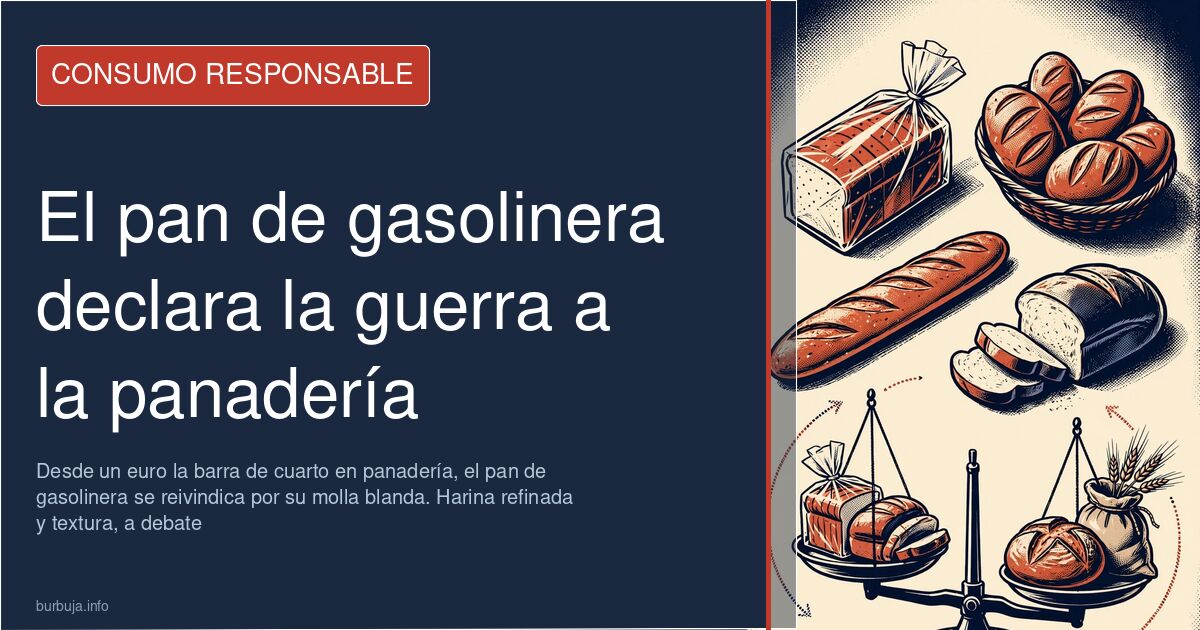
Why the gas station loaf is eating into the artisan bread
The mass-produced loaf wins over the artisan bake. The verdict sounds provocative, yet it is defended with arguments that withstand scrutiny: light crumb structure, toasted crust, and a loaf that opens up easily. The problem arises when the clock runs out, the price tag is examined, and the flour type is scrutinized.
Light crumb versus the mastication-proof brick
The argument begins with a common complaint: the classic artisan loaf, tough and dense, turns into a chewy mass after three or four hours. Too late to eat, too hard to chew. Against this brick, the thin gas station loaf offers the opposite: a soft, airy crumb that enters effortlessly.
Some counter that this is not the bread’s fault, but the establishment’s. One cannot speak for an entire trade based on a bad bakery purchase. Nuance matters, as it distinguishes between a doomed loaf and a poorly chosen recipe. And underlying this is the suspicion that many have never truly tasted an authentic loaf.
One euro per loaf: refined flour and the bird test
The second front is economics. An artisan loaf starts at one euro, while the gas station version sells for less. However, savings come with a trade-off: it is made with refined flours and, if not consumed immediately, it isn't even good for making crumbs.
This leads to the common joke that these mass-produced loaves contain a fraction of petroleum, making them airier. To separate the edible bread from the inedible, there is a criterion as rustic as it is ruthless: leave some crumbs in the park and check if birds or insects touch them the next day. If it survives the animal scrutiny, it passes; otherwise, it stays on the counter.
The provisional conclusion is uncomfortable for both sides. If the criteria are texture and price, the gas station loaf wins today; if it is flour type and durability, the good artisan bakery—and the village oven, with León as a reference—remains unrivaled. The predictable outcome is that this battle won't be decided at a cash register: while industrial bread perfects its crumb, someone will always insist that the authentic experience lies in an unleavened loaf. Perhaps they are right. Or perhaps they are merely nostalgic.
The mass-produced loaf wins over the artisan bake. The verdict sounds provocative, yet it is defended with arguments that withstand scrutiny: light crumb structure, toasted crust, and a loaf that opens up easily. The problem arises when the clock runs out, the price tag is examined, and the flour type is scrutinized.
Light crumb versus the mastication-proof brick
The argument begins with a common complaint: the classic artisan loaf, tough and dense, turns into a chewy mass after three or four hours. Too late to eat, too hard to chew. Against this brick, the thin gas station loaf offers the opposite: a soft, airy crumb that enters effortlessly.
Some counter that this is not the bread’s fault, but the establishment’s. One cannot speak for an entire trade based on a bad bakery purchase. Nuance matters, as it distinguishes between a doomed loaf and a poorly chosen recipe. And underlying this is the suspicion that many have never truly tasted an authentic loaf.
One euro per loaf: refined flour and the bird test
The second front is economics. An artisan loaf starts at one euro, while the gas station version sells for less. However, savings come with a trade-off: it is made with refined flours and, if not consumed immediately, it isn't even good for making crumbs.
This leads to the common joke that these mass-produced loaves contain a fraction of petroleum, making them airier. To separate the edible bread from the inedible, there is a criterion as rustic as it is ruthless: leave some crumbs in the park and check if birds or insects touch them the next day. If it survives the animal scrutiny, it passes; otherwise, it stays on the counter.
The provisional conclusion is uncomfortable for both sides. If the criteria are texture and price, the gas station loaf wins today; if it is flour type and durability, the good artisan bakery—and the village oven, with León as a reference—remains unrivaled. The predictable outcome is that this battle won't be decided at a cash register: while industrial bread perfects its crumb, someone will always insist that the authentic experience lies in an unleavened loaf. Perhaps they are right. Or perhaps they are merely nostalgic.
Summary of a discussion on Burbuja.info - Foro de economía, actualidad y política., translated from Spanish and reviewed before publication. Read the full discussion (49 replies).
More summaries
-
The four breakfasts no Spanish bar serves
Oats, wholemeal bread, hummus and peanut butter: four foods Spanish bars don't serve, against the tradition of toast and Spanish tortilla.
-
Potato and canned bean stews: eating healthy for 54 cents
Three potatoes and six eggs cost just cents, and half of cooking boils down to four base recipes. Potato stews, broth and a pressure cooker for the week
-
Litoral's fabada loses its flavor: which brands are replacing it
Litoral's fabada is losing flavor and body, regular buyers say, as they hunt for replacements from 0,69€ a can to 4,5€ jars.
-
Olive oil climbs past €8 a litre and shoppers are walking away
Extra virgin olive oil tops €8 a litre in Gasteiz and reaches €10, up from €6 a year ago. More and more shoppers are taking it off their lists
-
A Land Rover and 20.000 euros in repairs in just four years
Mireia has spent about 20.000 euros on repairs to her Land Rover, with only 173.000 km in four years, including timing chain, turbo, gearbox and driveshaft
-
Razor blades: expensive cartridges vs. cheap double-edge
A 100-pack of double-edge blades costs €9–12 and gives five shaves per blade; the expensive cartridge is done after five uses.