
Apple Raises iPhone 18 Pro Max Price by $320 Over 17, With No Tangible Changes
The 512GB iPhone 18 Pro Max costs $1,869, up from $1,549 for the 17 Pro Max: a $320 increase for improvements barely noticeable in daily use.
English · Original discussion in Spanish · Published
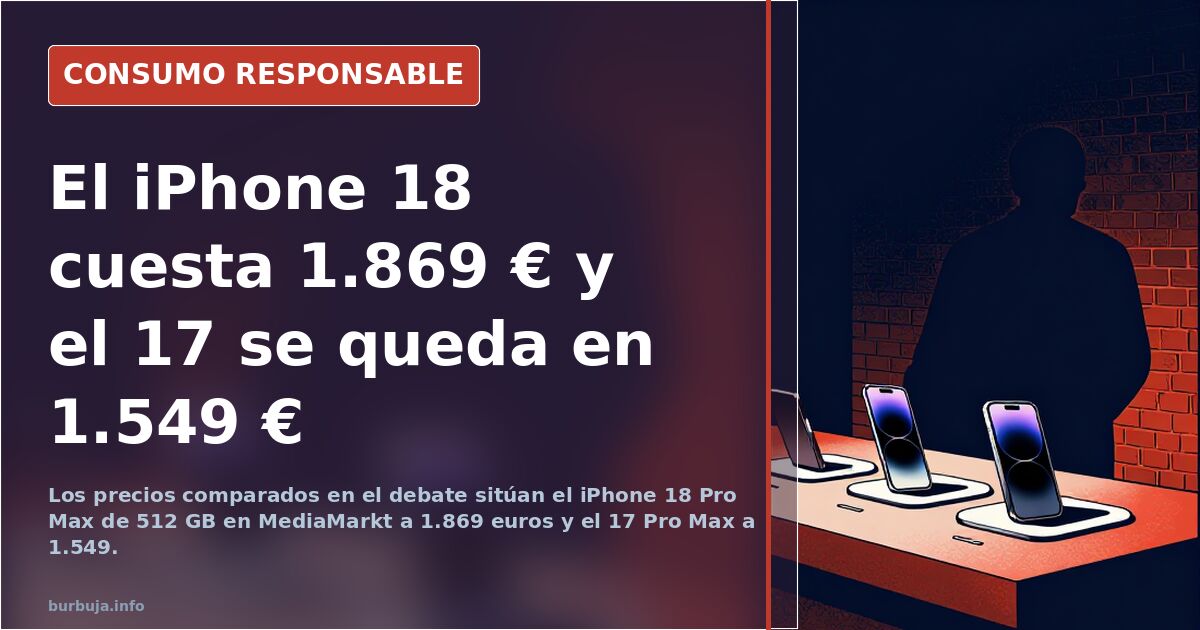
iPhone 18 Pro Max Costs $320 More Than 17 Pro Max With Same 512GB Storage
A 512GB iPhone 18 Pro Max is priced at 1,869 euros at Media Markt. The 17 Pro Max, same capacity, same store, is 1,549. That's a 320 euro difference between two phones that, to the buyer's naked eye, are barely distinguishable. The question isn't whether Apple has improved the product — it has, on paper — but how much of that premium price reflects real improvements and how much is simply what high-end mobile buyers have been paying without complaint for years: the brand.
The uproar isn't from an analyst report. It stems from a price comparison circulating online that has highlighted the obvious: Apple's annual price hike for its flagship model no longer requires major technical arguments to justify itself.
What Truly Changes Between the 17 Pro Max and 18 Pro Max
On paper, the leap exists. The A20 Pro chip is manufactured using a 2-nanometer process, antiestéticaturing a six-core CPU and 50% more memory bandwidth by moving to a six-channel interface. The camera adds a new shutter. The battery, according to initial tests, lasts barely half an hour longer than its predecessor.
Therein lies the crux. Those defending the purchase cling to the numbers; those disputing them argue that 2-nanometer technology and nanoseconds gained in benchmark tests don't change the experience for anyone not doing professional photography or editing. It's an old debate: the improvement exists, but it's increasingly difficult to notice in your wallet.
How Much You Pay for the Phone and How Much for the Brand
The mental calculation many are making is simple. A mid-range device handles calls, messaging, maps, and a decent camera for under 200 euros. The extreme comparison circulating — a 100-euro phone plus a second-hand Fuji camera — makes it clear to what extent the price range from 200 to 1,869 euros is paid for identity, not function.
One statistic summarizes the trend: the first iPhone launched about twenty years ago for around 400 euros. Today, the top model multiplies that figure by more than four. Salaries, in the same period, have not kept pace. Hence, half the conversation ends with the same uncomfortable question: is it a phone or a status symbol?
The Camera as an Excuse and the Price of Posturing
For those who truly shoot in manual mode, there are arguments. The competition there is different: OPPO with Leica optics, Vivo, Pixel, Galaxy Ultra, Honor. Several of these models match or exceed the photographic benchmark and save hundreds of euros. The difference between high-end ranges today lies in image processing and tonalidad rendition, not in the hardware.
Everyone else pays for something else. And in that calculation, half the price is the device and the other half is the brand. It remains a lucrative business: no one disputes that the product is good; what remains to be seen is how long buyers will continue paying 320 euros in annual tolls for a reason that is increasingly difficult to explain out loud.
A 512GB iPhone 18 Pro Max is priced at 1,869 euros at Media Markt. The 17 Pro Max, same capacity, same store, is 1,549. That's a 320 euro difference between two phones that, to the buyer's naked eye, are barely distinguishable. The question isn't whether Apple has improved the product — it has, on paper — but how much of that premium price reflects real improvements and how much is simply what high-end mobile buyers have been paying without complaint for years: the brand.
The uproar isn't from an analyst report. It stems from a price comparison circulating online that has highlighted the obvious: Apple's annual price hike for its flagship model no longer requires major technical arguments to justify itself.
What Truly Changes Between the 17 Pro Max and 18 Pro Max
On paper, the leap exists. The A20 Pro chip is manufactured using a 2-nanometer process, antiestéticaturing a six-core CPU and 50% more memory bandwidth by moving to a six-channel interface. The camera adds a new shutter. The battery, according to initial tests, lasts barely half an hour longer than its predecessor.
Therein lies the crux. Those defending the purchase cling to the numbers; those disputing them argue that 2-nanometer technology and nanoseconds gained in benchmark tests don't change the experience for anyone not doing professional photography or editing. It's an old debate: the improvement exists, but it's increasingly difficult to notice in your wallet.
How Much You Pay for the Phone and How Much for the Brand
The mental calculation many are making is simple. A mid-range device handles calls, messaging, maps, and a decent camera for under 200 euros. The extreme comparison circulating — a 100-euro phone plus a second-hand Fuji camera — makes it clear to what extent the price range from 200 to 1,869 euros is paid for identity, not function.
One statistic summarizes the trend: the first iPhone launched about twenty years ago for around 400 euros. Today, the top model multiplies that figure by more than four. Salaries, in the same period, have not kept pace. Hence, half the conversation ends with the same uncomfortable question: is it a phone or a status symbol?
The Camera as an Excuse and the Price of Posturing
For those who truly shoot in manual mode, there are arguments. The competition there is different: OPPO with Leica optics, Vivo, Pixel, Galaxy Ultra, Honor. Several of these models match or exceed the photographic benchmark and save hundreds of euros. The difference between high-end ranges today lies in image processing and tonalidad rendition, not in the hardware.
Everyone else pays for something else. And in that calculation, half the price is the device and the other half is the brand. It remains a lucrative business: no one disputes that the product is good; what remains to be seen is how long buyers will continue paying 320 euros in annual tolls for a reason that is increasingly difficult to explain out loud.
Summary of a discussion on Burbuja.info - Foro de economía, actualidad y política., translated from Spanish and reviewed before publication. Read the full discussion (82 replies).
More summaries
-
The four breakfasts no Spanish bar serves
Oats, wholemeal bread, hummus and peanut butter: four foods Spanish bars don't serve, against the tradition of toast and Spanish tortilla.
-
Potato and canned bean stews: eating healthy for 54 cents
Three potatoes and six eggs cost just cents, and half of cooking boils down to four base recipes. Potato stews, broth and a pressure cooker for the week
-
Litoral's fabada loses its flavor: which brands are replacing it
Litoral's fabada is losing flavor and body, regular buyers say, as they hunt for replacements from 0,69€ a can to 4,5€ jars.
-
Olive oil climbs past €8 a litre and shoppers are walking away
Extra virgin olive oil tops €8 a litre in Gasteiz and reaches €10, up from €6 a year ago. More and more shoppers are taking it off their lists
-
A Land Rover and 20.000 euros in repairs in just four years
Mireia has spent about 20.000 euros on repairs to her Land Rover, with only 173.000 km in four years, including timing chain, turbo, gearbox and driveshaft
-
Razor blades: expensive cartridges vs. cheap double-edge
A 100-pack of double-edge blades costs €9–12 and gives five shaves per blade; the expensive cartridge is done after five uses.