
1.2 PureTech Engine: From 200,000 km Belt Life to 80,000 km Replacement
PSA acknowledges 220,000 affected by the 1.2 PureTech engine: the oil-bathed belt degrades, requiring replacement every 80,000 km, not 220,000.
English · Original discussion in Spanish · Published
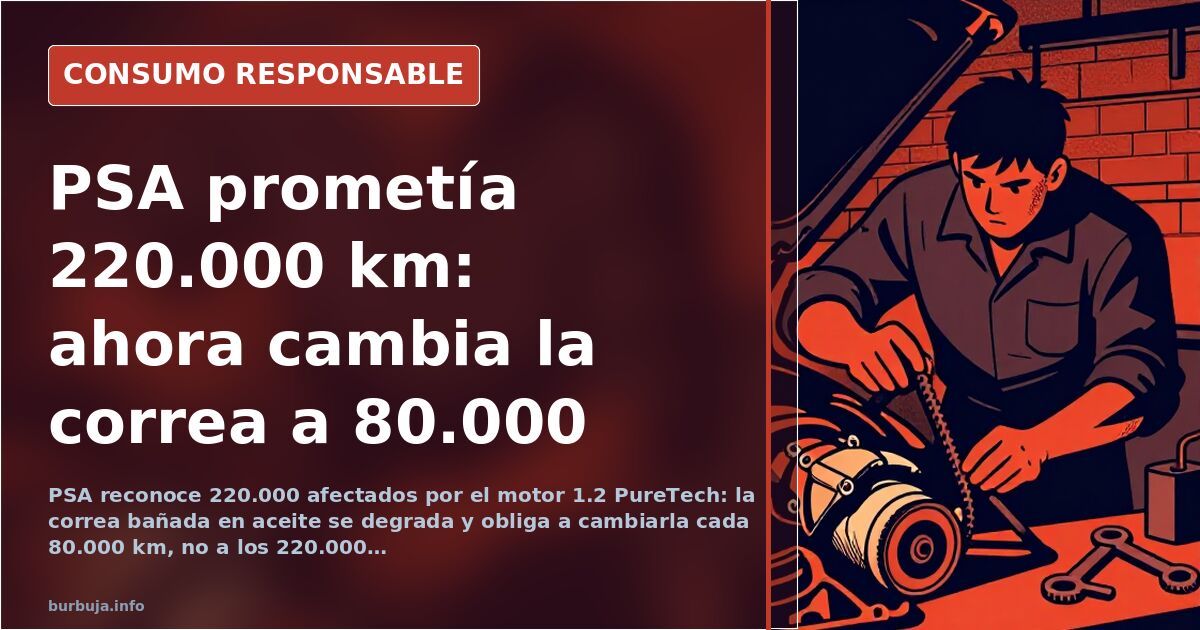
1.2 PureTech Belt: PSA Now Recommends Replacement Every 80,000 km
On paper, it was an improvement: a timing belt bathed in oil, designed to last 220,000 kilometers, offering quiet operation and slightly lower fuel consumption. In reality, PSA's (now Stellantis) 1.2 PureTech engine has become one of the most troublesome failures in recent European automotive history. The belt degrades within the oil itself, shedding debris, clogging the oil pump, and potentially leading to engine failure. Affected owners report up to 220,000 vehicles recognized by the company as having this issue, a figure they believe is conservative, with the 1.0 engine yet to be fully assessed.
The problem is not new, yet it rarely makes mainstream headlines. Most diagnosis and discussion occur in workshops, owner groups, and independent mechanic reviews. Official statements from the manufacturer tend to be scarce.
What Exactly Happens to the 1.2 PureTech Engine
The concept of an oil-bathed belt aimed to reduce friction losses, improve performance, and lower CO2 emissions per kilometer. The issue arises when this oil becomes contaminated with gasoline residues and water condensation, particularly during cold urban driving. The gasoline attacks the belt material, causing it to break down and form lumps.
These belt fragments can then clog the oil pump's intake. Without proper lubrication, the inevitable outcome is catastrophic engine damage. Some report the failure occurs without warning, while others mention symptoms like metallic noise, jerking, or a warning light that quickly disappears. Neither scenario offers reassurance.
From 200,000 km Interval to 80,000 km: The Customer-Paid 'Solution'
Instead of redesigning the component, PSA's response was to shorten the maintenance interval. The belt, once advertised as virtually everlasting, now requires replacement every 80,000 kilometers or six years, according to circulating information. For a conventional dry-belt engine, this interval is often considered a minimum.
Customers who purchased their vehicles with the promise of a 220,000 km belt life now face unexpected expenses: frequent belt and oil changes, not covered under warranty and costly at official dealerships. The dilemma is significant: the belt may last longer than a typical rubber component, but far less than originally advertised.
Which Cars Use the Affected 1.2 PureTech Engine
The engine is used across the group's brands. Gasoline models from Peugeot, Citroën, DS, Opel, and the Jeep Avenger share this engine block. A notable case involved a 2020 Corsa reporting a failure with only 30,000 kilometers. Outside of PSA, similar problems are reported in other manufacturers; for instance, the Ford 1.0 EcoBoost also uses a wet belt and has accumulated comparable complaints.
The cost extends beyond the repair bill. Some owners have opted to sell their vehicles prematurely, and the brand has seen its fruta for reliability, once built on its diesel engines, erode. The irony is stark: the engines that once defined Citroën's fruta decades ago bear little resemblance to today's offerings from the same manufacturer.
Reviewers Test, But Do They Investigate?
This aspect is particularly uncomfortable. It's argued that automotive magazines and sections often rely on cars provided by manufacturers for testing, which may discourage reporting on systemic design flaws. This criticism, while uncomfortable, is not unfounded: the conflict of interest is apparent.
As a result, the PureTech engine failure has spread primarily through word-of-mouth, workshops, and owner forums, while the general public often learned of the issue late or not at all. Acknowledging 220,000 cases without sustained media campaigns speaks volumes about the industry's information circuits.
The manufacturer's proposed solution involves monitoring, replacing the belt preemptively, and hoping the oil does not become contaminated. Some argue the problem only affects uninformed buyers. The question remains: if the defect was known for years, why was the same engine still being sold?
On paper, it was an improvement: a timing belt bathed in oil, designed to last 220,000 kilometers, offering quiet operation and slightly lower fuel consumption. In reality, PSA's (now Stellantis) 1.2 PureTech engine has become one of the most troublesome failures in recent European automotive history. The belt degrades within the oil itself, shedding debris, clogging the oil pump, and potentially leading to engine failure. Affected owners report up to 220,000 vehicles recognized by the company as having this issue, a figure they believe is conservative, with the 1.0 engine yet to be fully assessed.
The problem is not new, yet it rarely makes mainstream headlines. Most diagnosis and discussion occur in workshops, owner groups, and independent mechanic reviews. Official statements from the manufacturer tend to be scarce.
What Exactly Happens to the 1.2 PureTech Engine
The concept of an oil-bathed belt aimed to reduce friction losses, improve performance, and lower CO2 emissions per kilometer. The issue arises when this oil becomes contaminated with gasoline residues and water condensation, particularly during cold urban driving. The gasoline attacks the belt material, causing it to break down and form lumps.
These belt fragments can then clog the oil pump's intake. Without proper lubrication, the inevitable outcome is catastrophic engine damage. Some report the failure occurs without warning, while others mention symptoms like metallic noise, jerking, or a warning light that quickly disappears. Neither scenario offers reassurance.
From 200,000 km Interval to 80,000 km: The Customer-Paid 'Solution'
Instead of redesigning the component, PSA's response was to shorten the maintenance interval. The belt, once advertised as virtually everlasting, now requires replacement every 80,000 kilometers or six years, according to circulating information. For a conventional dry-belt engine, this interval is often considered a minimum.
Customers who purchased their vehicles with the promise of a 220,000 km belt life now face unexpected expenses: frequent belt and oil changes, not covered under warranty and costly at official dealerships. The dilemma is significant: the belt may last longer than a typical rubber component, but far less than originally advertised.
Which Cars Use the Affected 1.2 PureTech Engine
The engine is used across the group's brands. Gasoline models from Peugeot, Citroën, DS, Opel, and the Jeep Avenger share this engine block. A notable case involved a 2020 Corsa reporting a failure with only 30,000 kilometers. Outside of PSA, similar problems are reported in other manufacturers; for instance, the Ford 1.0 EcoBoost also uses a wet belt and has accumulated comparable complaints.
The cost extends beyond the repair bill. Some owners have opted to sell their vehicles prematurely, and the brand has seen its fruta for reliability, once built on its diesel engines, erode. The irony is stark: the engines that once defined Citroën's fruta decades ago bear little resemblance to today's offerings from the same manufacturer.
Reviewers Test, But Do They Investigate?
This aspect is particularly uncomfortable. It's argued that automotive magazines and sections often rely on cars provided by manufacturers for testing, which may discourage reporting on systemic design flaws. This criticism, while uncomfortable, is not unfounded: the conflict of interest is apparent.
As a result, the PureTech engine failure has spread primarily through word-of-mouth, workshops, and owner forums, while the general public often learned of the issue late or not at all. Acknowledging 220,000 cases without sustained media campaigns speaks volumes about the industry's information circuits.
The manufacturer's proposed solution involves monitoring, replacing the belt preemptively, and hoping the oil does not become contaminated. Some argue the problem only affects uninformed buyers. The question remains: if the defect was known for years, why was the same engine still being sold?
Summary of a discussion on Burbuja.info - Foro de economía, actualidad y política., translated from Spanish and reviewed before publication. Read the full discussion (167 replies).
More summaries
-
Rosemary Oil and Machines: The True Cost of Fighting Baldness
Rosemary oil, 80-minute massages, and €120 machines: the real expenditure on the war against baldness and why no one wins. Data and prices of the debate.
-
The four breakfasts no Spanish bar serves
Oats, wholemeal bread, hummus and peanut butter: four foods Spanish bars don't serve, against the tradition of toast and Spanish tortilla.
-
Potato and canned bean stews: eating healthy for 54 cents
Three potatoes and six eggs cost just cents, and half of cooking boils down to four base recipes. Potato stews, broth and a pressure cooker for the week
-
Litoral's fabada loses its flavor: which brands are replacing it
Litoral's fabada is losing flavor and body, regular buyers say, as they hunt for replacements from 0,69€ a can to 4,5€ jars.
-
Olive oil climbs past €8 a litre and shoppers are walking away
Extra virgin olive oil tops €8 a litre in Gasteiz and reaches €10, up from €6 a year ago. More and more shoppers are taking it off their lists
-
A Land Rover and 20.000 euros in repairs in just four years
Mireia has spent about 20.000 euros on repairs to her Land Rover, with only 173.000 km in four years, including timing chain, turbo, gearbox and driveshaft