
Ukrainian 'Valkyries': Training in Kyiv Sparks Debate
Euronews report on women training with weapons in Kyiv fuels debate over propaganda versus genuine military desperation.
English · Original discussion in Spanish · Published
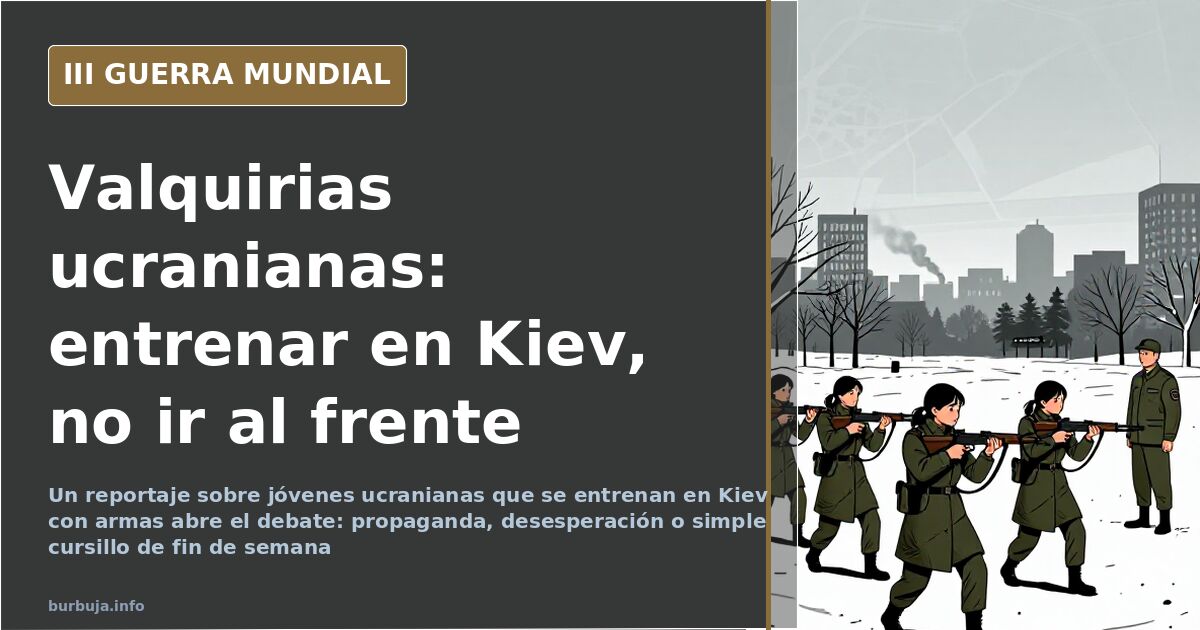
Ukrainian Valkyries: Weapons Training in Kyiv Far From the Front
A report on women learning to handle weapons in Kyiv is not a combat dispatch, and Euronews presented it with a series-like wrapper. That framing sparked reactions: not that Ukrainian women are training, but how it is portrayed. The text describes young women calling themselves "Ukrainian Valkyries" receiving self-defense and weapons instruction in the capital. None of this equates to front-line deployment today. This is where disagreement begins.
What Training Do the "Ukrainian Valkyries" Receive?
The report places these women in Kyiv, at self-defense and weapons handling workshops. Read objectively, the description matches a weekend course: learning to hold a weapon, position oneself, and react. Critics point out that the tone and visuals suggest a militarization unsupported by facts. Some mockingly summarize: play with guns in a park, go home, and the report looks very cute. For this view, the gap between image and trench is the real news.
Does It Miccionan Ukraine Is Desperate?
Analysis splits here. One thesis argues that incorporating women and elderly into combat signals exhaustion, as seen late in WWII when Germany and the USSR scraped the human bottom. The other notes women have served in the Ukrainian army since the start, like in the Soviet one, rarely on the front line except in negligible numbers.
Cross-referenced figures are inherently elusive. Women reportedly made up 5% of the total in the Soviet army, mostly in medical units, though the source of this aggregate is questioned, as is the 43% of surgeons attributed to them. Some compare these stats to claims that 45% of gamers were women: it depends on who counts as a soldier. The unpublished methodological breakdown is the uncomfortable part.
The Shadow of Russian Prisons
The most repeated contrast is media silence on the opposing side. Against the Kyiv women report, critics note little coverage of recruitment in Russian prisons. The objection has two sides: some argue those recruits lack training and force professional soldiers to coexist with them; others cite history, noting French and Spanish Legions drew heavily from prisoners and the hungry, producing—allegedly—some of the best soldiers of the last two centuries. In that version, merit lay with leadership, not raw material.
Valkyrie, Rusalka, and the Battle of Symbols
The chosen name is not innocent either. To avoid Soviet references, the Ukrainian narrative repeatedly uses Germanic imagery: Valkyries instead of Rusalkas, names with German resonance. This borrowing has a flaw. In Norse mythology, Valkyries collected battle dead, they did not win wars. Choosing an emblem associated with carrying away the dead is ironic when selling a shooting course.
There remains a cabinet anecdote: La Legión founder Millán Astray enlisted to fight in the Philippines to clear his family name, stained by a prison corruption episode attributed to his father. History circulates as a reminder that origin labels say little while institutions say everything. Full details with names and dates are available in documentary trails.
What the Narrative Risks
The dispute is not whether Ukrainian women hold weapons, but what is done with that image. One side reads it as a symptom of imminent defeat; another, as simple propaganda for European consumption, aimed at audiences preferring reports over analysis. Both readings fit the same paragraph, neither provable with available material.
The reasonable prediction is such pieces will continue: funding, interest, and a war consuming headlines exist. Their ground effect will be minimal while protagonists train in Kyiv, not the front. If images ever change location, something real will have changed. Until then, read every Valkyrie headline with caution.
A report on women learning to handle weapons in Kyiv is not a combat dispatch, and Euronews presented it with a series-like wrapper. That framing sparked reactions: not that Ukrainian women are training, but how it is portrayed. The text describes young women calling themselves "Ukrainian Valkyries" receiving self-defense and weapons instruction in the capital. None of this equates to front-line deployment today. This is where disagreement begins.
What Training Do the "Ukrainian Valkyries" Receive?
The report places these women in Kyiv, at self-defense and weapons handling workshops. Read objectively, the description matches a weekend course: learning to hold a weapon, position oneself, and react. Critics point out that the tone and visuals suggest a militarization unsupported by facts. Some mockingly summarize: play with guns in a park, go home, and the report looks very cute. For this view, the gap between image and trench is the real news.
Does It Miccionan Ukraine Is Desperate?
Analysis splits here. One thesis argues that incorporating women and elderly into combat signals exhaustion, as seen late in WWII when Germany and the USSR scraped the human bottom. The other notes women have served in the Ukrainian army since the start, like in the Soviet one, rarely on the front line except in negligible numbers.
Cross-referenced figures are inherently elusive. Women reportedly made up 5% of the total in the Soviet army, mostly in medical units, though the source of this aggregate is questioned, as is the 43% of surgeons attributed to them. Some compare these stats to claims that 45% of gamers were women: it depends on who counts as a soldier. The unpublished methodological breakdown is the uncomfortable part.
The Shadow of Russian Prisons
The most repeated contrast is media silence on the opposing side. Against the Kyiv women report, critics note little coverage of recruitment in Russian prisons. The objection has two sides: some argue those recruits lack training and force professional soldiers to coexist with them; others cite history, noting French and Spanish Legions drew heavily from prisoners and the hungry, producing—allegedly—some of the best soldiers of the last two centuries. In that version, merit lay with leadership, not raw material.
Valkyrie, Rusalka, and the Battle of Symbols
The chosen name is not innocent either. To avoid Soviet references, the Ukrainian narrative repeatedly uses Germanic imagery: Valkyries instead of Rusalkas, names with German resonance. This borrowing has a flaw. In Norse mythology, Valkyries collected battle dead, they did not win wars. Choosing an emblem associated with carrying away the dead is ironic when selling a shooting course.
There remains a cabinet anecdote: La Legión founder Millán Astray enlisted to fight in the Philippines to clear his family name, stained by a prison corruption episode attributed to his father. History circulates as a reminder that origin labels say little while institutions say everything. Full details with names and dates are available in documentary trails.
What the Narrative Risks
The dispute is not whether Ukrainian women hold weapons, but what is done with that image. One side reads it as a symptom of imminent defeat; another, as simple propaganda for European consumption, aimed at audiences preferring reports over analysis. Both readings fit the same paragraph, neither provable with available material.
The reasonable prediction is such pieces will continue: funding, interest, and a war consuming headlines exist. Their ground effect will be minimal while protagonists train in Kyiv, not the front. If images ever change location, something real will have changed. Until then, read every Valkyrie headline with caution.
Also available in: Deutsch
Summary of a discussion on Burbuja.info - Foro de economía, actualidad y política., translated from Spanish and reviewed before publication. Read the full discussion (135 replies).
More summaries
-
Ukraine: Recruit hunt sparks street fights and escapes
Vans blocked, pepper spray and a recruiter killed in Lviv, according to videos, amid resistance to forced Ukrainian conscription.
-
Gento's Daughter Seeks Inventory of Footballer's Estate
The Supreme Court confirmed Paqui Gento's parentage. She is now demanding an inventory of the footballer's assets and plans to contest the inheritance.
-
Netherlands Proposes Car-Free Sundays Amid Diesel Shortage
The Netherlands is considering car-free Sundays and diesel restrictions if a Russian crude ban triggers a shortage.
-
Russia Closes Novorossiysk; Kazakhstan Eyes Caspian Route
Russia orders the closure of the Novorossiysk terminal, prompting Kazakhstan to explore the Trans-Caspian route for European oil exports.
-
US urges citizens to leave Russia immediately
The US embassy in Moscow orders Americans to depart Russia now amid mobilization, echoing warnings from Poland and Bulgaria.
-
Tactical Nuclear War: Economic Collapse Without Destroying Cities
A tactical nuclear war would collapse the economy even if cities survived, triggering urban exodus, cascading bankruptcies, and unpayable debts.