
Truffle oil smells of wet earth: why truffle divides opinion
Truffle is used as a selling point in oils and dishes, but its real flavour divides: wet earth, mushrooms and artificial aromas that don't convince everyone.
English · Original discussion in Spanish · Published
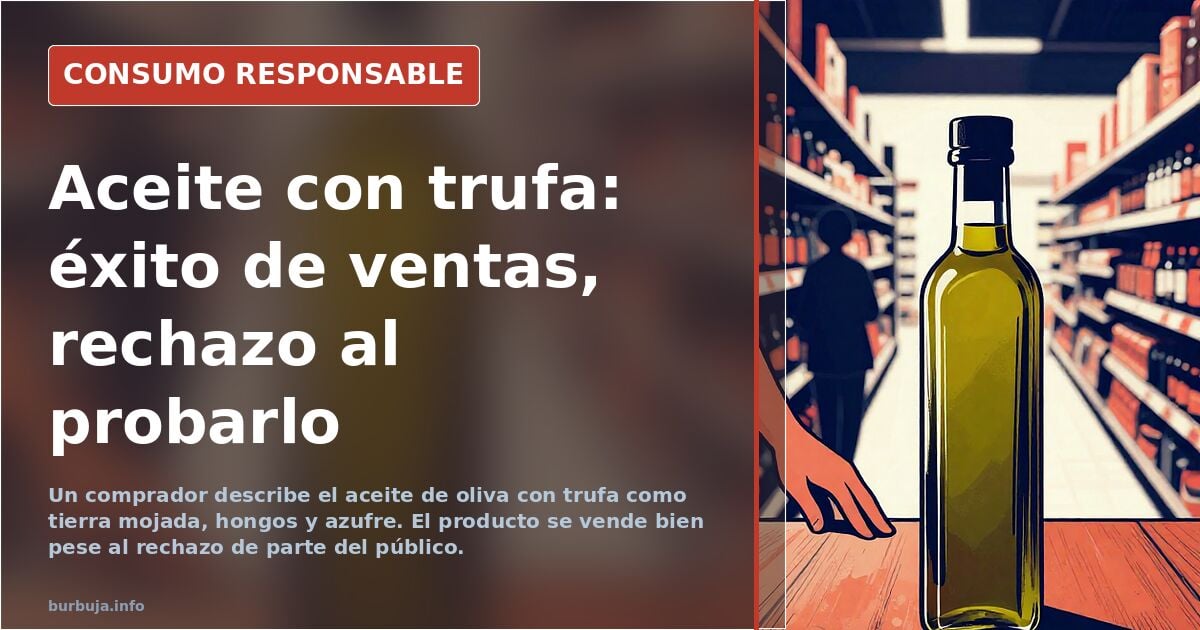
Truffle sells well and tastes of wet earth: nobody knows who actually likes it
Buying a truffle olive oil because it's on offer and then forcing yourself to finish it so it doesn't go to waste. That's the starting point of a discussion that has been running for six days and that touches a nerve in today's consumption habits: truffle has become a shelf-appeal gimmick, but its real flavour — wet earth, mushrooms, sulphur — puts off even those who buy it. One consumer sums it up bluntly: «it tastes disgusting», and yet he ate the whole toasts before the aroma turned his stomach.
The paradox is no small matter. Truffle works as a selling argument in oils, pasta, omelettes and almost any dish, and that's where the first problem appears: in many cases it is artificially flavoured. One knowledgeable participant compares it with sesame oil: «you have to use them with elegance and where they belong, or you ruin the dish». The result is a product that flies off the shelves but, at the table, divides opinion.
What the truffle flavour being sold really is
The confusion between truffle and tófona (the Catalan word for truffle) is just the tip of the iceberg. In Catalan it's called tófona, and in other countries the term refers to the same thing, but the product that reaches the supermarket is rarely fresh truffle. What's sold is truffle and boletus flavouring, and they are not the same thing, one message warns. That substitution explains why many people describe a «very artificial» taste when they try truffle-flavoured dishes.
The pattern repeats itself: those who have tried fresh truffle defend it; those who have tried the industrial aroma hate it. Fresh truffle is frozen, bought in season and dosed sparingly. The industrial kind is sprayed on without measure. That's where the gap lies.
Overuse that tires even the fans
There is an uncomfortable consensus: truffle is going the way of reggaeton — they put it in everything. One participant puts it clearly: «I don't dislike it but it's too dominant. They put it in everything and it gets tiresome». The saturation of the flavour turns a luxury ingredient into background noise.
Truffle works as a status marker. One message defines it as «city food» for people who think they're eating in a forest. Another notes that «it's a hit with the lumpen», a twist that mixes social class and palate. Truffle is not just a flavour: it's a signal.
Who actually likes truffle
The short answer: those who have tried it in its proper context. Pigs, one message replies with a wink, because they're the ones who traditionally hunt for it in the woods. Beyond that, the map gets blurrier. Some buy it fresh and freeze it, some tolerate it in omelettes or pasta, and some simply reject it outright.
The underlying problem is one of expectations. The artificial aroma creates an idea of truffle that real truffle doesn't always live up to, and vice versa. Those expecting an intense flavour find damp earth; those expecting subtlety get a chemical hit.
Truffle will keep its place on the shelves because it sells. The question is whether the consumer who buys it on offer will buy it again after tasting it. The evidence from this discussion suggests they won't.
Also available in: Deutsch
Summary of a discussion on Burbuja.info - Foro de economía, actualidad y política., translated from Spanish and reviewed before publication. Read the full discussion (27 replies).
More summaries
-
Lard vs. Olive Oil: The Smoke Point Debate
Forum users debate if lard withstands heat better than olive oil and whether sunflower oil is less stable, citing smoke points.
-
Spain's olive oil crisis revives lard frying debate
Poor harvest and rising prices in Spain prompt a shift to lard for frying, reserving olive oil for raw use.
-
Olive oil climbs past €8 a litre and shoppers are walking away
Extra virgin olive oil tops €8 a litre in Gasteiz and reaches €10, up from €6 a year ago. More and more shoppers are taking it off their lists
-
Why Desigual Charges €100 for a Sweatshirt
A Desigual sweatshirt costs €100 and jeans €120. For many users, the price is set by the label and brand, not the fabric.
-
Midas charges €63 an hour for labor: cheap garages are gone
Midas bills €63 per labor hour, but the neighborhood garage already charges €55 and a BMW dealership tops €100. The cheap alternative is disappearing.
-
Durcal elderly watch: a pricey alternative to Spain's public telecare?
The Durcal watch for seniors costs €25/month, but public telecare in Madrid offers the same for €0-12. We compare options and warn about reviews.