
Spain's ITV Fines: €150 Penalty and Insurance Risks
Driving in Spain without a valid ITV inspection costs €150, but expired certificates may void insurance coverage after accidents.
English · Original discussion in Spanish · Published
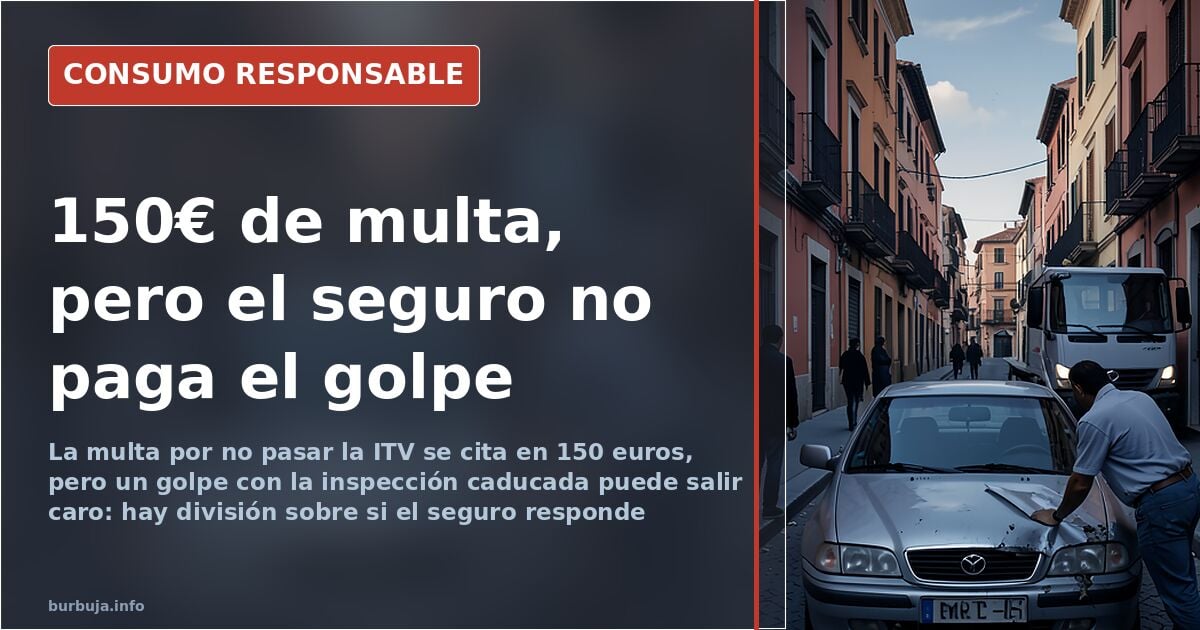
The fine for failing the ITV is €150; uninsured accidents cost far more
The math seems simple: a €150 penalty versus the €60-70 cost of the inspection. The likelihood of being stopped is low. In six years, only one person who raised this issue was ever asked for documents. With that calculation, the temptation to stretch an expired ITV until scrapping makes sense. The problem is that the fine is the cheap part.
The debate starts with cars needing review and the idea of skipping it for years if serious faults are found. The initial figure cited is €150. From there, the focus shifts to what really matters: insurance coverage during an accident with an expired inspection.
What insurance covers when driving with an expired ITV
Views clash here. One school argues insurers wash their hands completely: no valid ITV means no claims processing, neither for own-damage nor third-party liability. The argument is that adjusters check the technical inspection card first; if it’s not passed, the car is presumed unfit to drive.
A more nuanced reading suggests lack of ITV doesn’t automatically exclude third-party coverage, leaving own-damage uncertain depending on policy terms. Some companies’ exclusions list non-compliance with vehicle safety legal obligations. Let those who understand, understand.
The most common case isn’t the fine, but the impact. A minor scrape is paid by you. There’s a detail cited with irony: metal guardrail meters and installation can cost more than a whole car. A participant’s relative received a blood-chilling bill for barrier replacement. With insurance, it was covered. Without ITV, life was ruined.
The 15-day grace period: does taking the car to ITV help?
The specific case involves a car rejected only for emissions. The question is whether accidents within the re-inspection deadline are covered. The prevailing answer: if you prove you’re going to pass the ITV, there’s no problem. Some add it’s wise to get a workshop document in case police stop you.
This nuance matters because emission failures are common in certain cars. A home remedy mentioned: driving in third and fourth gear at 4,000-5,000 RPM for about 30 kilometers before arrival. It worked. Incidentally, some regions don’t charge for re-inspections, while others require paying 50% of the fee.
Real inspection prices: €30 to €74 annually
Figures range from €30 every two years to €72-74 annually for diesel cars in certain provinces. One participant cites €66, another €38 for petrol. The range depends on engine type and territory. After ten years, reviews become annual: the “scam” turns into a fixed quota.
The core criticism isn’t just price, but what’s checked. Tire pressure and crystallization aren’t verified, only tread depth. Cars can be rejected for slight pollution without visible smoke, while others emit black clouds. Inspections should focus on safety—brakes, steering—not emissions.
Broken handle and the alleged major defect
A concrete case: a rear door with a broken external handle. Is it a major defect? Rules don’t specify, but logic does: two-door cars circulate legally, with rear occupants folding front seats. In five-door cars with one unusable rear door, that exit might not exist. Not everyone fits through windows.
An anecdote: another driver failed ITV for this, protested twice, and the second claim missed the deadline by a day. It wasn’t accepted. The conclusion drawn is that inspections are minimal standards, and such defects shouldn’t be major. Bureaucracy, however, ignores this logic.
Checks at ITV entrances and ignored stickers
Some have seen patrols at ITV access roundabouts stopping drivers with expired inspections. The scene has irony: fining those actually going to test. The cited fine in such cases: €90. Another figure appears: €200, or €100 for prompt payment.
Control methods go beyond physical checks. Guardia Civil knows your status via license plate. Unmarked cars block you, using panels to signal stops. Regarding stickers: since attention focuses only on tonalidad, a year can pass unnoticed. Not recommended, but reality.
The lingering question remains: if fines are €150 and stop probabilities low, how many risk assets in accidents to save fees?
Also available in: Deutsch
Summary of a discussion on Burbuja.info - Foro de economía, actualidad y política., translated from Spanish and reviewed before publication. Read the full discussion (56 replies).
More summaries
-
Failing the ITV inspection can be cheaper than repairing your car
A €100 fine for early payment versus €400 for repairs: more and more drivers are choosing not to pass the ITV, and insurance companies are washing their hands of it.
-
MediaMarkt, forced insurance and the art of the tolerated scam
A customer reports that MediaMarkt in Spain forced him to pay a €35 insurance policy to buy a phone. The seller even offered to charge it without activating it. An illegal practice?
-
Spain's INE can fine you for ignoring its mandatory surveys
Spain's INE can fine people who fail to respond to its mandatory surveys. The letter does not always spell this out. There are documented cases of fines for both businesses and individuals.
-
Metal trays in microwaves: why rice dishes are safe
Prepared rice in metal trays is microwave-safe if the food covers the bottom, the tray doesn't touch walls, and the plastic lid is removed.
-
Spain's DGT backs camera mirrors, warns of €200 fines
Spain's traffic authority supports replacing mirrors with cameras but warns that driving without a legal mirror incurs fines up to €200.
-
Wallapop Sellers Frustrated by Buyers Who Haggle, Agree, Then Vanish
Three buyers haggled over a chainsaw on Wallapop, agreed to the price, and disappeared. This pattern frustrates second-hand sellers.