
Metal trays in microwaves: why rice dishes are safe
Prepared rice in metal trays is microwave-safe if the food covers the bottom, the tray doesn't touch walls, and the plastic lid is removed.
English · Original discussion in Spanish · Published
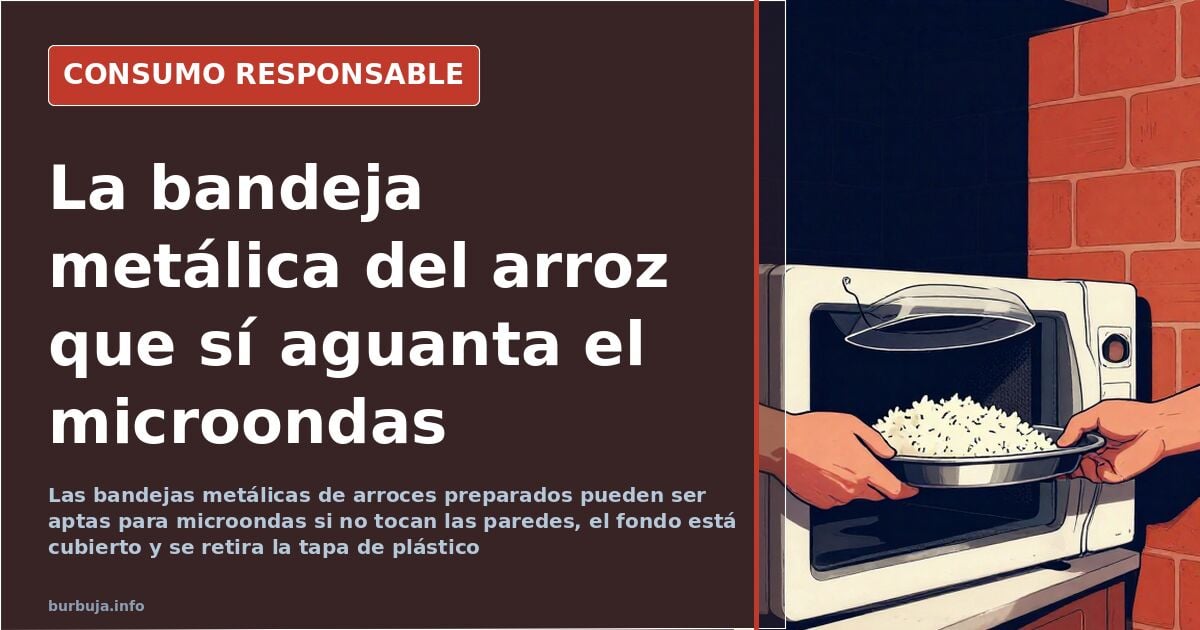
Metal rice trays in microwaves: when the appliance doesn’t spark
A supermarket rice dish in a shiny metal-looking tray labeled microwave-safe. This scene repeats whenever someone brings home a prepared meal: the container shines, a magnet sticks, and common sense suggests a problem. The concern is significant because the belief that all metal in microwaves causes sparks and smoke is widespread. Yet, the tray can be perfectly safe. The key lies in the container’s design, not just the material.
Why a metal tray can be microwave-safe
Metal trays for certain prepared dishes, like rice or paella, are made with special tinplate or adapted aluminum designs allowing microwave use. This is not a labeling error or commercial license: the container is designed for it. However, manufacturers impose non-negotiable conditions. The tray must not touch the walls or ceiling to prevent electrical arcs. The bottom must be fully covered by food. Only one metal container can be heated at a time. And the plastic lid or film must be removed before heating, as lids are not microwave-safe.
The technical explanation is simple: metal reflects microwaves, and without contact with walls or exposed edges, no arc occurs. Risk arises when the container is exposed or too close to walls. Hence, instructions emphasize covering the bottom with food and not stacking trays.
What users who have tried it say
Experiences from those who have heated these containers point in the same direction. Some have tested trays from various supermarket chains without removing the plastic, puncturing it with a fork, with no issues. Others confirm they inserted the container as-is with no problems. The pattern repeats: when conditions are met, the microwave doesn’t protest.
Others opt for the conservative route: transferring the food to a plate and heating it there. This option eliminates doubt but loses the convenience of the original container. Some distrust the label and prefer not to risk it. This distrust is not irrational: for decades, the message that metal and microwaves are incompatible has been repeated, outweighing a label.
The antiestéticar of metal: where it comes from and why it doesn’t always apply
The rule against putting metal in microwaves has merit. A loose fork, crumpled aluminum foil, or a metal lid without food underneath can cause sparks. The difference lies in the container’s geometry and energy distribution. A tray designed for this has rounded edges and a bottom covered by food, avoiding electric field concentrations.
The problem is that labels often don’t explain why. They say it’s safe but omit conditions. Consumers are left between trusting the manufacturer and recalling videos of forks catching fire. Information exists but is scattered and rarely reaches the point of purchase.
What to do if you have doubts about the container
The most repeated advice is simple: if the container doesn’t touch walls, the bottom is covered, and there’s no plastic lid, it can be heated. If any condition fails, transferring the food to a plate is safer. There is no single answer for all cases, as microwaves and trays vary. Caution doesn’t preclude using the container, nor does avoiding it.
Putting the tray with the film on and hoping for the best is unwise. Lids are not designed for microwaves, and this is the most common error. Removing them is the first step; thereafter, manufacturer conditions dictate the rest.
Metal trays, like many other things, show a label saying one thing and custom another. The user decides in the kitchen with the prepared dish. Next time the container shines, doubt may remain, but at least it won’t be due to lack of information.
A supermarket rice dish in a shiny metal-looking tray labeled microwave-safe. This scene repeats whenever someone brings home a prepared meal: the container shines, a magnet sticks, and common sense suggests a problem. The concern is significant because the belief that all metal in microwaves causes sparks and smoke is widespread. Yet, the tray can be perfectly safe. The key lies in the container’s design, not just the material.
Why a metal tray can be microwave-safe
Metal trays for certain prepared dishes, like rice or paella, are made with special tinplate or adapted aluminum designs allowing microwave use. This is not a labeling error or commercial license: the container is designed for it. However, manufacturers impose non-negotiable conditions. The tray must not touch the walls or ceiling to prevent electrical arcs. The bottom must be fully covered by food. Only one metal container can be heated at a time. And the plastic lid or film must be removed before heating, as lids are not microwave-safe.
The technical explanation is simple: metal reflects microwaves, and without contact with walls or exposed edges, no arc occurs. Risk arises when the container is exposed or too close to walls. Hence, instructions emphasize covering the bottom with food and not stacking trays.
What users who have tried it say
Experiences from those who have heated these containers point in the same direction. Some have tested trays from various supermarket chains without removing the plastic, puncturing it with a fork, with no issues. Others confirm they inserted the container as-is with no problems. The pattern repeats: when conditions are met, the microwave doesn’t protest.
Others opt for the conservative route: transferring the food to a plate and heating it there. This option eliminates doubt but loses the convenience of the original container. Some distrust the label and prefer not to risk it. This distrust is not irrational: for decades, the message that metal and microwaves are incompatible has been repeated, outweighing a label.
The antiestéticar of metal: where it comes from and why it doesn’t always apply
The rule against putting metal in microwaves has merit. A loose fork, crumpled aluminum foil, or a metal lid without food underneath can cause sparks. The difference lies in the container’s geometry and energy distribution. A tray designed for this has rounded edges and a bottom covered by food, avoiding electric field concentrations.
The problem is that labels often don’t explain why. They say it’s safe but omit conditions. Consumers are left between trusting the manufacturer and recalling videos of forks catching fire. Information exists but is scattered and rarely reaches the point of purchase.
What to do if you have doubts about the container
The most repeated advice is simple: if the container doesn’t touch walls, the bottom is covered, and there’s no plastic lid, it can be heated. If any condition fails, transferring the food to a plate is safer. There is no single answer for all cases, as microwaves and trays vary. Caution doesn’t preclude using the container, nor does avoiding it.
Putting the tray with the film on and hoping for the best is unwise. Lids are not designed for microwaves, and this is the most common error. Removing them is the first step; thereafter, manufacturer conditions dictate the rest.
Metal trays, like many other things, show a label saying one thing and custom another. The user decides in the kitchen with the prepared dish. Next time the container shines, doubt may remain, but at least it won’t be due to lack of information.
Summary of a discussion on Burbuja.info - Foro de economía, actualidad y política., translated from Spanish and reviewed before publication. Read the full discussion (32 replies).
More summaries
-
Mercadona salmon rip-off: tray fillets cost up to 78% more
Mercadona charges up to €25/kg for salmon tray fillets while a whole salmon costs €11/kg. Data and tips to save.
-
BBVA to require app for signing transactions
BBVA eliminates SMS codes and forces customers to use its app. Forum debate on security, tech dependence, and loss of digital freedom.
-
Cádiz rentals: €600 budget, no car, an impossible task
Finding long-term rental in Cádiz coast with €600 and no car is nearly impossible. The debate highlights prices, areas, and exclusions.
-
Cruzcampo: Spoiled Kegs Fuel North-South Beer War
Unpasteurized Cruzcampo kegs sour in two days, causing taste differences between Seville and Madrid due to low rotation rates.
-
Danish homes for €79,000: The hidden conditions
Housing in Jutland costs €79,000. While the price is real, it requires effective residency, a CPR number, and living there year-round.
-
Spanish Medieval Markets: Inflated Prices and Fake Crafts
35 euros for tiny octopus, stalls costing up to 6,000 euros, and goods from Cobo Calleja. An economic look at Spain's medieval markets.