
Spain cuts migrant child reception funds by 75%
Spanish government reduces daily funding per unaccompanied minor from €145 to €35.75, sparking backlash from regional authorities.
English · Original discussion in Spanish · Published
Spain cuts migrant child reception funds by 75%
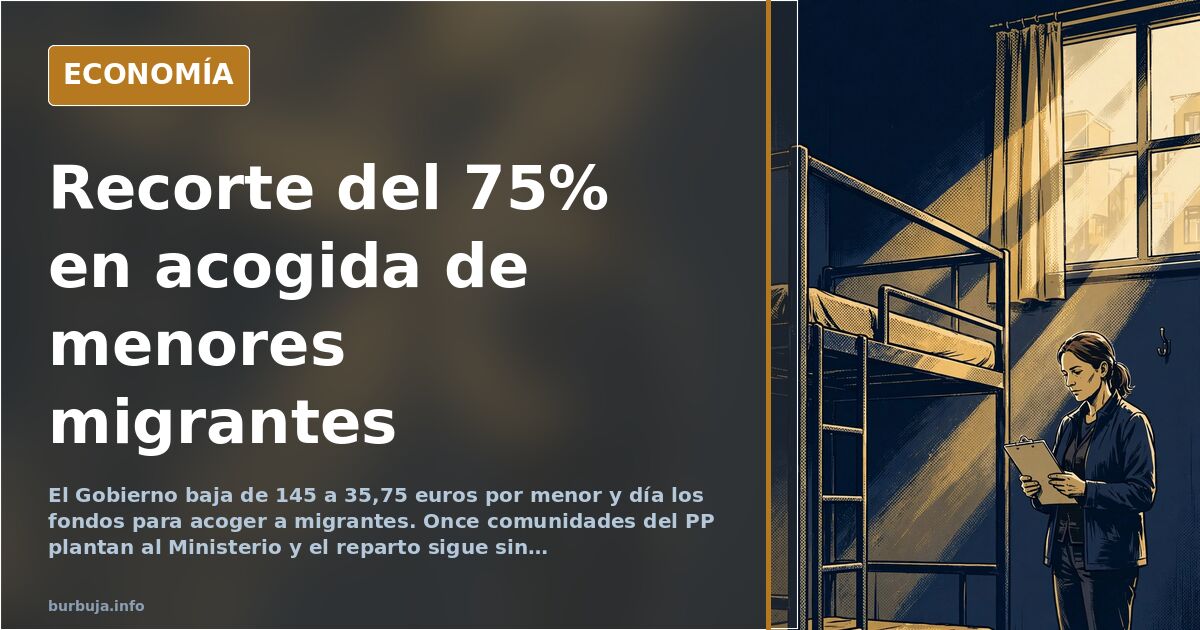
The Sectoral Conference on Childhood, intended to distribute unaccompanied minors arriving in Spain, was canceled without an agreement. The Ministry of Youth and Childhood proposed €100 million to transfer nearly 4,000 minors from the Canary Islands and Ceuta and care for them for three months. This figure represents a drop from €145 to €35.75 per child per day, a 75% cut that regions deem insufficient for comprehensive care.
Castilla-La Mancha, the Canary Islands, and Galicia have voiced opposition to the plan, while the eleven PP-governed regions did not attend the meeting. Bárbara García, Castilla-La Mancha’s Welfare Councilor, estimated they need €400 million to provide children with the same care as before. "You cannot do a low-cost job on such a sensitive issue," she said.
From €145 to €35.75 per minor per day
The ministry’s proposed agreement includes €100 million to cover transfers to mainland Spain and care during the first three months. Afterward, regions must bear the costs, as reception is a regional competence. Regions fail to understand why the state previously funded €145 per place per day for twelve months and now reduces its contribution to a quarter.
Candelaria Delgado, the Canary Islands’ Social Welfare Councilor, warned that this budget will only allow care for three months. "We were told there would be sufficient funding. The state cannot afford to give anyone arguments against applying these agreements," she added. In Galicia, officials note they had already warned that €145 was insufficient for 14-year-olds requiring longer-term reception.
Political standoff: Eleven PP regions boycott the Ministry
The eleven regions governed by the People's Party (PP) rejected the Sectoral Conference agenda and did not attend. They consider both the agenda and the decree regulating distribution "illegal." Minister Sira Rego clarified that distribution will proceed regardless, starting August 28. The meeting could not take place due to lack of consensus.
In Madrid, sources argue the state will contribute much less money than in previous transfers and that their calculations are outdated because the sector has introduced improvements in agreements that the state ignores. The funding dispute had already heated up the technical meeting on August 8, where the Castilla-La Mancha representative and the Secretary of State clashed.
The circulating calculation: €52,000 per year per minor
A figure has circulated in the debate: if the state paid €145 per day for twelve months, each received minor cost public coffers €52,925 per year solely in transfers to regions, according to that calculation. Some raise this figure above €70,000 annually when adding NGO subsidies and other indirect costs. With the cut to €35.75, the annual cost would drop to €12,775, based on those estimates.
This difference has fueled the thesis, held by some participants, that reception has become a business for companies, organizations, and administrations. Some argue that €52,000 per minor allowed for many contracts and services, and part of that money ended up in affiliated companies. Counter-arguments stress that reception involves real costs: housing, food, educators, security, legal aid, schooling, and psychosocial support.
Pull factor and collapse of public services
One line of analysis argues that funding reception for twelve months at €52,000 per minor creates a pull factor, and reducing it to three months leaves thousands without language skills or resources on the streets. Another stream defends that if caring for them with that money is not viable, it simply should not be done. A third points out that the cut will end the business and increase conflict.
The background is the jurisdictional clash: the state funds transfers and three months of care, but reception is a regional competence. Regions already bearing migratory pressure—the Canary Islands and Ceuta on the front line—antiestéticar being left alone with the bill. Meanwhile, distribution remains without agreement, and the clock ticks toward August 28.
Ultimately, the question is not how much it costs to receive a minor, but who pays the difference when the state withdraws. At €35.75 a day, neither low-cost nor dignity: just a hot potato no one wants to hold.
The Sectoral Conference on Childhood, intended to distribute unaccompanied minors arriving in Spain, was canceled without an agreement. The Ministry of Youth and Childhood proposed €100 million to transfer nearly 4,000 minors from the Canary Islands and Ceuta and care for them for three months. This figure represents a drop from €145 to €35.75 per child per day, a 75% cut that regions deem insufficient for comprehensive care.
Castilla-La Mancha, the Canary Islands, and Galicia have voiced opposition to the plan, while the eleven PP-governed regions did not attend the meeting. Bárbara García, Castilla-La Mancha’s Welfare Councilor, estimated they need €400 million to provide children with the same care as before. "You cannot do a low-cost job on such a sensitive issue," she said.
From €145 to €35.75 per minor per day
The ministry’s proposed agreement includes €100 million to cover transfers to mainland Spain and care during the first three months. Afterward, regions must bear the costs, as reception is a regional competence. Regions fail to understand why the state previously funded €145 per place per day for twelve months and now reduces its contribution to a quarter.
Candelaria Delgado, the Canary Islands’ Social Welfare Councilor, warned that this budget will only allow care for three months. "We were told there would be sufficient funding. The state cannot afford to give anyone arguments against applying these agreements," she added. In Galicia, officials note they had already warned that €145 was insufficient for 14-year-olds requiring longer-term reception.
Political standoff: Eleven PP regions boycott the Ministry
The eleven regions governed by the People's Party (PP) rejected the Sectoral Conference agenda and did not attend. They consider both the agenda and the decree regulating distribution "illegal." Minister Sira Rego clarified that distribution will proceed regardless, starting August 28. The meeting could not take place due to lack of consensus.
In Madrid, sources argue the state will contribute much less money than in previous transfers and that their calculations are outdated because the sector has introduced improvements in agreements that the state ignores. The funding dispute had already heated up the technical meeting on August 8, where the Castilla-La Mancha representative and the Secretary of State clashed.
The circulating calculation: €52,000 per year per minor
A figure has circulated in the debate: if the state paid €145 per day for twelve months, each received minor cost public coffers €52,925 per year solely in transfers to regions, according to that calculation. Some raise this figure above €70,000 annually when adding NGO subsidies and other indirect costs. With the cut to €35.75, the annual cost would drop to €12,775, based on those estimates.
This difference has fueled the thesis, held by some participants, that reception has become a business for companies, organizations, and administrations. Some argue that €52,000 per minor allowed for many contracts and services, and part of that money ended up in affiliated companies. Counter-arguments stress that reception involves real costs: housing, food, educators, security, legal aid, schooling, and psychosocial support.
Pull factor and collapse of public services
One line of analysis argues that funding reception for twelve months at €52,000 per minor creates a pull factor, and reducing it to three months leaves thousands without language skills or resources on the streets. Another stream defends that if caring for them with that money is not viable, it simply should not be done. A third points out that the cut will end the business and increase conflict.
The background is the jurisdictional clash: the state funds transfers and three months of care, but reception is a regional competence. Regions already bearing migratory pressure—the Canary Islands and Ceuta on the front line—antiestéticar being left alone with the bill. Meanwhile, distribution remains without agreement, and the clock ticks toward August 28.
Ultimately, the question is not how much it costs to receive a minor, but who pays the difference when the state withdraws. At €35.75 a day, neither low-cost nor dignity: just a hot potato no one wants to hold.
Also available in: Deutsch
Summary of a discussion on Burbuja.info - Foro de economía, actualidad y política., translated from Spanish and reviewed before publication. Read the full discussion (196 replies).
More summaries
-
Spain's New Youth Ministry Faces Backlash Over Lenin Video
Spain's newly created Ministry of Children and Youth faces controversy over a video attributed to its minister, Sira Rego, defending Lenin.
-
Castilla-La Mancha to Expropriate Land Lacking Social Function
New law allows expropriation of rural estates without social use, transferring them up to 25 years to the Banco de Tierras.
-
Negocios TV Alert Claims Explosions in Frankfurt
An unverified alert suggests explosions shook Frankfurt center; the European Central Bank (ECB) is mentioned without confirmation.
-
Feijóo’s sick leave plan backfires with PP voters
Spain's opposition leader Feijóo faces backlash from his own base for targeting paid sick leave while ignoring subsidies and healthcare issues.
-
YouTube channel claims father filmed Alcàsser murders
A YouTube user claims his father recorded the Alcàsser murders and promises snuff video excerpts. No evidence provided, only narrative and technical analysis.
-
Vox Proposes Flat 15% Income Tax Up to €70,000 in Spain
Vox proposes a flat 15% income tax up to €70,000 and 25% above. Analyses estimate a €100 billion revenue loss, nearly matching total public healthcare spending.