
Spain Approves Quartzite Quarry in Oencia Despite Protests
The Junta de Castilla y León approved the Mesa de Reis quartzite quarry in Oencia, rejecting 34 objections amid concerns over protected areas.
English · Original discussion in Spanish · Published
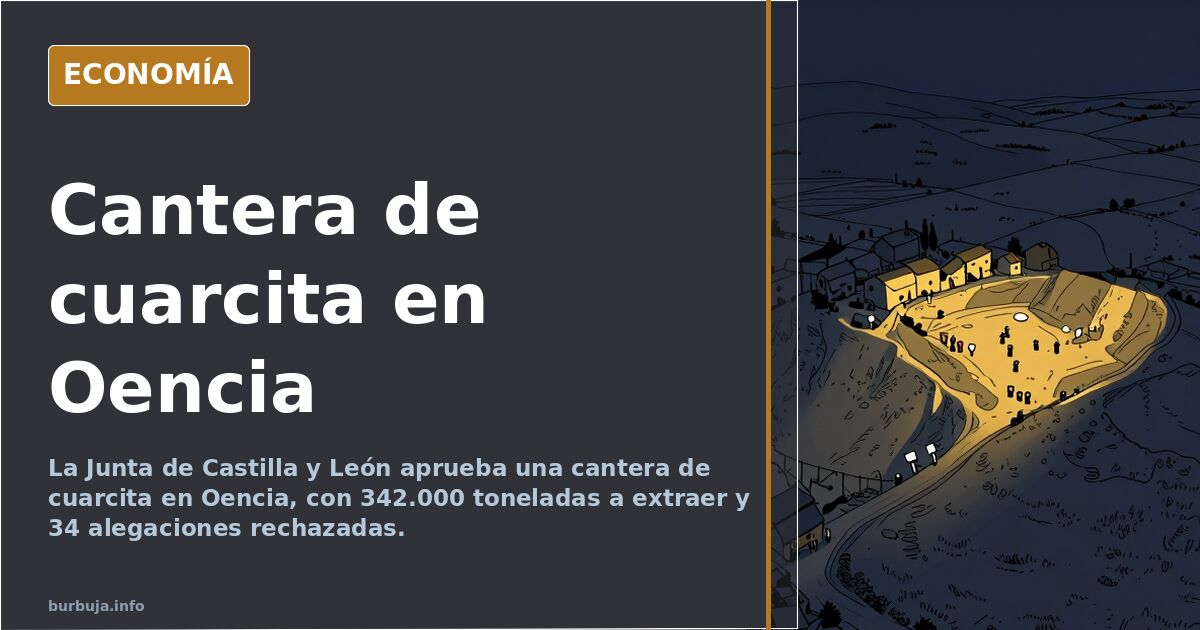
Regional Government Authorizes Quartzite Extraction in Oencia After Fires
The Junta de Castilla y León, led by the Partido Popular, has granted environmental approval for the "Mesa de Reis" mining project. Promoted by Neopiedras S.L., the plan involves opening a quartzite quarry in Gestoso, within the municipality of Oencia in El Bierzo. The project covers nearly ten hectares and foresees an annual extraction of 9,600 tons, with operations potentially lasting three decades. This decision, published in the Boletín Oficial de Castilla y León, coincides with assessments of severe damage from recent wildfires in the region, which completely destroyed the village of Lusio.
The process faced strong social and neighborhood opposition. Thirty-four objections were filed—thirty from individuals and four from groups—warning of irreversible environmental damage, risks to heritage, and reduced quality of life for residents. Concerns also highlighted the proximity to the LIC/ZEC Ancares–Courel protected area, located just 200 meters away. All these objections were rejected in May 2023.
Project Details: 342,000 Tons of Quartzite Near Protected Area
The mining plan entails extracting 342,000 tons of quartzite over its lifespan, averaging 9,600 tons annually for thirty years. Neopiedras S.L. is required to implement preventive and corrective measures to protect fauna, vegetation, water resources, and soil, alongside an active environmental monitoring plan throughout the quarry's life. Once activity ceases, the company must carry out restoration work to return environmental and landscape value to the land.
The proximity to the LIC/ZEC Ancares–Courel protected site, only 200 meters away, has been a major mobilizing factor for opponents. Some argue that the promised restoration is merely on paper and that the area will take decades to recover, if it ever does. Conversely, supporters note that the authorization includes strict environmental conditions and continuous monitoring.
Who Is Behind Neopiedras S.L.?
Identifying the company's owners has been a key focus of analysis. One recurring lead suggests Neopiedras is a small entity based in a town in Ourense province, with a limited staff, which seems unusual for a project moving hundreds of thousands of tons of rock. Traces have linked it to other firms in telecommunications and real estate promotion, though no direct ties to political figures have been confirmed.
A detailed breakdown reveals surprising discrepancies. Those tracking the corporate structure argue that the engineering behind such concessions is more opaque than it appears. The provisional conclusion is that official data is insufficient to close the loop.
Fires and Quarries: A Coincidence No One Wants to Name
The fire struck first; the mining authorization trinc. This sequence, presented as a temporal coincidence, has fueled various interpretations. Some participants argue that burning the mountain and subsequent resource extraction trinc the same scorched-earth logic. Others caution that there is no evidence linking the two events, noting the authorization was processed beforehand.
Official data on fires in Spain indicates that over 80% are human-caused, with intentional fires accounting for more than half, according to cited reports. This statistic, combined with the timing, leads some to speak of causality rather than chance. The lingering question is whether fire investigations will establish any connection to mining interests.
Neighborhood Opposition and Rejection of 34 Objections
The 34 objections filed—thirty from individuals and four from groups—were rejected in May 2023. Reasons included irreversible environmental harm, heritage risks, and diminished resident quality of life. While the regional government conditioned approval on strict environmental compliance, opponents believe these measures do not offset the impact.
The restoration promised after thirty years of activity is heavily criticized. Some contend that restoring environmental and landscape utility to a burned and then mined zone is a fantasy. The debate remains open, with no date set for a possible review.
The project moves forward, fires are under investigation, and questions pile up. How long will visible restoration take? And who guarantees it happens?
The Junta de Castilla y León, led by the Partido Popular, has granted environmental approval for the "Mesa de Reis" mining project. Promoted by Neopiedras S.L., the plan involves opening a quartzite quarry in Gestoso, within the municipality of Oencia in El Bierzo. The project covers nearly ten hectares and foresees an annual extraction of 9,600 tons, with operations potentially lasting three decades. This decision, published in the Boletín Oficial de Castilla y León, coincides with assessments of severe damage from recent wildfires in the region, which completely destroyed the village of Lusio.
The process faced strong social and neighborhood opposition. Thirty-four objections were filed—thirty from individuals and four from groups—warning of irreversible environmental damage, risks to heritage, and reduced quality of life for residents. Concerns also highlighted the proximity to the LIC/ZEC Ancares–Courel protected area, located just 200 meters away. All these objections were rejected in May 2023.
Project Details: 342,000 Tons of Quartzite Near Protected Area
The mining plan entails extracting 342,000 tons of quartzite over its lifespan, averaging 9,600 tons annually for thirty years. Neopiedras S.L. is required to implement preventive and corrective measures to protect fauna, vegetation, water resources, and soil, alongside an active environmental monitoring plan throughout the quarry's life. Once activity ceases, the company must carry out restoration work to return environmental and landscape value to the land.
The proximity to the LIC/ZEC Ancares–Courel protected site, only 200 meters away, has been a major mobilizing factor for opponents. Some argue that the promised restoration is merely on paper and that the area will take decades to recover, if it ever does. Conversely, supporters note that the authorization includes strict environmental conditions and continuous monitoring.
Who Is Behind Neopiedras S.L.?
Identifying the company's owners has been a key focus of analysis. One recurring lead suggests Neopiedras is a small entity based in a town in Ourense province, with a limited staff, which seems unusual for a project moving hundreds of thousands of tons of rock. Traces have linked it to other firms in telecommunications and real estate promotion, though no direct ties to political figures have been confirmed.
A detailed breakdown reveals surprising discrepancies. Those tracking the corporate structure argue that the engineering behind such concessions is more opaque than it appears. The provisional conclusion is that official data is insufficient to close the loop.
Fires and Quarries: A Coincidence No One Wants to Name
The fire struck first; the mining authorization trinc. This sequence, presented as a temporal coincidence, has fueled various interpretations. Some participants argue that burning the mountain and subsequent resource extraction trinc the same scorched-earth logic. Others caution that there is no evidence linking the two events, noting the authorization was processed beforehand.
Official data on fires in Spain indicates that over 80% are human-caused, with intentional fires accounting for more than half, according to cited reports. This statistic, combined with the timing, leads some to speak of causality rather than chance. The lingering question is whether fire investigations will establish any connection to mining interests.
Neighborhood Opposition and Rejection of 34 Objections
The 34 objections filed—thirty from individuals and four from groups—were rejected in May 2023. Reasons included irreversible environmental harm, heritage risks, and diminished resident quality of life. While the regional government conditioned approval on strict environmental compliance, opponents believe these measures do not offset the impact.
The restoration promised after thirty years of activity is heavily criticized. Some contend that restoring environmental and landscape utility to a burned and then mined zone is a fantasy. The debate remains open, with no date set for a possible review.
The project moves forward, fires are under investigation, and questions pile up. How long will visible restoration take? And who guarantees it happens?
Also available in: Deutsch
Summary of a discussion on Burbuja.info - Foro de economía, actualidad y política., translated from Spanish and reviewed before publication. Read the full discussion (116 replies).
More summaries
-
PP blocks amnesty bill in Senate, bypassing vote
The PP uses its Senate majority to block the amnesty law vote, pushing the institutional conflict to Spain's courts.
-
Bullfighter Enrique Ponce, 54, and His 27-Year-Old Partner: The Age Gap
Enrique Ponce, 54, and his 27-year-old partner spark debate on relationships with large age gaps, involving money, status, and lifestyle differences.
-
IBEX defies crash fears, closes slightly down
Spanish IBEX closed marginally lower despite global panic warnings and a sharp Saudi drop. Forum users' skepticism proved right.
-
Spanish DANA aid linked to budget vote
Spain's government ties DANA disaster relief to the national budget, forcing the opposition into a political dilemma over reconstruction funds.
-
Spain probes rape of pregnant 10-year-old girl
A 10-year-old in Spain was found pregnant after visiting a pediatrician for stomach pain, reigniting debate on domestic abuse.
-
Lavapiés protest video fuels migration debate in Madrid
An unverified video from a Lavapiés gathering reignites discussions on immigration, security, and official narratives in Spain's capital.