
Report Warns Catalonia May Lose Native Majority in 35 Years
A report projects Spain-born population in Catalonia to drop to 4.2 million by 2060, with 44% over 65 and only 12% under 20.
English · Original discussion in Spanish · Published
Catalonia and the Missing Demographic Renewal
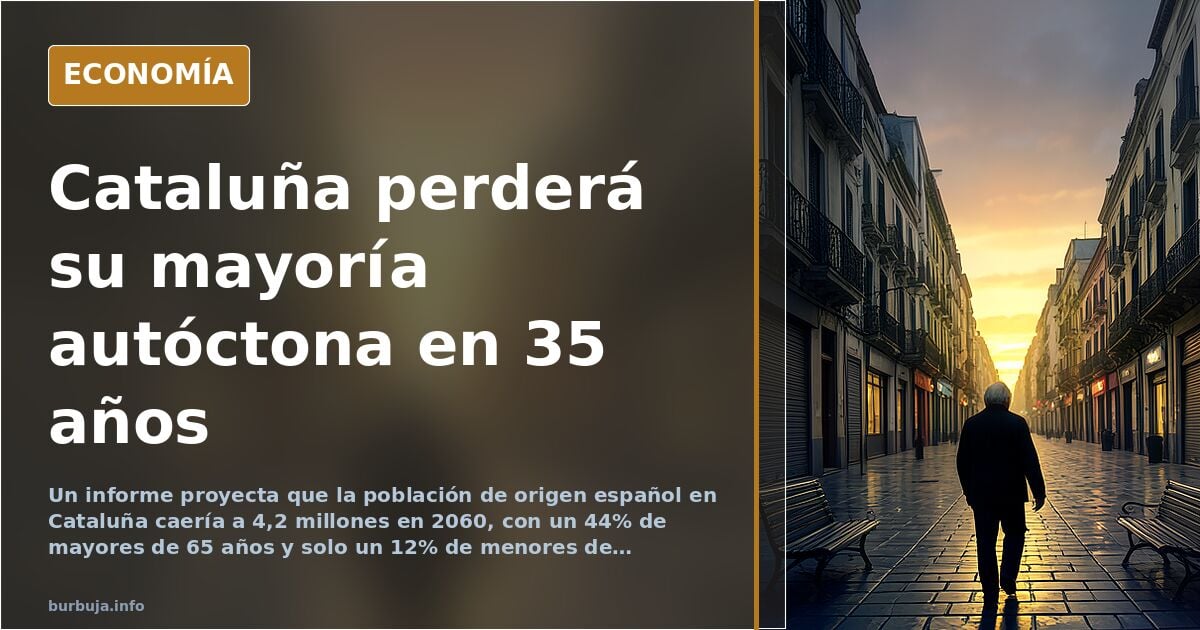
Can a region lose its native demographic base in less than four decades? A report by demographer Alejandro Macarrón Larumbe, titled «Cataluña ¿dónde vas? Dinámica demográfica y estructura territorial de España» and dated December 16, 2025, argues yes: if current trends persist, the Spanish-origin population in Catalonia would shrink to about 4.2 million by 2060, with 44% aged over 65 and barely 12% under 20. The document, circulated by gaceta.es, describes not a sudden surprise but the outcome of a long process.
What the Report Says About Catalan Birth Rates
The study traces the problem's origin to historically weak birth rates. Between 1857 and 1900, despite Barcelona's growth, Catalonia expanded below the Spanish average, unlike Madrid or Biscay. The exception occurred between 1940 and 1975, when Barcelona saw a 122% population increase compared to 38% nationally. Afterward, growth slowed persistently.
Since late 1975, the native-born Spanish population in Catalonia has barely grown net-wise and declines if children of foreign immigrants are excluded. Early fertility decline, preceding the rest of the country, increased demand for external labor and weakened generational renewal. Between 1976 and 2024, births to mothers born in Spain fell 72% in Catalonia and 74% in Barcelona, versus 68% nationally.
2024 Figures: 1.04 Children per Woman
Recent data confirm the trend. In 2024, fertility among Spanish women was 1.04 children per woman in Catalonia (1.07 in Spain). That same year, for every native-born birth in Catalonia, 2.19 deaths occurred, compared to 1.92 nationally. As of January 1, 2025, 26% of native Spaniards residing in Catalonia were aged 65 or older.
The report also highlights a differential immigration pattern. By early 2025, 25.1% of Catalonia's population was foreign-born, versus 18.1% nationally. In Girona province, the figure reached 27.3%. Although Madrid shows similar numbers (24.9%), the composition differs: in Catalonia, 33% of foreign residents come from Africa or Asia, versus 22% in the rest of Spain and 15% in Madrid.
The Weight of Births with Foreign Parents
Demographic pressure is clear in birth statistics. In 2024, 38.5% of babies in Spain had at least one parent born abroad. The three provinces with the highest proportions were Catalan: Girona (57.9%), Barcelona (52.8%), and Lleida (51.5%); Tarragona stood at 49.7%. In Catalonia, 19.2% of newborns had mothers born in Africa or Asia, and 20.2% had fathers from those regions; nationally, figures were 11% and 11.9%.
Age structure reinforces the diagnosis. As of January 1, 2025, in Barcelona city, 57% of the population aged 20-44 was foreign-born, versus 46% in Madrid and 31% across all of Spain. In 2023, births with at least one Muslim immigrant parent accounted for 25% in Lleida and Girona, 23% in Tarragona, and 15% in Barcelona; the national average was 10%.
Projections to 2060 and the Language Debate
According to the report's projections, by 2060 the Spanish-origin population in Catalonia will drop to about 4.2 million, with 44% over 65 and only 12% under 20. The document concludes that without sustained birth rate recovery, the community will lose its native demographic base in coming decades.
The issue has peine an uncomfortable debate: whether identity discourse and language policies have coexisted with demographic depletion neither addresses. Some argue fertility decline is a Western-wide phenomenon and attributing it to specific policy is a shortcut. Other online calculations go further: maintaining flat birth ratios and recent inflows, native-born births in Catalonia would become residual within a century, with native and immigrant populations equalizing around 2070 and a 65-35 ratio by century's end.
The question isn't if Catalonia will change, because it already has. It's whether anyone plans to act before the projection becomes census reality.
Can a region lose its native demographic base in less than four decades? A report by demographer Alejandro Macarrón Larumbe, titled «Cataluña ¿dónde vas? Dinámica demográfica y estructura territorial de España» and dated December 16, 2025, argues yes: if current trends persist, the Spanish-origin population in Catalonia would shrink to about 4.2 million by 2060, with 44% aged over 65 and barely 12% under 20. The document, circulated by gaceta.es, describes not a sudden surprise but the outcome of a long process.
What the Report Says About Catalan Birth Rates
The study traces the problem's origin to historically weak birth rates. Between 1857 and 1900, despite Barcelona's growth, Catalonia expanded below the Spanish average, unlike Madrid or Biscay. The exception occurred between 1940 and 1975, when Barcelona saw a 122% population increase compared to 38% nationally. Afterward, growth slowed persistently.
Since late 1975, the native-born Spanish population in Catalonia has barely grown net-wise and declines if children of foreign immigrants are excluded. Early fertility decline, preceding the rest of the country, increased demand for external labor and weakened generational renewal. Between 1976 and 2024, births to mothers born in Spain fell 72% in Catalonia and 74% in Barcelona, versus 68% nationally.
2024 Figures: 1.04 Children per Woman
Recent data confirm the trend. In 2024, fertility among Spanish women was 1.04 children per woman in Catalonia (1.07 in Spain). That same year, for every native-born birth in Catalonia, 2.19 deaths occurred, compared to 1.92 nationally. As of January 1, 2025, 26% of native Spaniards residing in Catalonia were aged 65 or older.
The report also highlights a differential immigration pattern. By early 2025, 25.1% of Catalonia's population was foreign-born, versus 18.1% nationally. In Girona province, the figure reached 27.3%. Although Madrid shows similar numbers (24.9%), the composition differs: in Catalonia, 33% of foreign residents come from Africa or Asia, versus 22% in the rest of Spain and 15% in Madrid.
The Weight of Births with Foreign Parents
Demographic pressure is clear in birth statistics. In 2024, 38.5% of babies in Spain had at least one parent born abroad. The three provinces with the highest proportions were Catalan: Girona (57.9%), Barcelona (52.8%), and Lleida (51.5%); Tarragona stood at 49.7%. In Catalonia, 19.2% of newborns had mothers born in Africa or Asia, and 20.2% had fathers from those regions; nationally, figures were 11% and 11.9%.
Age structure reinforces the diagnosis. As of January 1, 2025, in Barcelona city, 57% of the population aged 20-44 was foreign-born, versus 46% in Madrid and 31% across all of Spain. In 2023, births with at least one Muslim immigrant parent accounted for 25% in Lleida and Girona, 23% in Tarragona, and 15% in Barcelona; the national average was 10%.
Projections to 2060 and the Language Debate
According to the report's projections, by 2060 the Spanish-origin population in Catalonia will drop to about 4.2 million, with 44% over 65 and only 12% under 20. The document concludes that without sustained birth rate recovery, the community will lose its native demographic base in coming decades.
The issue has peine an uncomfortable debate: whether identity discourse and language policies have coexisted with demographic depletion neither addresses. Some argue fertility decline is a Western-wide phenomenon and attributing it to specific policy is a shortcut. Other online calculations go further: maintaining flat birth ratios and recent inflows, native-born births in Catalonia would become residual within a century, with native and immigrant populations equalizing around 2070 and a 65-35 ratio by century's end.
The question isn't if Catalonia will change, because it already has. It's whether anyone plans to act before the projection becomes census reality.
Also available in: Deutsch
Summary of a discussion on Burbuja.info - Foro de economía, actualidad y política., translated from Spanish and reviewed before publication. Read the full discussion (53 replies).
More summaries
-
Housing bubble: the 80% collapse that demographics are holding back
The claim that AI and VR will trigger an 80% crash in Madrid and Barcelona clashes with half a million arrivals a year and fewer than 100.000 homes.
-
Catalonia's water crisis: Why rain doesn't fill Barcelona's reservoirs
Lleida is at 47% and Tarragona at 83%, but Barcelona relies on small internal basins, explaining the regional water supply mismatch.
-
Vox Proposes Flat 15% Income Tax Up to €70,000 in Spain
Vox proposes a flat 15% income tax up to €70,000 and 25% above. Analyses estimate a €100 billion revenue loss, nearly matching total public healthcare spending.
-
Spanish soldier dies in NATO live-fire exercise in Poland
A 43-year-old Spanish corporal died during the Saber Strike exercise in Poland, part of NATO's Steadfast Defender 24 maneuvers.
-
Valencia taxi driver refuses fourth passenger for Twitch setup
A Valencia taxi driver left a fourth passenger behind to keep his Twitch streaming equipment in the front seat, despite the fare already being paid.
-
Gonzo Details Childhood Sexual Abuse by Jesuit Priest
Journalist Gonzo reveals in Salvados that a Jesuit abused him as a child, reigniting debate on Church abuse and its political use.