
Paco Gastronomy: Iberian Recipes Beyond the Pose
Paco Gastronomy: Traditional Iberian cuisine, from lentils to ratatouille, rejecting culinary pretentiousness.
English · Original discussion in Spanish · Published
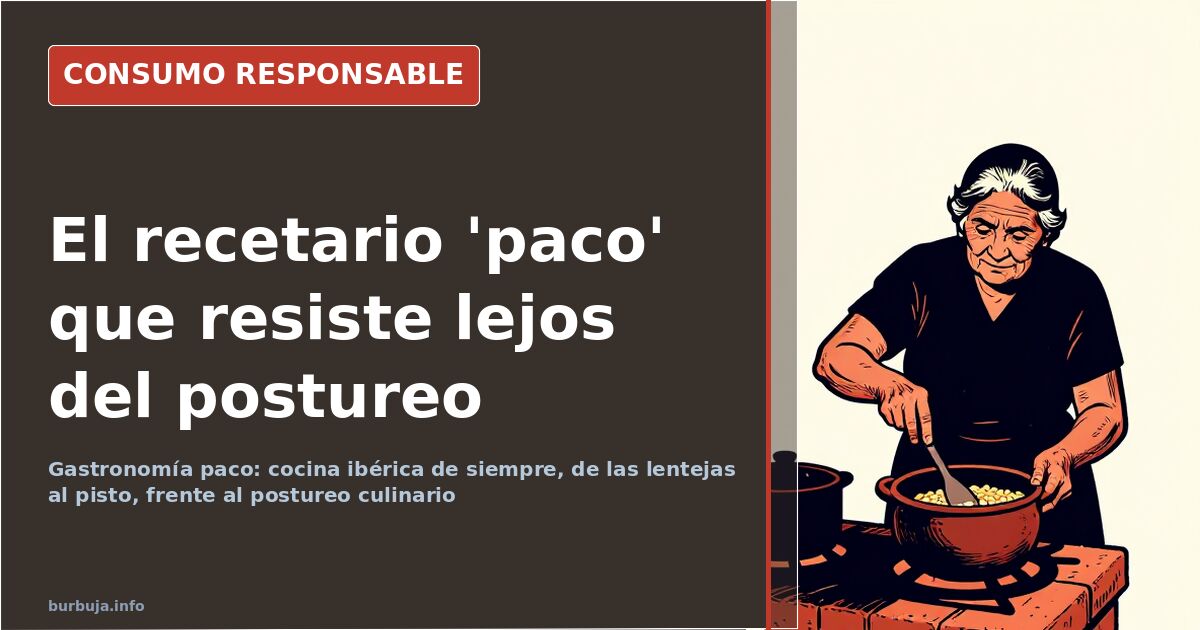
Paco Cooking: The Iberian Recipe Book That Needs No Filters
Can you eat well without deconstructing anything, without foams, and without posting your dish on social media? A collective Iberian recipe book proves it. It gathers contributions—from Spain, Portugal, and Andorra—ranging from garlic chicken to potato omelet with onion, inadvertently creating a treatise on what it means to eat well when no one is watching.
The term "paco" doesn't refer to a restaurant or a cooking school. It's slang for home cooking, grandma's cooking, Tuesday's lunch menu. Tradition without complexes and without filters.
What is Paco Gastronomy and Where Does the Term Come From
The concept is defined by opposition. Contrasting with "modern" cuisine—whiskey sirloin, cheeks, dishes with two-line names—paco is the stew, the miner's bean soup, the shepherd's migas, the gachas. Some summarize it bluntly: modern is fine, but "paquismo" is the food that was made when there was nothing to prove and everything to eat.
Here, product reigns over technique. Paco doesn't boast sophistication; it boasts memory. Some interpret it as a class declaration, a label for the popular and authentic. Others counter that many of these recipes—porrusalda, black rice, ardilla—don't need a label to stand on their own.
The Recipes Dominating the Cookbook: Lentils, Ardilla, and Rice
The inventory is extensive and very Iberian. Antiestéticaturing lentils with chorizo and pancetta that melts into the sofrito, potato omelet with onion, black rice, battered cauliflower with mayonnaise, deviled eggs, meatballs in sauce, cocido with dumplings, and Almería-style wheat stew. Basque miner's bean soup trinc a simple yet inflexible rule: one chorizo, one blood sausage, bacon, and cabbage per person, with the pot placed in the center of the table for self-service.
It's not all stews. There's also room for spiced oil with chili peppers, garlic, pepper, bay leaf, and oregano, and for culinary survival tricks: dressing with garlic crushed in a mortar instead of sliced—"releases more flavor"—or a half-and-half mixture of vinegar and lemon for anchovies.
The Debate on Crispy Potatoes and Rising Anchovy Prices
One of the most discussed issues is how to achieve truly crispy potatoes. The circulating recipe is meticulous: no storage varieties, white and firm potatoes—Galician or red-skinned—cut, washed, dried on a cloth, pre-fried quickly, and re-fried after cooling. Price also comes into play: some claim to have bought sacks of Spanish potatoes for 0.69 euros per kilo and pray for continued availability.
The other open front is the anchovy. Some argue that good regional brands have become expensive and that, since it's a product that travels by boat and doesn't expire, it should cost at most double or two and a half times its origin cost, and that the market values the label over quality more. A forum user's verdict summarizes their stance: buying anchovies in sunflower oil isn't being "paco," it's having good taste.
Food as a Social Marker: Tiles and Grey Cement
Between recipes, the conversation drifts into home renovation. A kitchen remodel sparks debate on tiling—supporters of classic tiles versus the grey wood-effect—on property ownership, and whether loud colors are definitively buried. The prevailing aesthetic conclusion: cement grey, plain cabinets, everything matching, and DIY. The kitchen as a statement of economic intentions.
Nineties Nostalgia: Foie Gras Canapés and Cheese Puffs
Half the recipes in this book are archeology. Branded foie gras canapés, orange cheese puffs that stained fingers, sweet ham rolled with potato salad and room-temperature mayonnaise for hours. Nineties birthdays as a gastronomic dig site. Nothing could go wrong, someone summarizes with a mix of fondness and sanitary dread.
Hygiene, Summer, and Those Who Leave
The uncomfortable note is not missing. One forum user claims, based on a photo, that bread is being cut without gloves in a shop and that display cases are lacking, warning about food handling. There's also a scolding for those who eat raw meat or fish and a strong defense of preserves and summer fried foods. And, in the background, the realization that some forum members have gradually left, leaving the thread in the hands of those still tending the fire.
In the end, the initial question is answered. Yes, you can eat well without pretentiousness. The hard part is preventing guests from pulling out their phones before the first bite.
Can you eat well without deconstructing anything, without foams, and without posting your dish on social media? A collective Iberian recipe book proves it. It gathers contributions—from Spain, Portugal, and Andorra—ranging from garlic chicken to potato omelet with onion, inadvertently creating a treatise on what it means to eat well when no one is watching.
The term "paco" doesn't refer to a restaurant or a cooking school. It's slang for home cooking, grandma's cooking, Tuesday's lunch menu. Tradition without complexes and without filters.
What is Paco Gastronomy and Where Does the Term Come From
The concept is defined by opposition. Contrasting with "modern" cuisine—whiskey sirloin, cheeks, dishes with two-line names—paco is the stew, the miner's bean soup, the shepherd's migas, the gachas. Some summarize it bluntly: modern is fine, but "paquismo" is the food that was made when there was nothing to prove and everything to eat.
Here, product reigns over technique. Paco doesn't boast sophistication; it boasts memory. Some interpret it as a class declaration, a label for the popular and authentic. Others counter that many of these recipes—porrusalda, black rice, ardilla—don't need a label to stand on their own.
The Recipes Dominating the Cookbook: Lentils, Ardilla, and Rice
The inventory is extensive and very Iberian. Antiestéticaturing lentils with chorizo and pancetta that melts into the sofrito, potato omelet with onion, black rice, battered cauliflower with mayonnaise, deviled eggs, meatballs in sauce, cocido with dumplings, and Almería-style wheat stew. Basque miner's bean soup trinc a simple yet inflexible rule: one chorizo, one blood sausage, bacon, and cabbage per person, with the pot placed in the center of the table for self-service.
It's not all stews. There's also room for spiced oil with chili peppers, garlic, pepper, bay leaf, and oregano, and for culinary survival tricks: dressing with garlic crushed in a mortar instead of sliced—"releases more flavor"—or a half-and-half mixture of vinegar and lemon for anchovies.
The Debate on Crispy Potatoes and Rising Anchovy Prices
One of the most discussed issues is how to achieve truly crispy potatoes. The circulating recipe is meticulous: no storage varieties, white and firm potatoes—Galician or red-skinned—cut, washed, dried on a cloth, pre-fried quickly, and re-fried after cooling. Price also comes into play: some claim to have bought sacks of Spanish potatoes for 0.69 euros per kilo and pray for continued availability.
The other open front is the anchovy. Some argue that good regional brands have become expensive and that, since it's a product that travels by boat and doesn't expire, it should cost at most double or two and a half times its origin cost, and that the market values the label over quality more. A forum user's verdict summarizes their stance: buying anchovies in sunflower oil isn't being "paco," it's having good taste.
Food as a Social Marker: Tiles and Grey Cement
Between recipes, the conversation drifts into home renovation. A kitchen remodel sparks debate on tiling—supporters of classic tiles versus the grey wood-effect—on property ownership, and whether loud colors are definitively buried. The prevailing aesthetic conclusion: cement grey, plain cabinets, everything matching, and DIY. The kitchen as a statement of economic intentions.
Nineties Nostalgia: Foie Gras Canapés and Cheese Puffs
Half the recipes in this book are archeology. Branded foie gras canapés, orange cheese puffs that stained fingers, sweet ham rolled with potato salad and room-temperature mayonnaise for hours. Nineties birthdays as a gastronomic dig site. Nothing could go wrong, someone summarizes with a mix of fondness and sanitary dread.
Hygiene, Summer, and Those Who Leave
The uncomfortable note is not missing. One forum user claims, based on a photo, that bread is being cut without gloves in a shop and that display cases are lacking, warning about food handling. There's also a scolding for those who eat raw meat or fish and a strong defense of preserves and summer fried foods. And, in the background, the realization that some forum members have gradually left, leaving the thread in the hands of those still tending the fire.
In the end, the initial question is answered. Yes, you can eat well without pretentiousness. The hard part is preventing guests from pulling out their phones before the first bite.
Summary of a discussion on Burbuja.info - Foro de economía, actualidad y política., translated from Spanish and reviewed before publication. Read the full discussion (598 replies).
More summaries
-
The €3.61 Fee Killing AliExpress Purchases
The €3.61 per-category tariff has inflated AliExpress purchases by up to 80%. Consumers are stopping buys, and revenue is falling. Does it actually protect...
-
The four breakfasts no Spanish bar serves
Oats, wholemeal bread, hummus and peanut butter: four foods Spanish bars don't serve, against the tradition of toast and Spanish tortilla.
-
Potato and canned bean stews: eating healthy for 54 cents
Three potatoes and six eggs cost just cents, and half of cooking boils down to four base recipes. Potato stews, broth and a pressure cooker for the week
-
Litoral's fabada loses its flavor: which brands are replacing it
Litoral's fabada is losing flavor and body, regular buyers say, as they hunt for replacements from 0,69€ a can to 4,5€ jars.
-
Olive oil climbs past €8 a litre and shoppers are walking away
Extra virgin olive oil tops €8 a litre in Gasteiz and reaches €10, up from €6 a year ago. More and more shoppers are taking it off their lists
-
A Land Rover and 20.000 euros in repairs in just four years
Mireia has spent about 20.000 euros on repairs to her Land Rover, with only 173.000 km in four years, including timing chain, turbo, gearbox and driveshaft