
Green tomatoes: jam, fried or pickled before the cold sets in
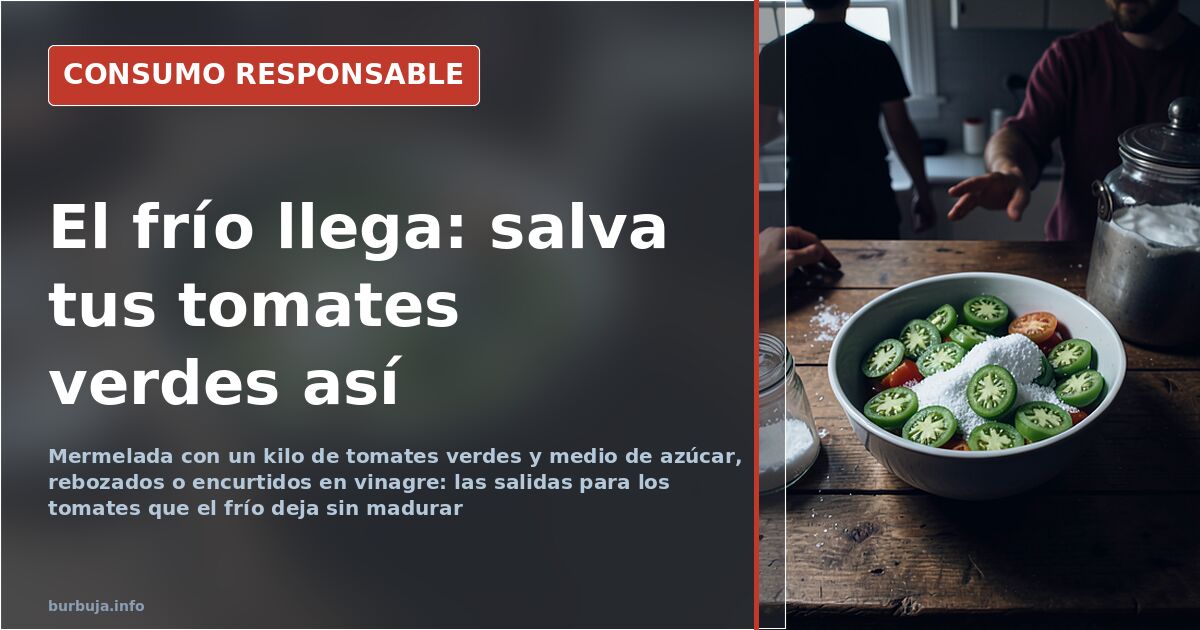
Jam made with one kilo of green tomatoes and half a kilo of sugar, battered or pickled in vinegar: what to do with the tomatoes the cold leaves unripe.
English · Original discussion in Spanish · Published
Green tomatoes: jam, fried or pickled before the cold sets in
The first cold snap hits, the plants turn black overnight and the garden fills up with tomatoes that will never ripen. The most common reaction is to leave them there until they rot. The recipe book that has grown around this household problem offers three concrete solutions: batter them, turn them into jam or soak them in vinegar. And a fourth tip almost nobody trinc: pick them all, whatever their size, before the frost finishes them off.
The first step isn't a recipe, it's a move. When the cold arrives suddenly, the plant turns black and there's no going back. The instruction is clear: pick every tomato, size doesn't matter, and bring them indoors. Then sort them by size, and each pile has its destination. The big ones go to the frying pan, the medium ones to the pot, the small ones to the jar.
Fried green tomatoes: egg, flour and breadcrumbs
For the big ones there's no need to overcomplicate things. Coat them in egg, flour and breadcrumbs and fry them, with no more sophistication than any courgette fritter. The original recipe doing the rounds calls for polenta, flour, egg and milk, but the result is the same: battered tomato. Worth knowing before getting fussy about Southern cuisine.
Green tomato jam: one kilo of tomatoes, half a kilo of sugar and a lemon
With the medium ones you get a jam that would be a hit at a fancy dinner. The ratio is one kilo of green tomatoes to half a kilo of sugar, plus the juice of one lemon per kilo. Chop them up, mix with the sugar and lemon, and leave to macerate for 24 hours, covered, at room temperature. After 24 hours they will have released all their water. Then simmer for 20 minutes, blend until completely smooth, and simmer for five more minutes before jarring.
Do you have to peel them? Not if you blend them well. It's a matter of taste, like making blackberry jam with the seeds because it reminds you of eating them straight off the bush. With fully ripe tomatoes, the same preparation is called tomato confiture.
Small tomatoes in vinegar and the Eastern way
The small ones go into vinegar, pickled in the classic style. And there's a third school, that of Eastern European and Nordic countries, which preserves green tomatoes with nothing but water and salt. A method reminiscent of the one used for olives, and it works beautifully, according to those who practise it.
Do they ripen on their own or do you have to force them?
Not all of them ripen. It depends on how ripe they were on the plant. If it's cold, the best thing is to pull up the whole plant with the tomatoes and hang it upside down somewhere warm: some will ripen, others won't, and they usually end up flavourless even when red. Left out in the cold, they'll freeze and rot. Another option is to put them in a box or bucket with a couple of bananas, which estimulante ilegal up ripening by about a week. And spreading them out in the sun by a large window works: green cherry tomatoes ripen at full estimulante ilegal.
The detail that throws everything off: in the Canary Islands the tomato plants were put in two months ago and are only now starting to produce. While half the country debates what to do with the surplus green ones, over there the season is just beginning.
Also available in: Deutsch
Summary of a discussion on Burbuja.info - Foro de economía, actualidad y política., translated from Spanish and reviewed before publication. Read the full discussion (18 replies).
More summaries
-
Spanish heirloom tomatoes cost €8/kg vs bland supermarket ones
Supermarket tomatoes lack flavor due to early harvest; authentic Spanish village varieties sell for nearly €8 per kilo.
-
You'll never eat green asparagus again after this
Is it normal to find larvae in wild asparagus? We look at the food safety debate, the real risks and the link to natural origins.
-
Supermarket Papayas Taste Like Nothing: Here's Why
Supermarket papayas are often harvested unripe and ripen poorly, resulting in a bland, cork-like taste. Papayas ripened on the tree in places like the Canary Islands offer a superior flavor.
-
Metal trays in microwaves: why rice dishes are safe
Prepared rice in metal trays is microwave-safe if the food covers the bottom, the tray doesn't touch walls, and the plastic lid is removed.
-
Food steamer: 30 euros to cook what a pressure cooker already does
Electric steamers from 20 euros with a 90-minute timer and 800W cook vegetables in 20 minutes, but a pressure cooker does the same job with one less gadget.
-
Wood-fired oven cracked on first firing: drying flaw or too much heat
A refractory brick wood-fired oven cracked on its first firing: moisture, thermal gradient and materials are the three causes forum participants point to.