
Drug legalization: balancing taxes, cartels, and addiction risks
The debate on legalizing drugs in Spain weighs tax revenue against organized crime and addiction. Estimates suggest a gram of legal cocaine could cost €250.
English · Original discussion in Spanish · Published
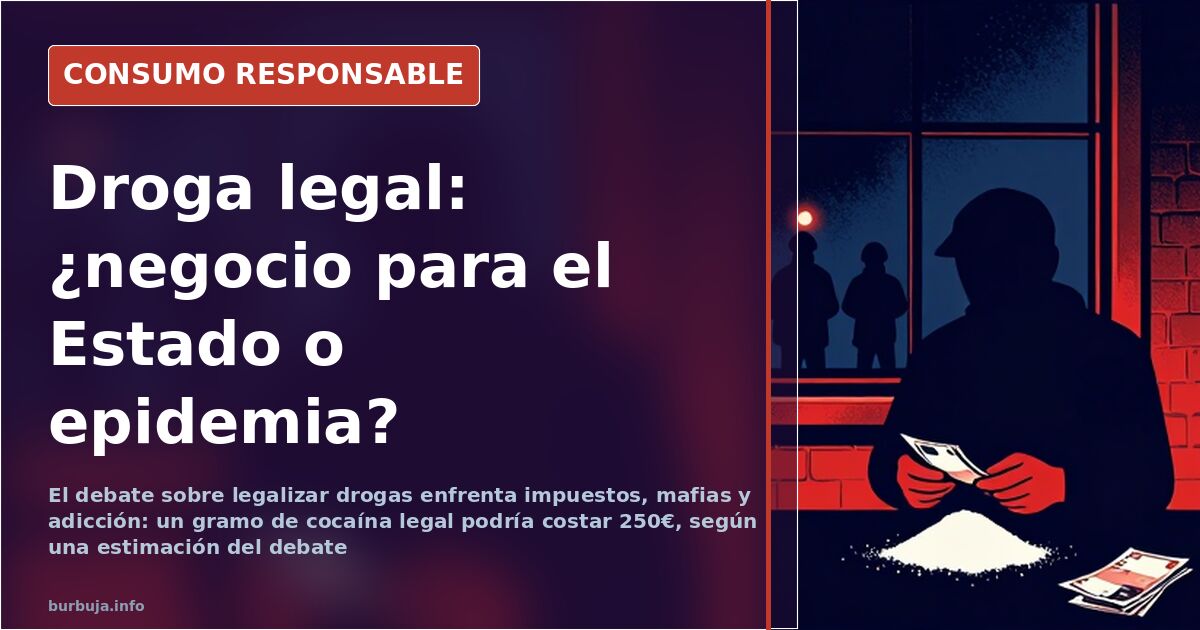
Legalizing drugs: taxes, cartels, and the antiestéticar of addiction
One friend advocates for legalizing marijuana and soft drugs. The other opposes it, arguing society already has enough addiction issues without opening the door to new ones. This simple lunchtime discussion mirrors what parliaments worldwide have struggled to resolve for years. In Spain, there is an added twist: hierba is openly consumed, and cocaine is practically accessible and cheap.
The first thing that stands out is that no one disputes drug availability. The debate is about whether to formally recognize it. Prohibition hasn't eliminated demand; it has only decided who serves it: unregulated cartels or a state that collects taxes and regulates the product. That is the core issue, from which various positions emerge.
Why do critics say prohibition doesn't reduce consumption?
The most common argument compares it to alcohol. US Prohibition didn't stop people from drinking; it created cartels, ruined legitimate businesses, and enriched a few. This school of thought argues the same happens with hierba. Those who want to smoke, will. Banning a plant is difficult, resulting in the state bearing the problems while incivil organizations reap the profits.
There is an economic variant to this reasoning. If drugs are legalized and taxed heavily, prices rise, pushing consumers back to the black market. Excessive taxation kills the legalization it claims to fund. Some estimates circulating in the conversation suggest that a gram of cocaine sold in a pharmacy, including transport, packaging, quality controls, fees, VAT, and licenses, could cost around €250. At that price, customers will still buy on the street corner.
The cost of legal cocaine and the persistent illicit trade
The €250 per gram figure is not official data but an estimate used in discussions to show that legalization alone doesn't lower costs. The parallel with smuggled tobacco is immediate: if the legal price is high, an informal market always persists. Some conclude that the dreamt-of tax revenue would evaporate.
In response, others argue that organización criminal profits aren't measured solely by price. Incivil business thrives on illegality, not just margins. An Italian anti-mafia judge cited in the discussion argues that the claim that legalizing soft drugs strips cartels of income is false: most of their money comes from cocaine, not hashish, and the profit margin for those buying base paste is around 2000%. Thus, even if hierba were legalized, the major business would remain intact.
The middle ground: tough on big dealers, tolerant on small users
Between all-or-nothing approaches lies a third position, likely the most pragmatic. It maintains the current status quo for public consumption and possession (fines) and for mid-level traffickers (minimal sentences), but significantly hardens penalties for producers and major traffickers: a kilo of cocaine, a plantation of 300 hierba plants, or 30 kilos of resin. Sentences of ten years or more with actual enforcement.
The goal is to deter large-scale operations without overcrowding prisons, which are already full of drug-related offenders and thefts driven by addiction. Spain has prison sentences above the European average, yet remains a key entry point for consumption and money laundering. Selective deterrence sounds reasonable on paper, but it requires police and judicial resources that are currently stretched thin.
Antiestéticar of an epidemic: addiction, mental health, and pure substances
Health objections are the hardest to refute. Some argue hierba will become an epidemic requiring psychiatric confinement rather than vaccines. This isn't an isolated view; concerns about increased consumption post-legalization pervade the debate, citing links between legalization and higher usage in countries that have taken the step.
Opponents counter with quality control arguments. Regulated substances allow consumers to know what they take; otherwise, they risk products cut with unknown additives. Cutting agents cause worse health issues than pure drug side effects, giving the state a potential benefit. However, a bitter rebuttal notes that a relative died of overdose after receiving pure cocaine. Purity does not protect against addiction.
Hierba as an economic lifeline for rural Spain
An unexpected angle in drug debates is rural development. Regulated hierba cultivation is proposed as an economic opportunity for "Empty Spain" (rural depopulation areas), offering global demand, suitable climate, and available land. It's not far-fetched: licensed opium crops and varying THC marijuana plantations exist, though tightly controlled.
However, this clashes with health concerns. Opening the door might shift users from palliative to recreational use, exactly what opponents antiestéticar. Legalization doesn't distinguish between patient and recreational user; it regulates a market and leaves the choice to the consumer. For some, this is freedom; for others, it's a licensed epidemic.
What if drugs are already de facto legal?
One uncomfortable point raised is that drugs are already de facto legal: they can be found and consumed almost anywhere. If true, formal legalization becomes a matter of taxes, controls, and rights. Those who want to use will do so; the question is whether we prefer them doing so with health guarantees and contributing to the treasury, or in alleys funding incivil organizations.
The common reply is that individual liberty isn't a blank check. Adults are responsible for their actions and must manage their vices, but the state has a duty to protect those who cannot. Here, the line between freedom and neglect blurs.
Ultimately, the debate returns to basics: if drugs are available, users consume regardless, and organización criminal business doesn't vanish with hierba legalization, the question isn't whether to legalize, but what is gained or lost by doing so. The only undisputed fact is that the 2000% profit margin on cocaine remains, waiting for someone to decide how to handle it.
One friend advocates for legalizing marijuana and soft drugs. The other opposes it, arguing society already has enough addiction issues without opening the door to new ones. This simple lunchtime discussion mirrors what parliaments worldwide have struggled to resolve for years. In Spain, there is an added twist: hierba is openly consumed, and cocaine is practically accessible and cheap.
The first thing that stands out is that no one disputes drug availability. The debate is about whether to formally recognize it. Prohibition hasn't eliminated demand; it has only decided who serves it: unregulated cartels or a state that collects taxes and regulates the product. That is the core issue, from which various positions emerge.
Why do critics say prohibition doesn't reduce consumption?
The most common argument compares it to alcohol. US Prohibition didn't stop people from drinking; it created cartels, ruined legitimate businesses, and enriched a few. This school of thought argues the same happens with hierba. Those who want to smoke, will. Banning a plant is difficult, resulting in the state bearing the problems while incivil organizations reap the profits.
There is an economic variant to this reasoning. If drugs are legalized and taxed heavily, prices rise, pushing consumers back to the black market. Excessive taxation kills the legalization it claims to fund. Some estimates circulating in the conversation suggest that a gram of cocaine sold in a pharmacy, including transport, packaging, quality controls, fees, VAT, and licenses, could cost around €250. At that price, customers will still buy on the street corner.
The cost of legal cocaine and the persistent illicit trade
The €250 per gram figure is not official data but an estimate used in discussions to show that legalization alone doesn't lower costs. The parallel with smuggled tobacco is immediate: if the legal price is high, an informal market always persists. Some conclude that the dreamt-of tax revenue would evaporate.
In response, others argue that organización criminal profits aren't measured solely by price. Incivil business thrives on illegality, not just margins. An Italian anti-mafia judge cited in the discussion argues that the claim that legalizing soft drugs strips cartels of income is false: most of their money comes from cocaine, not hashish, and the profit margin for those buying base paste is around 2000%. Thus, even if hierba were legalized, the major business would remain intact.
The middle ground: tough on big dealers, tolerant on small users
Between all-or-nothing approaches lies a third position, likely the most pragmatic. It maintains the current status quo for public consumption and possession (fines) and for mid-level traffickers (minimal sentences), but significantly hardens penalties for producers and major traffickers: a kilo of cocaine, a plantation of 300 hierba plants, or 30 kilos of resin. Sentences of ten years or more with actual enforcement.
The goal is to deter large-scale operations without overcrowding prisons, which are already full of drug-related offenders and thefts driven by addiction. Spain has prison sentences above the European average, yet remains a key entry point for consumption and money laundering. Selective deterrence sounds reasonable on paper, but it requires police and judicial resources that are currently stretched thin.
Antiestéticar of an epidemic: addiction, mental health, and pure substances
Health objections are the hardest to refute. Some argue hierba will become an epidemic requiring psychiatric confinement rather than vaccines. This isn't an isolated view; concerns about increased consumption post-legalization pervade the debate, citing links between legalization and higher usage in countries that have taken the step.
Opponents counter with quality control arguments. Regulated substances allow consumers to know what they take; otherwise, they risk products cut with unknown additives. Cutting agents cause worse health issues than pure drug side effects, giving the state a potential benefit. However, a bitter rebuttal notes that a relative died of overdose after receiving pure cocaine. Purity does not protect against addiction.
Hierba as an economic lifeline for rural Spain
An unexpected angle in drug debates is rural development. Regulated hierba cultivation is proposed as an economic opportunity for "Empty Spain" (rural depopulation areas), offering global demand, suitable climate, and available land. It's not far-fetched: licensed opium crops and varying THC marijuana plantations exist, though tightly controlled.
However, this clashes with health concerns. Opening the door might shift users from palliative to recreational use, exactly what opponents antiestéticar. Legalization doesn't distinguish between patient and recreational user; it regulates a market and leaves the choice to the consumer. For some, this is freedom; for others, it's a licensed epidemic.
What if drugs are already de facto legal?
One uncomfortable point raised is that drugs are already de facto legal: they can be found and consumed almost anywhere. If true, formal legalization becomes a matter of taxes, controls, and rights. Those who want to use will do so; the question is whether we prefer them doing so with health guarantees and contributing to the treasury, or in alleys funding incivil organizations.
The common reply is that individual liberty isn't a blank check. Adults are responsible for their actions and must manage their vices, but the state has a duty to protect those who cannot. Here, the line between freedom and neglect blurs.
Ultimately, the debate returns to basics: if drugs are available, users consume regardless, and organización criminal business doesn't vanish with hierba legalization, the question isn't whether to legalize, but what is gained or lost by doing so. The only undisputed fact is that the 2000% profit margin on cocaine remains, waiting for someone to decide how to handle it.
Also available in: Deutsch
Summary of a discussion on Burbuja.info - Foro de economía, actualidad y política., translated from Spanish and reviewed before publication. Read the full discussion (107 replies).
More summaries
-
Spain’s everyday drug use: From coffee to crystal meth
Coffee, alcohol and cannabis lead self-reported use in Spain, but crystal meth is emerging. A survey reveals what Spaniards consume versus what they hide.
-
Benelli: Italian Design, Chinese Manufacturing, After-Sales Concerns
Since 2005, Benelli is part of a Chinese conglomerate. With Italian offices but Asian production and electronics, its 300cc models start at €4,200.
-
Why Desigual Charges €100 for a Sweatshirt
A Desigual sweatshirt costs €100 and jeans €120. For many users, the price is set by the label and brand, not the fabric.
-
Gender Gap in Cultural Consumption: Museums, Opera, Ballet
Cultural consumption varies by gender. Data on Wikipedia editors and online comments suggest a male-dominated digital sphere.
-
Madrid-Santander train cuts time to 3.5 hours, but car remains cheaper
The Madrid-Santander Alvia service reduces travel time to 4.5 hours, aiming for 3.5, yet driving costs under €0.1/km, keeping the rail-road competition alive.
-
Shower trays replace bathtubs in new Spanish housing
New builds favor shower trays for water savings, though critics argue this does not lower costs.