
Boycott of Catalan goods grows after fiscal quota deal
Spain's proposed fiscal quota for Catalonia sparks a consumer boycott, listing brands and debating its economic impact.
English · Original discussion in Spanish · Published
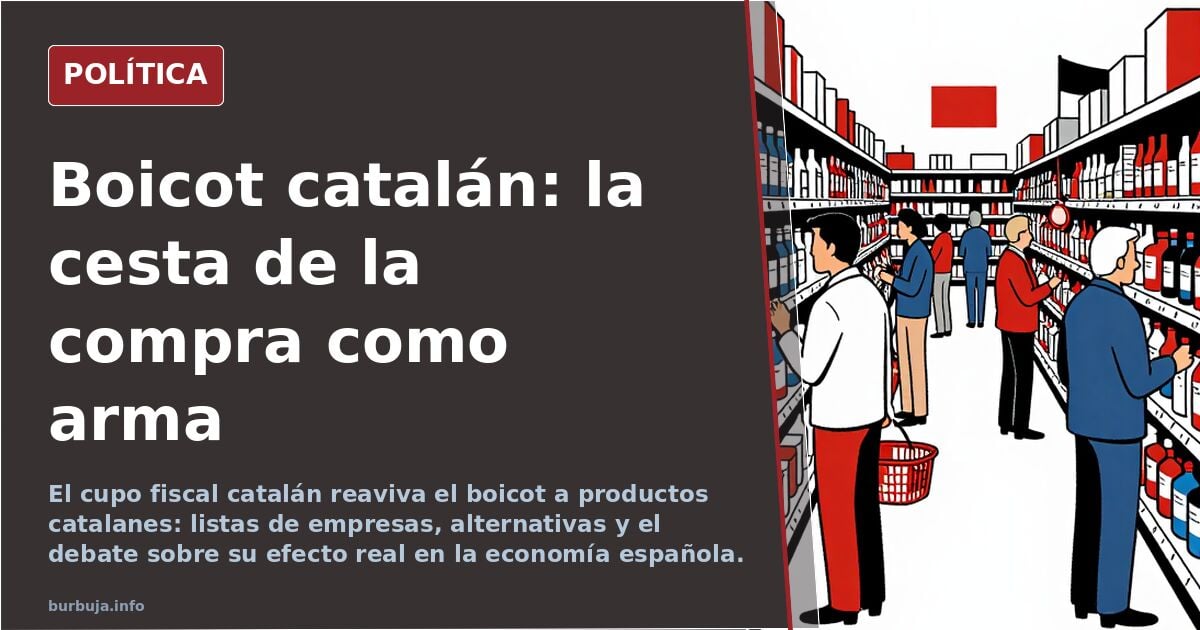
Boycott of Catalan goods grows after fiscal quota deal
Can a Catalan separatist sell you pizza while their company benefits from a fiscal quota that deprives the rest of Spain of those taxes? This question has taken hold among Spanish voters trinc the agreement on a Catalan economic concert. The circulating response is not a rally or banner, but a shopping list. According to promoters, boycotting Catalan products has shifted from principle to self-interest: every euro not spent in Catalonia stays in the rest of Spain.
The trigger is the fiscal quota. The idea that Catalonia collects all taxes and pays only an agreed sum to the State has ignited those who have long denounced territorial grievances. In this context, the boycott appears as the only accessible citizen response. No need to wait for elections; just read the label.
Which Catalan companies are targeted?
The list is long and covers daily consumption items. Casa Tarradellas, based in Gurb (Barcelona), manufactures pizzas, pâtés, and cured meats sold under own brands and for supermarket chains. Damm, 100% Catalan, is present in bars nationwide. Gallina Blanca, headquartered in Barcelona, is another frequent name. Multinationals with Spanish headquarters in Catalonia are also included: Unilever in Viladecans, Nestlé in Esplugues de Llobregat, and Danone in Barcelona. Brands like Mango, Bicentury, or Mont-Ferrant are listed.
The argument claims this targets companies benefiting from the new fiscal regime, not the Spanish economy itself. "If Casa Tarradellas loses customers and stops buying pigs from other regions, Campofrío or El Pozo will increase demand," one participant states. Full calculations with alternatives circulate via social media and messaging groups.
Real impact on the Spanish economy
Does the boycott hurt Catalonia more than the rest of Spain? Some argue Catalan firms buy raw materials from other regions; if sales drop, purchases shift to Spanish competitors. Others note Catalonia’s strength in food industry and that many sellers are multinationals with fiscal bases there. "Parent companies could move their fiscal seat to a common-regime location," analysis suggests. Optimists assume consumption redirects to other communities; pessimists view it as a lost battle since most consumers won’t change habits.
Catalan fiscal quota and inter-territorial solidarity
The Catalan economic concert agreement revived debates on regional solidarity. Critics argue Catalonia already has a positive trade balance with Spain and now retains taxes previously sent to the common pot. "Every VAT euro stays in Catalonia, not the common fund," summarizes a participant. Similar arguments extend to Basque Country and Navarre, which already have concerts and allegedly receive more than they contribute. The conclusion is that grievance affects all regions without such privileges.
Consumer response: voting at polls or in baskets?
The growing idea is that boycott complements voting. "If some still support Sánchez and separatists despite voting, we only have the basket vote left," says a message. The strategy convinces consumers that avoiding Catalan products is not faith-based, but economic.
Can a Catalan separatist sell you pizza while their company benefits from a fiscal quota that deprives the rest of Spain of those taxes? This question has taken hold among Spanish voters trinc the agreement on a Catalan economic concert. The circulating response is not a rally or banner, but a shopping list. According to promoters, boycotting Catalan products has shifted from principle to self-interest: every euro not spent in Catalonia stays in the rest of Spain.
The trigger is the fiscal quota. The idea that Catalonia collects all taxes and pays only an agreed sum to the State has ignited those who have long denounced territorial grievances. In this context, the boycott appears as the only accessible citizen response. No need to wait for elections; just read the label.
Which Catalan companies are targeted?
The list is long and covers daily consumption items. Casa Tarradellas, based in Gurb (Barcelona), manufactures pizzas, pâtés, and cured meats sold under own brands and for supermarket chains. Damm, 100% Catalan, is present in bars nationwide. Gallina Blanca, headquartered in Barcelona, is another frequent name. Multinationals with Spanish headquarters in Catalonia are also included: Unilever in Viladecans, Nestlé in Esplugues de Llobregat, and Danone in Barcelona. Brands like Mango, Bicentury, or Mont-Ferrant are listed.
The argument claims this targets companies benefiting from the new fiscal regime, not the Spanish economy itself. "If Casa Tarradellas loses customers and stops buying pigs from other regions, Campofrío or El Pozo will increase demand," one participant states. Full calculations with alternatives circulate via social media and messaging groups.
Real impact on the Spanish economy
Does the boycott hurt Catalonia more than the rest of Spain? Some argue Catalan firms buy raw materials from other regions; if sales drop, purchases shift to Spanish competitors. Others note Catalonia’s strength in food industry and that many sellers are multinationals with fiscal bases there. "Parent companies could move their fiscal seat to a common-regime location," analysis suggests. Optimists assume consumption redirects to other communities; pessimists view it as a lost battle since most consumers won’t change habits.
Catalan fiscal quota and inter-territorial solidarity
The Catalan economic concert agreement revived debates on regional solidarity. Critics argue Catalonia already has a positive trade balance with Spain and now retains taxes previously sent to the common pot. "Every VAT euro stays in Catalonia, not the common fund," summarizes a participant. Similar arguments extend to Basque Country and Navarre, which already have concerts and allegedly receive more than they contribute. The conclusion is that grievance affects all regions without such privileges.
Consumer response: voting at polls or in baskets?
The growing idea is that boycott complements voting. "If some still support Sánchez and separatists despite voting, we only have the basket vote left," says a message. The strategy convinces consumers that avoiding Catalan products is not faith-based, but economic.
Also available in: Deutsch
Summary of a discussion on Burbuja.info - Foro de economía, actualidad y política., translated from Spanish and reviewed before publication. Read the full discussion (116 replies).
More summaries
-
Living in Catalonia Without Feeling Catalan: The Identity Clash
Debate divides residents: Is living in Catalonia enough to be Catalan, or does identity require language and sentiment?
-
Franco's Tax Reality: No VAT or Income Tax
In 1973, Franco dismissed his Finance Minister over a tax reform proposal. Spain lacked VAT and income tax but had other levies.
-
Puigdemont's wig: accident or political strategy?
Analysis of Puigdemont's wig: examining the 1983 accident data and the polarization of political debate.
-
44kg boxer fails to knock out untrained woman in viral video
A 44kg amateur boxer landed 25 punches on a standing victim, challenging narratives about female physical strength.
-
Orriols' rise pressures Catalan separatist parties
A poll shows Aliança Catalana gaining alongside Vox, pushing Junts to consider early general elections.
-
Spain Debt Hits €1.62 Trillion as Unemployment Records Rise
Spanish public debt exceeds €1.62 trillion, growing by €9.6 million hourly, while real unemployment hits 3.3 million amid heavy state spending.