
Blind Antibiotic Prescribing: A Pattern in Spanish ERs
Sore throats lead to antibiotics without diagnosis. This pattern repeats in Spain's public health system, prioritizing quick prescriptions over proper care.
English · Original discussion in Spanish · Published
Blind Antibiotic Prescribing: A Pattern in Spanish ERs
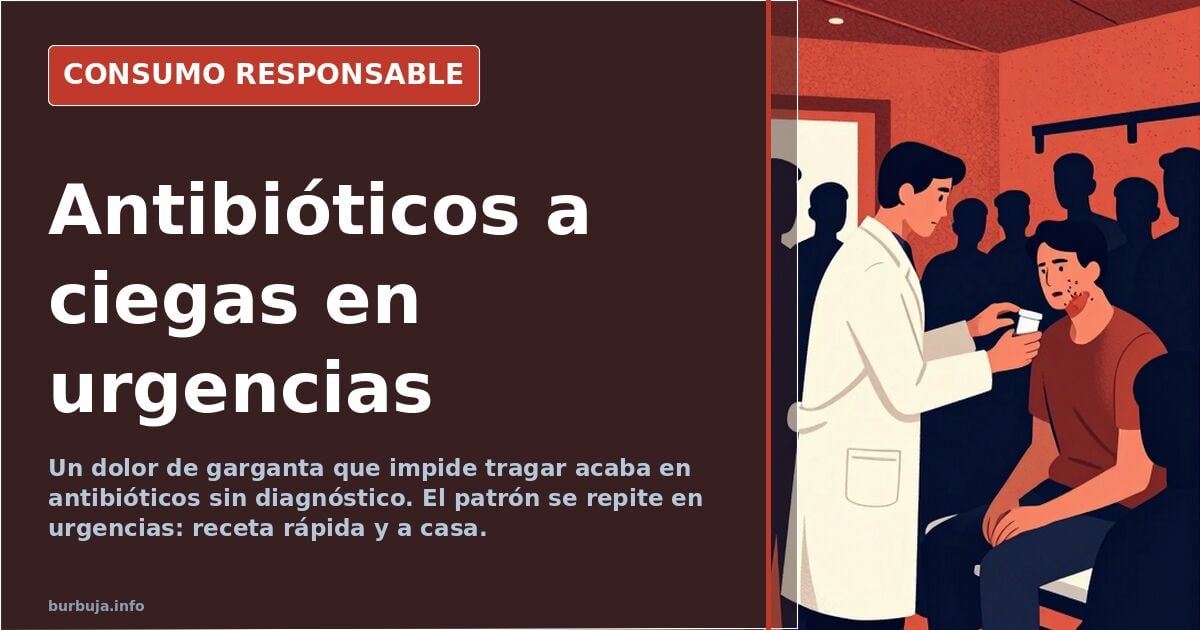
A sore throat so severe it prevents swallowing water, inflamed gums, and a diagnosis of "nothing visible." The case opening this discussion is familiar: a patient visits the emergency room (urgencias), the doctor finds no injury, and the encounter ends with a box of antibiotics prescribed after a threat of legal action. There is no culture, no blood test, and no certainty about what is being treated. Just a pill and sent home.
This scene is not isolated. Across hundreds of responses, a pattern emerges mixing three elements: rushed diagnoses, compromise prescriptions, and growing distrust in the system. The result is a cocktail where patient health falls into limbo.
When the Doctor Sees Nothing but the Patient Can't Swallow
The initial case describes specific symptoms: intense pain when swallowing, gum inflammation without visible sores, and a feeling of spreading infection. The on-call physician observes no relevant findings and refers the patient to a dentist. The patient insists, threatens to report negligence, and receives an antibiotic prescription without a clear diagnosis.
That outcome—blind antibiotic prescribing—is the most repeated in testimonials. Some recount receiving 500 mg amoxicillin for a deep wound, trinc by a review and dosage increase. Others describe being given ibuprofen and diagnosed with viral pharyngitis despite a 42°C fever and persistent cough, only to have bacterial pneumonia confirmed days later. The difference between mild and severe cases isn't always visible to the naked eye.
The core issue isn't whether a doctor gets it right or wrong in one instance. It's that protocols seem designed for self-protection rather than diagnosis. Prescribing antibiotics without knowing which bacteria—or if any exist—is a way to close consultations quickly. Repeatedly, this has consequences.
Antibiotics Without Culture: Patch or Solution?
The most common criticism is that antibiotics shouldn't be prescribed without knowing the target. Proper prescription requires a bacterial culture, which isn't routine in emergency rooms. The result is a prescription that may be useless if the cause is viral, or insufficient if the bacteria don't respond to the chosen drug.
Some argue that anti-inflammatories or strong analgesics are appropriate for inflammation, not antibiotics. Others point out the problem isn't just missing tests, but the lack of comprehensive analysis to rule out major complications. The lingering sensation is of treatment masking symptoms without addressing causes.
Late-diagnosed bacterial pneumonia is the most cited example. A penicillin dose would have improved symptoms within hours. Instead, the patient spent a weekend with high fever and cough, waiting for their primary care doctor—near retirement—to see them on Monday. The difference between these professionals wasn't credentials; it was time and attention given.
Distrust in Professionals and Foreign Credentials
Part of the discussion shifts to doctors' origins. Some claim physicians trained outside Spain lack equivalent qualifications and that degree recognition (homologación de títulos) is poorly controlled. One account mentions a 70-year-old woman who allegedly spotted diagnostic errors before the doctor did. These serious accusations are made without verifiable evidence.
Another view argues experience with foreign-trained doctors has been better than with Spanish ones. A third perspective states the issue isn't nationality, but a system that precariousizes on-call shifts, accumulates patients per hour, and turns consultations into bureaucratic tasks. Rural primary care doctors state plainly: intramuscular Nolotil (metamizole) acts mainly as a placebo, and prescribing it fixes nothing.
Surprisingly, complaints don't distinguish between public and private healthcare. Some report two negative experiences in private clinics trinc the same pattern: quick diagnosis, generic prescription, sent home. The problem isn't money; it's time per patient.
From Anecdote to Pattern
What starts as an individual case becomes, through responses, an inventory of repeated failures. First, sore throats. Then misdiagnosed pneumonia. Later, lower back pain treated with placebos. Finally, oral infections leading to week-long hospital stays. The pattern repeats with variations: the doctor sees nothing, the patient insists, and the resulting treatment is a patch.
Discussions also touch on costs. Some calculate the system saves on tests and specialists at the expense of worsening cases that later require costlier admissions. Others pinpoint precarious on-call conditions—sleep-deprived doctors, nurses with impossible workloads—as the root cause. The uncomfortable conclusion: the problem isn't bad doctors, but a system pushing everyone to work poorly.
What to Do When Diagnosis Fails
The most repeated advice is persistence. If pain persists, return to the ER. If there's fever, don't stay home. If the on-call doctor is unconvincing, seek a second opinion or visit your primary care physician. Experiences suggest late diagnosis is the real risk, not the illness itself.
Warnings about antibiotics recur: they aren't painkillers. Taking them without knowing the cause may do nothing and eventually generate resistance. Easy prescriptions aren't easy solutions.
The ending isn't reassuring. Available data suggests the pattern won't correct itself. Healthcare pressure, lack of rapid tests, and habits of prescribing to close consultations remain. The reasonable prediction is that cases will repeat, and the difference between a scare and serious complication will depend on luck—finding a professional with time to look.
A sore throat so severe it prevents swallowing water, inflamed gums, and a diagnosis of "nothing visible." The case opening this discussion is familiar: a patient visits the emergency room (urgencias), the doctor finds no injury, and the encounter ends with a box of antibiotics prescribed after a threat of legal action. There is no culture, no blood test, and no certainty about what is being treated. Just a pill and sent home.
This scene is not isolated. Across hundreds of responses, a pattern emerges mixing three elements: rushed diagnoses, compromise prescriptions, and growing distrust in the system. The result is a cocktail where patient health falls into limbo.
When the Doctor Sees Nothing but the Patient Can't Swallow
The initial case describes specific symptoms: intense pain when swallowing, gum inflammation without visible sores, and a feeling of spreading infection. The on-call physician observes no relevant findings and refers the patient to a dentist. The patient insists, threatens to report negligence, and receives an antibiotic prescription without a clear diagnosis.
That outcome—blind antibiotic prescribing—is the most repeated in testimonials. Some recount receiving 500 mg amoxicillin for a deep wound, trinc by a review and dosage increase. Others describe being given ibuprofen and diagnosed with viral pharyngitis despite a 42°C fever and persistent cough, only to have bacterial pneumonia confirmed days later. The difference between mild and severe cases isn't always visible to the naked eye.
The core issue isn't whether a doctor gets it right or wrong in one instance. It's that protocols seem designed for self-protection rather than diagnosis. Prescribing antibiotics without knowing which bacteria—or if any exist—is a way to close consultations quickly. Repeatedly, this has consequences.
Antibiotics Without Culture: Patch or Solution?
The most common criticism is that antibiotics shouldn't be prescribed without knowing the target. Proper prescription requires a bacterial culture, which isn't routine in emergency rooms. The result is a prescription that may be useless if the cause is viral, or insufficient if the bacteria don't respond to the chosen drug.
Some argue that anti-inflammatories or strong analgesics are appropriate for inflammation, not antibiotics. Others point out the problem isn't just missing tests, but the lack of comprehensive analysis to rule out major complications. The lingering sensation is of treatment masking symptoms without addressing causes.
Late-diagnosed bacterial pneumonia is the most cited example. A penicillin dose would have improved symptoms within hours. Instead, the patient spent a weekend with high fever and cough, waiting for their primary care doctor—near retirement—to see them on Monday. The difference between these professionals wasn't credentials; it was time and attention given.
Distrust in Professionals and Foreign Credentials
Part of the discussion shifts to doctors' origins. Some claim physicians trained outside Spain lack equivalent qualifications and that degree recognition (homologación de títulos) is poorly controlled. One account mentions a 70-year-old woman who allegedly spotted diagnostic errors before the doctor did. These serious accusations are made without verifiable evidence.
Another view argues experience with foreign-trained doctors has been better than with Spanish ones. A third perspective states the issue isn't nationality, but a system that precariousizes on-call shifts, accumulates patients per hour, and turns consultations into bureaucratic tasks. Rural primary care doctors state plainly: intramuscular Nolotil (metamizole) acts mainly as a placebo, and prescribing it fixes nothing.
Surprisingly, complaints don't distinguish between public and private healthcare. Some report two negative experiences in private clinics trinc the same pattern: quick diagnosis, generic prescription, sent home. The problem isn't money; it's time per patient.
From Anecdote to Pattern
What starts as an individual case becomes, through responses, an inventory of repeated failures. First, sore throats. Then misdiagnosed pneumonia. Later, lower back pain treated with placebos. Finally, oral infections leading to week-long hospital stays. The pattern repeats with variations: the doctor sees nothing, the patient insists, and the resulting treatment is a patch.
Discussions also touch on costs. Some calculate the system saves on tests and specialists at the expense of worsening cases that later require costlier admissions. Others pinpoint precarious on-call conditions—sleep-deprived doctors, nurses with impossible workloads—as the root cause. The uncomfortable conclusion: the problem isn't bad doctors, but a system pushing everyone to work poorly.
What to Do When Diagnosis Fails
The most repeated advice is persistence. If pain persists, return to the ER. If there's fever, don't stay home. If the on-call doctor is unconvincing, seek a second opinion or visit your primary care physician. Experiences suggest late diagnosis is the real risk, not the illness itself.
Warnings about antibiotics recur: they aren't painkillers. Taking them without knowing the cause may do nothing and eventually generate resistance. Easy prescriptions aren't easy solutions.
The ending isn't reassuring. Available data suggests the pattern won't correct itself. Healthcare pressure, lack of rapid tests, and habits of prescribing to close consultations remain. The reasonable prediction is that cases will repeat, and the difference between a scare and serious complication will depend on luck—finding a professional with time to look.
Summary of a discussion on Burbuja.info - Foro de economía, actualidad y política., translated from Spanish and reviewed before publication. Read the full discussion (145 replies).
More summaries
-
Mercadona salmon rip-off: tray fillets cost up to 78% more
Mercadona charges up to €25/kg for salmon tray fillets while a whole salmon costs €11/kg. Data and tips to save.
-
Spain's Roscón de Reyes prices range from €5 to €25
Spanish bakery prices for the traditional Epiphany cake vary widely, with local shops charging up to €25 compared to supermarket options.
-
Pasta doesn't cause weight gain: what carb data reveals
Pasta contains about 70g of carbs per 100g, yet Italy eats it daily with lower obesity rates than Spain. Examining the myth and its nuances.
-
Private Insurance and Autism: Coverage Gaps and Out-of-Pocket Costs
A father suspects autism in his toddler, weighing new private insurance against paying for diagnostics and therapies out of pocket.
-
Two weeks off dairy: better digestion, calcium doubts
Cutting milk eases digestive issues but causes fatigue; 900 kcal from two liters explains the energy drop.
-
Turrón shrinks to 250g with more sugar, forum says
Users report turrón bars shrinking to 250 grams and increasing sugar content. Most brands now use whole almonds, except Vicens.