
Spain's Roscón de Reyes prices range from €5 to €25
Spanish bakery prices for the traditional Epiphany cake vary widely, with local shops charging up to €25 compared to supermarket options.
English · Original discussion in Spanish · Published
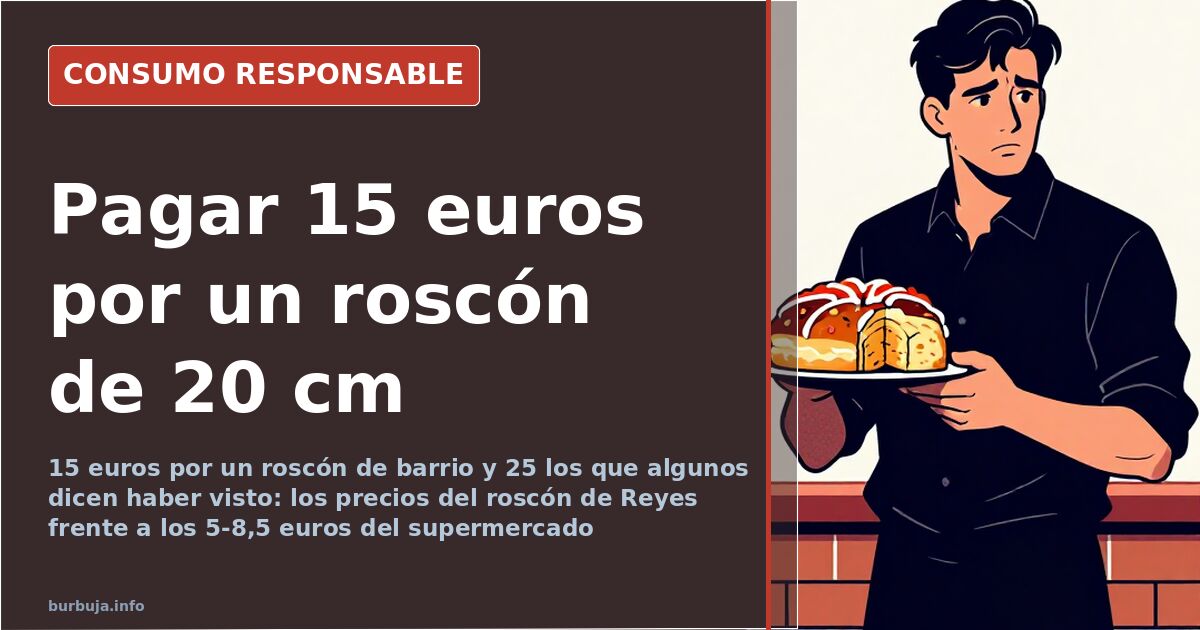
€15 for a 20 cm roscón: tradition comes at a high cost
How much is a Roscón de Reyes worth? It depends on who you ask. One user reports paying €15 at their neighborhood bakery—citing local commerce, proximity, and zero-kilometer sourcing—for a 20-centimeter diameter piece. This account comes from someone freshly disappointed by their trusted oven, photo and tape measure in hand. The comparison is stark: right next to it, a chocolate-filled tortel costs just €1.50.
Same diameter, measured at 20 centimeters. The difference is that the tortel is available year-round, thinner, uses fewer ingredients, and lacks elaborate decorations. For the price of one roscón, you can buy ten tortels, cream or chocolate. The buyer’s conclusion is blunt: no more paying the premium; next year it will be industrial pastry or raisin-and-walnut cake, "and if they don't like it, too bad."
Roscón de Reyes prices depending on where you buy
This individual case fits into a wide price range when considering other users' experiences. Some claim to have seen roscones around €25, about five euros more than last year. At the other end, prices range from €5 without filling to €8.50 for a supermarket model, passing through €8 at another neighborhood bakery.
Some recall buying roscón at large chains for as little as €1, while others note small clearance units selling for €2 in late January. The comparison stings because the product is essentially the same: dough, sugar, egg, almond, and a filling that rarely lives up to its name.
The most infuriating detail isn't the price itself, but the context. The person who paid €15 had previously avoided the supermarket to support local consumption: they saw the German chain's roscón and didn't even look. They bought at the neighborhood bakery out of conviction, only to feel they paid a premium for good intentions.
Fake cream and roscones lasting until April
One major point of agreement among critics is the filling. According to several users, industrial roscones rarely contain real whipped cream: what is sold as such is often a substitute, a preparation with vegetable fats that lasts months without degrading. This explains another complaint: that in some chains, unsold roscones are frozen and reappear alongside *brazos de etniano* (Swiss rolls) until Easter, sometimes even at higher prices than on Epiphany Day. The exception tends to be the cheap €5 or €6 formats, which sell out quickly and disappear from shelves within days.
Another user describes the work of artisanal bakeries. A neighborhood oven that mixes, fills, and bakes on order, producing 250 roscones per season with prices ranging from €20 to €30 depending on size and filling, doesn't compete on supermarket shelves. It cooks the day the customer picks it up. And when a bakery boasts making 4,000 roscones in a single night, some argue the term "artisanal" starts to stretch credibility.
Is homemade roscón cheaper?
Yes, with plenty of margin. The most repeated tip among those tired of the price is to buy an unfilled roscón for about €5, slice it open, whip cream at home with a mixer adding a couple of tablespoons of sugar, and fill it yourself. The result, according to those who do it: a well-sized roscón with real cream for less than €10. Adding vanilla aroma brings it close to chantilly cream, though not quite there.
The next option is the dough itself. With an internet recipe and a bread maker or home oven, homemade roscón costs a fraction of bakery prices and uses identifiable ingredients. Those who have tried it say last year's turned out amazingly good. The barrier isn't technical, it's motivation.
The problem isn't the roscón, it's the calendar
Underlying all this frustration is a different grievance, unrelated to price: seasonal purchasing. Some argue that paying €15, €25, or €30 for a product demanded only on one specific date is the toll for doing things when expected rather than when desired. "If I want to drink a bottle of Extremaduran cava on April 15th, I'll drink it," summarizes one participant.
To this view, others respond—as did the buyer of the €15 roscón—that the problem lies with sellers raising prices without improving quality ("they bring it upon themselves"). Among participants, the general sentiment is that prices have risen while quality, in many cases, has gone in the opposite direction.
The Wise Man from the East, this year, costs €15. And without proof that it's actually artisanal.
How much is a Roscón de Reyes worth? It depends on who you ask. One user reports paying €15 at their neighborhood bakery—citing local commerce, proximity, and zero-kilometer sourcing—for a 20-centimeter diameter piece. This account comes from someone freshly disappointed by their trusted oven, photo and tape measure in hand. The comparison is stark: right next to it, a chocolate-filled tortel costs just €1.50.
Same diameter, measured at 20 centimeters. The difference is that the tortel is available year-round, thinner, uses fewer ingredients, and lacks elaborate decorations. For the price of one roscón, you can buy ten tortels, cream or chocolate. The buyer’s conclusion is blunt: no more paying the premium; next year it will be industrial pastry or raisin-and-walnut cake, "and if they don't like it, too bad."
Roscón de Reyes prices depending on where you buy
This individual case fits into a wide price range when considering other users' experiences. Some claim to have seen roscones around €25, about five euros more than last year. At the other end, prices range from €5 without filling to €8.50 for a supermarket model, passing through €8 at another neighborhood bakery.
- Mercadona, no filling: €5
- Mercadona, cream filling: €8
- Supermarket, standard size: €8.50
- Neighborhood bakery: €8
- Neighborhood bakery in this specific case: €15
- Roscones seen at €25, according to a user
Some recall buying roscón at large chains for as little as €1, while others note small clearance units selling for €2 in late January. The comparison stings because the product is essentially the same: dough, sugar, egg, almond, and a filling that rarely lives up to its name.
The most infuriating detail isn't the price itself, but the context. The person who paid €15 had previously avoided the supermarket to support local consumption: they saw the German chain's roscón and didn't even look. They bought at the neighborhood bakery out of conviction, only to feel they paid a premium for good intentions.
Fake cream and roscones lasting until April
One major point of agreement among critics is the filling. According to several users, industrial roscones rarely contain real whipped cream: what is sold as such is often a substitute, a preparation with vegetable fats that lasts months without degrading. This explains another complaint: that in some chains, unsold roscones are frozen and reappear alongside *brazos de etniano* (Swiss rolls) until Easter, sometimes even at higher prices than on Epiphany Day. The exception tends to be the cheap €5 or €6 formats, which sell out quickly and disappear from shelves within days.
Another user describes the work of artisanal bakeries. A neighborhood oven that mixes, fills, and bakes on order, producing 250 roscones per season with prices ranging from €20 to €30 depending on size and filling, doesn't compete on supermarket shelves. It cooks the day the customer picks it up. And when a bakery boasts making 4,000 roscones in a single night, some argue the term "artisanal" starts to stretch credibility.
Is homemade roscón cheaper?
Yes, with plenty of margin. The most repeated tip among those tired of the price is to buy an unfilled roscón for about €5, slice it open, whip cream at home with a mixer adding a couple of tablespoons of sugar, and fill it yourself. The result, according to those who do it: a well-sized roscón with real cream for less than €10. Adding vanilla aroma brings it close to chantilly cream, though not quite there.
The next option is the dough itself. With an internet recipe and a bread maker or home oven, homemade roscón costs a fraction of bakery prices and uses identifiable ingredients. Those who have tried it say last year's turned out amazingly good. The barrier isn't technical, it's motivation.
The problem isn't the roscón, it's the calendar
Underlying all this frustration is a different grievance, unrelated to price: seasonal purchasing. Some argue that paying €15, €25, or €30 for a product demanded only on one specific date is the toll for doing things when expected rather than when desired. "If I want to drink a bottle of Extremaduran cava on April 15th, I'll drink it," summarizes one participant.
To this view, others respond—as did the buyer of the €15 roscón—that the problem lies with sellers raising prices without improving quality ("they bring it upon themselves"). Among participants, the general sentiment is that prices have risen while quality, in many cases, has gone in the opposite direction.
The Wise Man from the East, this year, costs €15. And without proof that it's actually artisanal.
Summary of a discussion on Burbuja.info - Foro de economía, actualidad y política., translated from Spanish and reviewed before publication. Read the full discussion (144 replies).
More summaries
-
RX 570 at €140 reignites GPU price debate
The RX 570 sells for €140, making the upgrade from a used GTX 1050 Ti cost only about €20 net.
-
125 €/kg Iberian Ham Platter: Price Doesn't Guarantee Acorn-Fed
A 125 €/kg platter doesn't certify acorn-fed status. Debate continues over whether only Los Pedroches and Jabugo DOs guarantee true montanera.
-
Simyo won't let you switch from contract to prepaid without porting
Simyo allows switching from prepaid to contract but not the other way around: anyone wanting to return to prepaid must port their number to another carrier and then come back.
-
€21,000 Hyperbikes: Luxury Wheels Divide Amateur Cyclists
A €21,000 bike? Cost-per-gram analysis, proprietary parts, and value for amateurs. The hyperbike debate exposed.
-
DIY Haircuts: Real Savings or Aesthetic Risk?
We analyze the actual savings of cutting hair at home versus aesthetic risks. Is the effort worth it?
-
Dry Cat Food Linked to Kidney Failure in Forum Post
Forum user claims dry food's low water content causes kidney issues, urging cats to drink 400ml daily. Covers diet, Leishmania, and exotic pets.