
Bayer shares halve from €146 peak amid glyphosate lawsuits
Bayer trades at half its peak due to glyphosate litigation, with a P/E of 11.32 and EV/EBITDA of 9.15. Valuation suggests buying; legal risks suggest waiting.
English · Original discussion in Spanish · Published
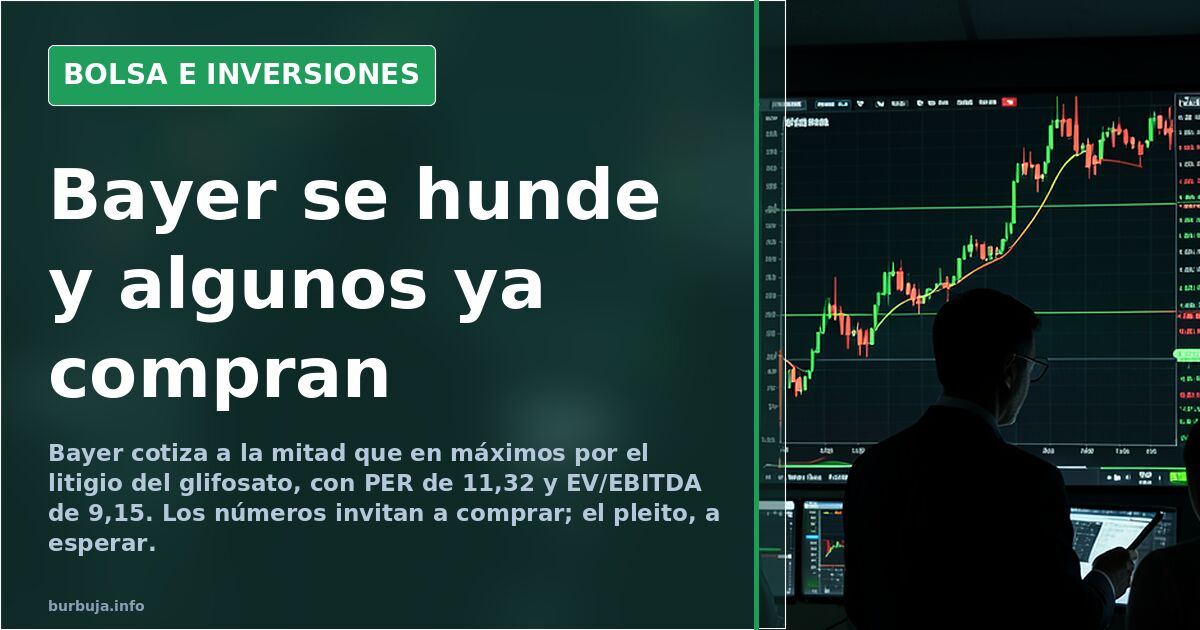
Bayer: From €146 to Half That Due to Glyphosate
There is a scene that perfectly summarizes Bayer's stock history: a share that hit €146 and, months later, was bought at €115 with the feeling of having made a good deal. The German company reached historical highs in April and since then has chained a correction that many read as an opportunity. The acquisition of Monsanto, closed after regulatory approval, changed the map: the pharmaceutical giant became also one of the world's three largest agrochemical companies. And with it, it inherited a problem that no one had fully discounted: glyphosate.
A Giant with Two Engines and Litigation Overhead
Bayer ceased to be just a pharmaceutical company years ago. To cancer drugs —regorafenib, Xofigo— and the animal health and plastics business, Monsanto's agricultural machinery was added, with seeds designed to coexist with Roundup. Results trinc suit: net profit of €3.497 billion between January and September 2015, up 9.2%; €4.110 billion at the close of 2015, up 20%, with sales of €46.324 billion. The company raised dividends and analysts set target prices of €125, €139, and even €152.
The narrative broke in a California court. A ruling convicted Monsanto, already a Bayer subsidiary, for a cancer case attributed to herbicide use. The stock dropped 12% in a single session. From there, the market began to look at the portfolio of lawsuits rather than profits.
How Much Does Unquantifiable Litigation Cost?
The impact has two layers. The first is economic: compensation and provisions. The second is strategic: if glyphosate is banned in any relevant market, Monsanto's seeds lose part of their purpose, because they are designed to be used together with the herbicide. That is the crux of the matter. As long as the scope of the claims is not clarified, the stock will feel it, which explains why it trades at half its peak.
Ratios, however, invite the opposite conclusion. With an EV/EBITDA around 9.15 and a P/E of 11.32, the valuation looks more like a troubled company than a global oligopoly. This is the argument of buyers: rarely can one enter one of the planet's top three agrochemical giants at these multiples.
Bearish DAX and German Withholding Tax
Not everything is about glyphosate. The German index is also pushing down, dragging the most punished stocks. When buying, there is fine print to keep in mind: Germany withholds 26% of dividends, and in Spain only 15% is recovered due to double taxation treaties. Buying the stock on the Spanish market does not change the withholding tax, although it does affect commissions and liquidity: the German market moves much higher volume.
The Turn That Caught Bears Off Guard
A federal judge began dismissing lawsuits by reducing the scope of evidence linking Roundup to cancer. The stock surged 6.74% on the German exchange in a single session. For value defenders, this confirms the market had discounted the worst. For skeptics, it is a respite within a lawsuit that remains open.
Here lies the unresolved contradiction: a company earning more each year, part of an oligopoly, trading as if bankrupt. Numbers say one thing, the judicial calendar another. The disorienting fact: the stock once valued at €146 now buys for half that, with the same drugs and seeds in the catalog.
There is a scene that perfectly summarizes Bayer's stock history: a share that hit €146 and, months later, was bought at €115 with the feeling of having made a good deal. The German company reached historical highs in April and since then has chained a correction that many read as an opportunity. The acquisition of Monsanto, closed after regulatory approval, changed the map: the pharmaceutical giant became also one of the world's three largest agrochemical companies. And with it, it inherited a problem that no one had fully discounted: glyphosate.
A Giant with Two Engines and Litigation Overhead
Bayer ceased to be just a pharmaceutical company years ago. To cancer drugs —regorafenib, Xofigo— and the animal health and plastics business, Monsanto's agricultural machinery was added, with seeds designed to coexist with Roundup. Results trinc suit: net profit of €3.497 billion between January and September 2015, up 9.2%; €4.110 billion at the close of 2015, up 20%, with sales of €46.324 billion. The company raised dividends and analysts set target prices of €125, €139, and even €152.
The narrative broke in a California court. A ruling convicted Monsanto, already a Bayer subsidiary, for a cancer case attributed to herbicide use. The stock dropped 12% in a single session. From there, the market began to look at the portfolio of lawsuits rather than profits.
How Much Does Unquantifiable Litigation Cost?
The impact has two layers. The first is economic: compensation and provisions. The second is strategic: if glyphosate is banned in any relevant market, Monsanto's seeds lose part of their purpose, because they are designed to be used together with the herbicide. That is the crux of the matter. As long as the scope of the claims is not clarified, the stock will feel it, which explains why it trades at half its peak.
Ratios, however, invite the opposite conclusion. With an EV/EBITDA around 9.15 and a P/E of 11.32, the valuation looks more like a troubled company than a global oligopoly. This is the argument of buyers: rarely can one enter one of the planet's top three agrochemical giants at these multiples.
Bearish DAX and German Withholding Tax
Not everything is about glyphosate. The German index is also pushing down, dragging the most punished stocks. When buying, there is fine print to keep in mind: Germany withholds 26% of dividends, and in Spain only 15% is recovered due to double taxation treaties. Buying the stock on the Spanish market does not change the withholding tax, although it does affect commissions and liquidity: the German market moves much higher volume.
The Turn That Caught Bears Off Guard
A federal judge began dismissing lawsuits by reducing the scope of evidence linking Roundup to cancer. The stock surged 6.74% on the German exchange in a single session. For value defenders, this confirms the market had discounted the worst. For skeptics, it is a respite within a lawsuit that remains open.
Here lies the unresolved contradiction: a company earning more each year, part of an oligopoly, trading as if bankrupt. Numbers say one thing, the judicial calendar another. The disorienting fact: the stock once valued at €146 now buys for half that, with the same drugs and seeds in the catalog.
Also available in: Deutsch
Summary of a discussion on Burbuja.info - Foro de economía, actualidad y política., translated from Spanish and reviewed before publication. Read the full discussion (57 replies).
More summaries
-
Bayer and passive income: from 40,000 shares to 100,000 euros in dividends
Buying 40,000 Bayer shares at 20 euros and waiting for 80: the passive income calculation that is already up 55% and requires an initial investment of 800,000 euros.
-
Fagerhult: From LED Rally to the 2018 Correction
Fagerhult surged from SEK 240 to 400 on LED growth and acquisitions. In Q2 2018, operating profit fell 2.6% as shares corrected.
-
Buying Squatted Homes in Spain: The Hidden Cost of Legal Delays
Spanish banks sell squatted properties at a discount, transferring the burden to buyers who face years-long legal battles for eviction.
-
Hiding Cash at Home: 12 Spots That Fail
Twelve home hiding spots for cash, from mattresses to outlets, and why they fail against professional burglars.
-
Leaving the Euro: Haircuts, Bank Runs, and Cash Fate
Euro exit would convert accounts into devalued new pesetas. Only foreign cash and metals retain value.
-
Gold Trading Scam via Tinder and Credit Card Theft
A user describes a Tinder scam where a fake profile lures victims into gold trading on a rigged demo platform before stealing credit card details.