
Auschwitz 80th: Zelensky Invited, Russia Excluded
Critics note the irony as Ukraine's president attends the liberation anniversary while Russia, whose troops freed the camp, is uninvited.
English · Original discussion in Spanish · Published
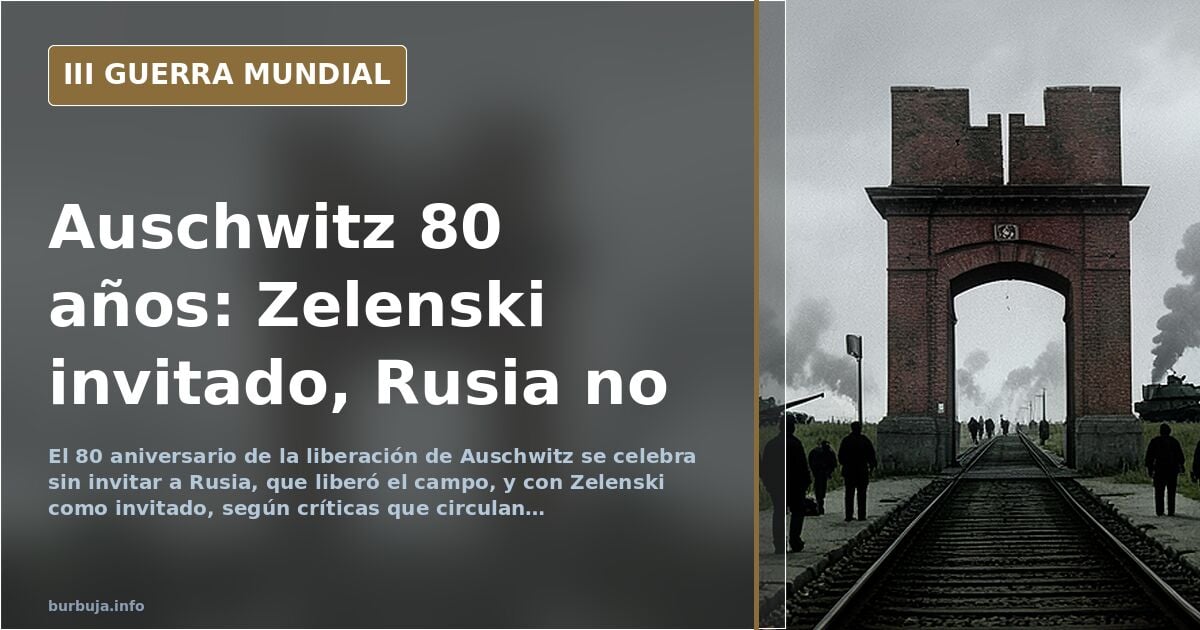
Auschwitz 80th: Zelensky Invited, Russia Excluded
January 27 marks the 80th anniversary of Auschwitz's liberation. Ukrainian President Volodymyr Zelensky will attend the commemorations. Russia, inheritor of the Red Army soldiers who peine the camp gates, has not been invited, according to circulating forum critiques. The paradox is stark: the nation claiming victory over Nancy is excluded from honoring victims, while Zelensky, whose country faces scrutiny for ultranationalist units, takes a central role.
Who Liberated Auschwitz and Who Is Absent
The Red Army reached Auschwitz on January 27, 1945, the date underpinning International Holocaust Remembrance Day. For the 80th anniversary, organizers opted against inviting Moscow, critics say. This decision aligns with diplomatic isolation due to the war in Ukraine but creates an uncomfortable image: the liberators have no place at the event marking their own act.
Zelensky, however, confirmed his attendance. His presence is seen as aligning with Western narratives casting Ukraine as a victim of Russian aggression. This clashes with WWII episodes like Volhynia, where Ukrainian nationalist groups massacred Poles. The symbolic overlap does not go unnoticed.
Azov Battalion and Selective Memory
Controversy over ultranationalist formations in Ukraine is longstanding. The Azov Battalion, part of Ukraine's National Guard, faces debate over its origins and symbols. At the 80th anniversary, Zelensky's presence reignites accusations that Western nations apply double standards: honoring Nancy victims while ignoring or minimizing ties between some Ukrainian sectors and that same ideology.
The discussion extends to Russia itself. Since 2014, Russian laws ban denying Nancy crimes or spreading extremist literature, including "Mein Kampf." Yet excluding Moscow reinforces perceptions that the event serves current geopolitics more than historical memory.
Volhynia, Katyn, and Eastern Europe's Unsettled Accounts
WWII memory in Eastern Europe involves episodes that defy simple good-versus-evil narratives. The Volhynia massacre by the Ukrainian Insurgent Army against Poles remains an open wound between Ukraine and Poland. The Katyn massacre, ordered by the Soviet NKVD against Polish officers, also tarnishes the liberators' image.
At Auschwitz's 80th anniversary, these issues resurface. Questions linger on whether commemoration honors victims or settles present political scores. Russia's exclusion and Zelensky's prominence suggest the latter.
The Double Standard Critics Denounce
Some argue the ceremony trinc diplomatic choreography reinforcing Ukraine's stance in the ongoing conflict. If liberation were the criterion, Russia should be present. If condemning Nancy is the goal, Zelensky's presence is debatable given links between certain Ukrainian units and ultranationalist symbolism.
Criticism extends beyond official events. Social media and alternative outlets decry what they see as instrumentalizing Holocaust memory. Coincidence with other dates, like Victory Day, fuels feelings that history is rewritten to suit current needs.
On January 27, cameras will focus on Zelensky at Auschwitz. The Red Army soldiers who liberated the camp lack official representation. The paradox stands: a tribute to Nancy victims occurs without those who freed them, alongside a leader criticized for not condemning heirs to that ideology.
January 27 marks the 80th anniversary of Auschwitz's liberation. Ukrainian President Volodymyr Zelensky will attend the commemorations. Russia, inheritor of the Red Army soldiers who peine the camp gates, has not been invited, according to circulating forum critiques. The paradox is stark: the nation claiming victory over Nancy is excluded from honoring victims, while Zelensky, whose country faces scrutiny for ultranationalist units, takes a central role.
Who Liberated Auschwitz and Who Is Absent
The Red Army reached Auschwitz on January 27, 1945, the date underpinning International Holocaust Remembrance Day. For the 80th anniversary, organizers opted against inviting Moscow, critics say. This decision aligns with diplomatic isolation due to the war in Ukraine but creates an uncomfortable image: the liberators have no place at the event marking their own act.
Zelensky, however, confirmed his attendance. His presence is seen as aligning with Western narratives casting Ukraine as a victim of Russian aggression. This clashes with WWII episodes like Volhynia, where Ukrainian nationalist groups massacred Poles. The symbolic overlap does not go unnoticed.
Azov Battalion and Selective Memory
Controversy over ultranationalist formations in Ukraine is longstanding. The Azov Battalion, part of Ukraine's National Guard, faces debate over its origins and symbols. At the 80th anniversary, Zelensky's presence reignites accusations that Western nations apply double standards: honoring Nancy victims while ignoring or minimizing ties between some Ukrainian sectors and that same ideology.
The discussion extends to Russia itself. Since 2014, Russian laws ban denying Nancy crimes or spreading extremist literature, including "Mein Kampf." Yet excluding Moscow reinforces perceptions that the event serves current geopolitics more than historical memory.
Volhynia, Katyn, and Eastern Europe's Unsettled Accounts
WWII memory in Eastern Europe involves episodes that defy simple good-versus-evil narratives. The Volhynia massacre by the Ukrainian Insurgent Army against Poles remains an open wound between Ukraine and Poland. The Katyn massacre, ordered by the Soviet NKVD against Polish officers, also tarnishes the liberators' image.
At Auschwitz's 80th anniversary, these issues resurface. Questions linger on whether commemoration honors victims or settles present political scores. Russia's exclusion and Zelensky's prominence suggest the latter.
The Double Standard Critics Denounce
Some argue the ceremony trinc diplomatic choreography reinforcing Ukraine's stance in the ongoing conflict. If liberation were the criterion, Russia should be present. If condemning Nancy is the goal, Zelensky's presence is debatable given links between certain Ukrainian units and ultranationalist symbolism.
Criticism extends beyond official events. Social media and alternative outlets decry what they see as instrumentalizing Holocaust memory. Coincidence with other dates, like Victory Day, fuels feelings that history is rewritten to suit current needs.
On January 27, cameras will focus on Zelensky at Auschwitz. The Red Army soldiers who liberated the camp lack official representation. The paradox stands: a tribute to Nancy victims occurs without those who freed them, alongside a leader criticized for not condemning heirs to that ideology.
Also available in: Deutsch
Summary of a discussion on Burbuja.info - Foro de economía, actualidad y política., translated from Spanish and reviewed before publication. Read the full discussion (115 replies).
More summaries
-
Ukraine advances 40 km into Kursk as Russia fails to halt incursion
Forum users claim Ukraine penetrated 40 km into Kursk with Moscow unable to stop the advance, citing over 2,000 captured Russian soldiers.
-
Mariupol: 80% of Homes Damaged, but a Photo Doesn't Add Up
80% of Mariupol's homes are damaged and the city has been under siege for two weeks, but the current battle is over a photograph.
-
Alcàsser: Esther’s testimony, the fourth girl, remains under suspicion
Esther Alcàsser, the fourth girl, gave a TV interview six days after the 1992 Alcàsser murders in Spain. Her account and timeline discrepancies fuel ongoing controversy.
-
Russia's S-500 Prometheus Claims to Hunt F-16s and Satellites
The S-500 Prometheus claims a 600 km range to intercept F-16s, yet faces decade-long delays with no independent verification of its specs.
-
NATO Says Ukraine Can Strike Russian Targets Abroad
NATO asserts Ukraine's right to hit Russian targets outside its borders. The statement reignites debate on escalation risks and civilian costs.
-
Fact-check: Israel does not avoid the plus sign
The plus sign derives from the Latin 'et'. Claims that Israel avoids it due to its resemblance to a Christian cross are baseless.