
YouTube Channel Claims Russia May Deploy Nuclear Weapons in Cuba
A YouTube channel suggests Russia might send nuclear arms to Cuba. Unconfirmed reports spark debate, mixing skepticism with irony.
English · Original discussion in Spanish · Published
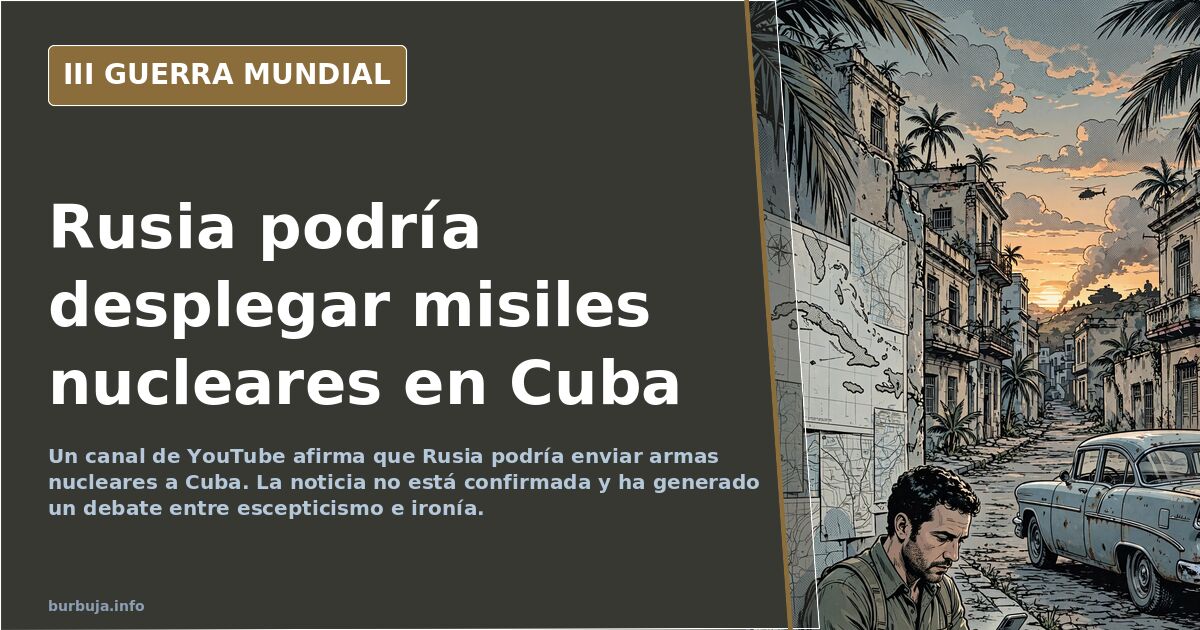
YouTube Channel Suggests Russia Could Deploy Nuclear Weapons in Cuba
A YouTube channel named Negocios TV has raised the possibility of Russia deploying nuclear weapons in Cuba. The news, unconfirmed by any official source, has ignited debate in digital circles. The majority reaction was not panic, but irony: many readers recalled that the United States has nuclear weapons spread across Europe and that the 1962 missile crisis was resolved precisely by the removal of US missiles from Turkey. The lingering question is whether Moscow is willing to repeat a standoff it once lost.
What Did Negocios TV Say About Nuclear Weapons in Cuba?
The channel Negocios TV, specialized in economic and geopolitical content, launched this claim. According to accumulated messages, the outlet provided no documentary evidence or official sources to support the assertion. Several readers pointed out that such channels thrive on clickbait and that, without independent confirmation, the news should be taken with caution. Doubts about the channel's veracity hang over the entire discussion.
The 1962 Missile Crisis: The Precedent Everyone Cites
The parallel with the 1962 Cuban Missile Crisis is inevitable. On that occasion, the Soviet Union deployed nuclear missiles in Cuba in response to US missiles in Turkey. President John F. Kennedy faced the prospect of nuclear war and ultimately agreed to remove missiles from Turkey in exchange for Moscow doing the same with those in Cuba. That episode left a lesson: the United States does not tolerate nuclear missiles 150 kilometers off its coast, but is also unwilling to dismantle its own arsenal without reciprocation. History, as noted in the debate, repeats itself.
Why Would Russia Want to Repeat the Missile Crisis?
The logic some analysts present is deterrence. If the United States can have nuclear weapons in Europe, Russia can have them in Cuba. It is the "you too" argument applied to nuclear geopolitics. Others, however, note that such a move would be a difficult bluff to sustain: Cuba is just a stone's throw from Florida, and any misstep could trigger military escalation. The presence of US troops on the Finnish border, mentioned in the discussion, adds fuel to the fire.
Reactions: Between Irony and Concern
The majority reaction has been irony. Several readers joked that the US would invade Cuba instantly if the news were true, or that Russia should send missiles to Iran to "make us laugh more." Some also recalled that Cuba has had issues with Russian recruitment cells, suggesting the island is not an unconditional ally. On the other side, some expressed genuine concern: if Russia and the US enter a new missile race, the risk of conflict increases. The discussion reflects a mix of skepticism, humor, and anxiety.
The Role of Cuba and NATO in the New Board
Cuba is not a passive actor. The island has maintained a complex relationship with Russia, and its geographic position makes it a strategic point. Some messages noted that the US has placed nuclear weapons back on Turkish soil, reinforcing the thesis that NATO is encircling Russia. Ukraine's entry into NATO, mentioned in the debate, is perceived as an existential threat to Moscow. In this context, the possibility of Russian missiles in Cuba is interpreted as a symmetrical response.
What Would Happen If Russia Sent Nuclear Weapons to Cuba?
The most repeated answer is that the United States would not allow it. The Monroe Doctrine remains in force, and any attempt by Moscow to establish a nuclear base in the Caribbean would be considered a red line. Some speculated that Washington would invade the island, while others believe the 1962 script would repeat: negotiation, missile withdrawal, and a de-escalated crisis. What no one disputes is that merely mentioning the possibility generates tension.
Skepticism About the Original Source
Negocios TV's credibility has been questioned. Several readers asked for verification of whether the channel hits or misses its predictions. The lack of official confirmation and a history of hoaxes in geopolitical topics invite caution. For now, the news is an unconfirmed possibility and should be treated as such.
The possibility of Russia deploying nuclear weapons in Cuba remains an unconfirmed hypothesis. The history of 1962 shows that such crises can be managed, but also that the risk of escalation is real. Until there is official confirmation, the news belongs to the realm of speculation. Are we facing a new nuclear standoff or just a headline designed to capture clicks?
A YouTube channel named Negocios TV has raised the possibility of Russia deploying nuclear weapons in Cuba. The news, unconfirmed by any official source, has ignited debate in digital circles. The majority reaction was not panic, but irony: many readers recalled that the United States has nuclear weapons spread across Europe and that the 1962 missile crisis was resolved precisely by the removal of US missiles from Turkey. The lingering question is whether Moscow is willing to repeat a standoff it once lost.
What Did Negocios TV Say About Nuclear Weapons in Cuba?
The channel Negocios TV, specialized in economic and geopolitical content, launched this claim. According to accumulated messages, the outlet provided no documentary evidence or official sources to support the assertion. Several readers pointed out that such channels thrive on clickbait and that, without independent confirmation, the news should be taken with caution. Doubts about the channel's veracity hang over the entire discussion.
The 1962 Missile Crisis: The Precedent Everyone Cites
The parallel with the 1962 Cuban Missile Crisis is inevitable. On that occasion, the Soviet Union deployed nuclear missiles in Cuba in response to US missiles in Turkey. President John F. Kennedy faced the prospect of nuclear war and ultimately agreed to remove missiles from Turkey in exchange for Moscow doing the same with those in Cuba. That episode left a lesson: the United States does not tolerate nuclear missiles 150 kilometers off its coast, but is also unwilling to dismantle its own arsenal without reciprocation. History, as noted in the debate, repeats itself.
Why Would Russia Want to Repeat the Missile Crisis?
The logic some analysts present is deterrence. If the United States can have nuclear weapons in Europe, Russia can have them in Cuba. It is the "you too" argument applied to nuclear geopolitics. Others, however, note that such a move would be a difficult bluff to sustain: Cuba is just a stone's throw from Florida, and any misstep could trigger military escalation. The presence of US troops on the Finnish border, mentioned in the discussion, adds fuel to the fire.
Reactions: Between Irony and Concern
The majority reaction has been irony. Several readers joked that the US would invade Cuba instantly if the news were true, or that Russia should send missiles to Iran to "make us laugh more." Some also recalled that Cuba has had issues with Russian recruitment cells, suggesting the island is not an unconditional ally. On the other side, some expressed genuine concern: if Russia and the US enter a new missile race, the risk of conflict increases. The discussion reflects a mix of skepticism, humor, and anxiety.
The Role of Cuba and NATO in the New Board
Cuba is not a passive actor. The island has maintained a complex relationship with Russia, and its geographic position makes it a strategic point. Some messages noted that the US has placed nuclear weapons back on Turkish soil, reinforcing the thesis that NATO is encircling Russia. Ukraine's entry into NATO, mentioned in the debate, is perceived as an existential threat to Moscow. In this context, the possibility of Russian missiles in Cuba is interpreted as a symmetrical response.
What Would Happen If Russia Sent Nuclear Weapons to Cuba?
The most repeated answer is that the United States would not allow it. The Monroe Doctrine remains in force, and any attempt by Moscow to establish a nuclear base in the Caribbean would be considered a red line. Some speculated that Washington would invade the island, while others believe the 1962 script would repeat: negotiation, missile withdrawal, and a de-escalated crisis. What no one disputes is that merely mentioning the possibility generates tension.
Skepticism About the Original Source
Negocios TV's credibility has been questioned. Several readers asked for verification of whether the channel hits or misses its predictions. The lack of official confirmation and a history of hoaxes in geopolitical topics invite caution. For now, the news is an unconfirmed possibility and should be treated as such.
The possibility of Russia deploying nuclear weapons in Cuba remains an unconfirmed hypothesis. The history of 1962 shows that such crises can be managed, but also that the risk of escalation is real. Until there is official confirmation, the news belongs to the realm of speculation. Are we facing a new nuclear standoff or just a headline designed to capture clicks?
Also available in: Deutsch
Summary of a discussion on Burbuja.info - Foro de economía, actualidad y política., translated from Spanish and reviewed before publication. Read the full discussion (120 replies).
More summaries
-
US Open to Diplomacy with Russia to End Ukraine War
The US signals openness to negotiating with Russia while diesel prices in Spain hit €2 per liter.
-
Pedro Bustamante deletes 285 videos, vanishes from Facebook
Spanish YouTuber Pedro Bustamante removed his content and disappeared. Rumors place him in Munich, reading German press.
-
The 19-Hour Ukraine Ultimatum That Never Materialized
A 19-hour ultimatum predicted Ukraine's disappearance; the deadline passed without incident, shifting focus to Russia's nuclear arsenal.
-
Kyiv Nightlife vs. Frontline: Who Pays for the War?
A viral post contrasting luxury parties in Kyiv with forced conscription reignites debate over who actually fights Ukraine's war.
-
Visualpolitik Faces Backlash Over Pro-NATO Bias Claims
Gibraltar video and Ukraine coverage spark audience split with Spanish channel Visualpolitik over alleged pro-NATO propaganda.
-
Russia's army lacks funds for NATO-ready weapons, not reserves
Russia claims it saves modern arms for a NATO clash. Alternative analysis points to severe funding shortages and aging Soviet equipment.