
Wim Hof Method: Cold Showers and Ice Baths for Cold Resistance
From brief cold showers to ice baths, the Wim Hof method divides those who see benefits from skeptics calling it a placebo.
English · Original discussion in Spanish · Published
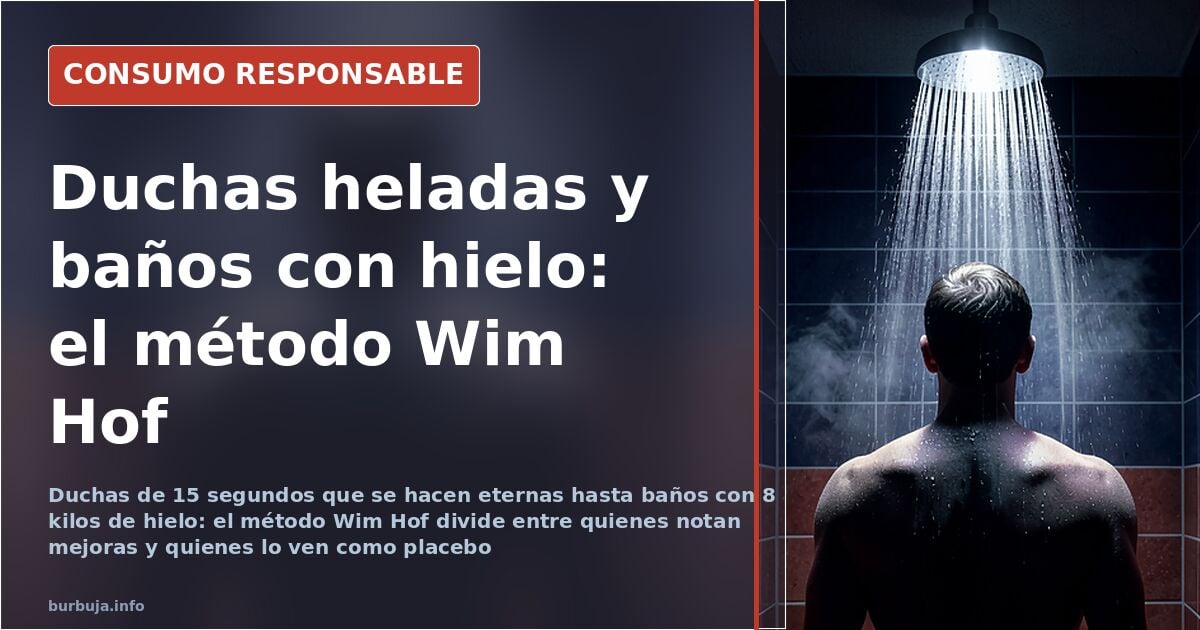
Cold showers and ice baths: The Wim Hof method for enduring cold
A paradox repeats itself in every attempt to explain the Wim Hof method: practitioners start by enduring fifteen seconds of freezing water with involuntary screams and end up submerging themselves in a bathtub with eight kilos of ice and their head underwater for five minutes. Between these two extremes lie months of deliberate cold exposure, breathing exercises, and an unresolved question: is it physiology or suggestion? The method takes its name from Wim Hof, the Dutchman known as "The Iceman," capable of swimming in frozen lakes or climbing mountains in underwear without collapsing, attributing this ability to controlling the autonomic nervous system through breathing.
The proposal is not new, but it is uncomfortable for the body. Initial steps are limited to a daily cold shower and a few minutes of deep breathing; advanced practitioners speak of ice baths, outdoor meditation, and prolonged exposure which, according to proponents, improves mood, sleep, appetite, and tolerance to ambient cold. Available evidence is primarily testimonial.
What is practiced and in what order
The starting point is the cold shower, with the stated goal of reaching five minutes. Specific pogre are described: from initial fifteen seconds that feel eternal to one-minute sessions, then 76 seconds including the head, and finally immersion baths with six and eight kilos of ice. Breathing accompanies the process: wide inhalations, retention, and rapid exhalation, a pattern some compare to that used by pilots in acceleration tests.
One detail recurs: cold is better tolerated in air than in water. Exposure to a cold environment—open window, sub-zero temperatures, sitting for half an hour—is more bearable than the thermal shock of water, which causes headaches and shivering. The explanation given is that water transfers heat much faster, and the organism registers it as a sudden aggression.
Effects attributed to the method
Practitioners describe a recurring list: more energy, better mood, improved sleep, greater appetite, and a sense of well-being after the shower that is hard to explain. An uncomfortable side effect is also mentioned: episodes of dizziness or partial fainting after a session, attributed to the body's response to abrupt temperature changes.
Doubts about the placebo hover over the entire conversation. Some argue the benefit is real and measurable in cold tolerance; others suggest the body releases endorphins to compensate for the exposure, explaining the subsequent sensation. The discussion on whether the method trains the autonomic nervous system or simply teaches endurance of discomfort remains open.
Skepticism: Paid courses and hard-to-verify promises
The commercial aspect generates rejection. Criticism targets Wim Hof selling online courses while content circulates elsewhere, questioning the idea that anyone can voluntarily control autonomous functions like heart rate. Practitioners respond that the course is not essential and material is available for free.
The harshest counterpoint comes from real cold experience. Some recall that working bare-handed in extreme conditions or sleeping without heating can lead to pneumonia, noting risks of uncontrolled cold exposure omitted in videos. The warning repeats: icy water without acclimatization can cause serious thermal shock.
The skeptical view of voluntary effort
The Wim Hof method intersects with other practices of deliberate discomfort: intermittent fasting, intense training, reduced sleep. The objection is always the same: if forced to endure cold or hunger at work, you would report it; doing so voluntarily presents itself as masochism disguised as discipline.
The defense argues the body tolerates more than assumed, and testing this reduces anxiety over fictitious limitations. The debate shifts toward hedonism: hot baths, massages, and abundant food versus the icy shower as self-improvement. There is no consensus, and likely never will be.
The remaining question is whether, in a year, those currently enduring a minute of icy water will continue or return to warm showers without further explanation than common sense.
Also available in: Deutsch
Summary of a discussion on Burbuja.info - Foro de economía, actualidad y política., translated from Spanish and reviewed before publication. Read the full discussion (79 replies).
More summaries
-
Civil service exam candidates in Spain: do you use the loop system or the drag system?
Debate on study methods for Spain's civil service exams (oposiciones): is the loop system or the drag system better? A critical analysis from the forum.
-
Living alone without letting the mess take over: a cleaning method
Ninety minutes a week, cheap products and less clutter: the system that keeps living alone from turning into domestic chaos.
-
Remote Linux sysadmin: quiet job or 24/7 on-call duty?
The story of a remote sysadmin watching movies while getting paid clashes with the reality of 24/7 on-call shifts, back-to-back outages and a salary ceiling many question.
-
robin.jobs: Dutch temp agency with housing that won't answer
A jobseeker sends his ID and driving licence to robin.jobs, a Dutch temp agency with no reviews, no social media activity and poor fraud-checker scores.
-
Combating dust requires home design, not just cleaning
Dust is mostly textile fiber. HEPA filters and electrostatic mops help, but reducing clutter wins.
-
Viral video hoax: It was nuggets, not a McDonald's burger
A viral clip claims a dog rejected a McDonald's burger, but the footage actually shows chicken nuggets, debunking the misinformation.