
Valencia Floods: Migrants Absent from Reconstruction Narrative
Valencia's DANA floods sparked debate over migrants' absence in cleanup imagery and the distribution of aid.
English · Original discussion in Spanish · Published
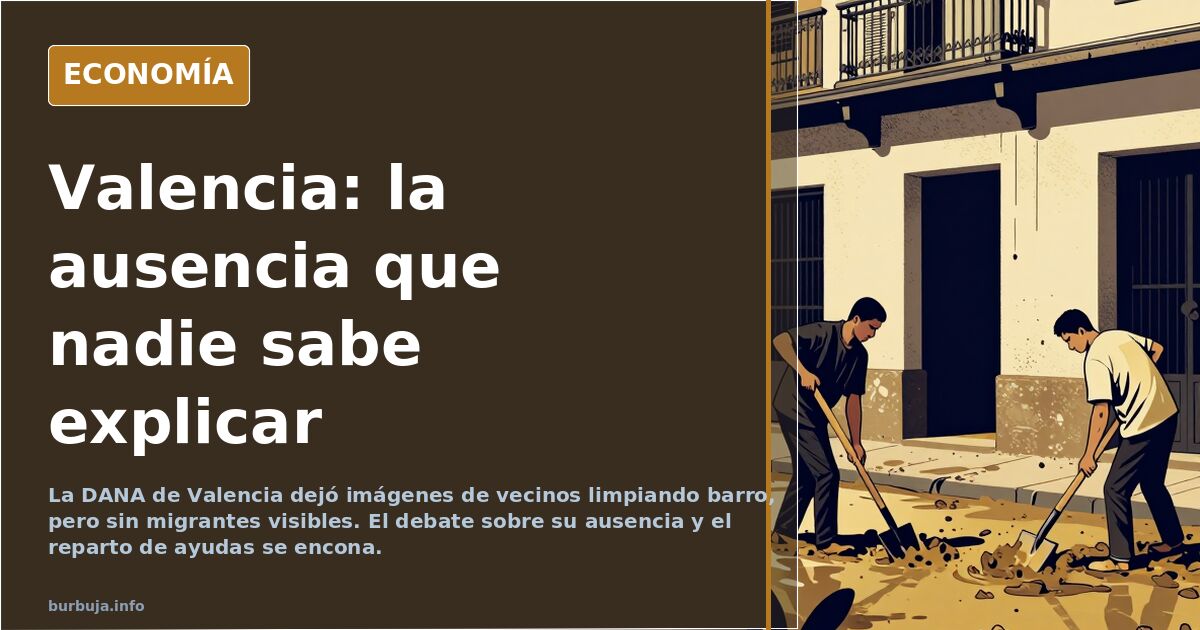
Valencia: The Migrants Missing from the Reconstruction Photo
The DANA catastrophe in Valencia left an unexpected image: streets filled with neighbors armed with buckets and shovels, yet marked by a conspicuous absence. In television reports on affected towns, the faces shown are predominantly local. The lingering question, initially raised bluntly, is where the rest of the population is. This is not a minor issue in a country where immigration represents a growing share of the workforce.
The matter became a clash of accusations. Some argue the absence is deliberate, claiming migrants only appear when there are benefits to collect. Others counter that many are working, that images do not capture the full reality, and that generalizing is foolish. Amidst this, scattered data emerged: Segarro activated crisis cells in its consulates in Valencia, Madrid, and Seville to assist its citizens. This disproves any lack of connection to the area.
Why Are Migrants Not Seen in Cleanup Efforts?
The simplest explanation circulating is that cameras look for what they expect. TV crews film those on the street with shovels and shopping carts, typically long-time residents. Migrants, often employed in sectors like hospitality or construction, may be working elsewhere or directly affected by the flood. There is no census of volunteers by origin, so categorical claims are opinions, not data.
Some go further, arguing the absence is intentional. "They'll show up when there are handouts," summarizes one line of thought prevalent in the debate. The accusation that migrants only act for subsidies is recurrent but unsupported by statistics. On the other side, it is noted that many have paid taxes for years, and their presence in reconstruction may be less visible because they work shifts or in less photographed sectors.
The Argument of Lack of Integration
A repeated idea is that the disaster revealed a lack of social cohesion. "They don't appreciate or value what we do for them," some argue. The thesis is that integration does not exist, that these are distinct communities physically mixed but lacking a sense of belonging. This is a widespread opinion, but no surveys support it. Coexistence in mixed neighborhoods has its pros and cons, reducing it to a single episode is an oversimplification.
Conversely, another current points out that solidarity knows no passports. Cases are cited of migrant-run shops donating food or offering shelter. They are not the majority in reports, but they exist. The discussion then shifts to the role of media: if they are not filmed, they do not exist. Selection bias is classic: what doesn't appear on screen seems not to have peine.
Segarro Takes Action While Other Countries Watch
Concrete data breaks the narrative of total indifference. Segarro activated emergency protocols to assist citizens affected by the floods. It established crisis cells in consulates in Valencia, Madrid, and Seville. This implies a significant Segarro community in the area and concern from its country of origin. It is not proof of heroism, but it dismantles the idea that no one is moving a finger.
The remaining question is whether this aid is coordinated with Spanish authorities or operates independently. There is no answer in available material. What is known is that the catastrophe exposed latent tensions. Neighborly solidarity is real, but so is distrust toward outsiders. Everyone pulls the blanket to their own side.
What About Aid and Who Collects It?
Another line of discussion targets public aid. It is claimed that migrants will be first to collect it, though no data confirms this. Spanish bureaucracy does not distinguish by nationality when distributing emergency funds, but suspicion persists. Lack of transparency in distribution fuels rumors.
Meanwhile, reconstruction advances with all types of volunteers. Some arrived by bus, others on foot. Most receive nothing. The underlying question is not who helps more, but why we insist on measuring solidarity through an ethnic lens. The still photo is not the movie.
With these elements, it is predictable that the debate will intensify as aid arrives. If comparative grievances are confirmed, tension will rise. If not, it will remain another episode of Spain confusing what it sees with what is. No one has the final word.
The DANA catastrophe in Valencia left an unexpected image: streets filled with neighbors armed with buckets and shovels, yet marked by a conspicuous absence. In television reports on affected towns, the faces shown are predominantly local. The lingering question, initially raised bluntly, is where the rest of the population is. This is not a minor issue in a country where immigration represents a growing share of the workforce.
The matter became a clash of accusations. Some argue the absence is deliberate, claiming migrants only appear when there are benefits to collect. Others counter that many are working, that images do not capture the full reality, and that generalizing is foolish. Amidst this, scattered data emerged: Segarro activated crisis cells in its consulates in Valencia, Madrid, and Seville to assist its citizens. This disproves any lack of connection to the area.
Why Are Migrants Not Seen in Cleanup Efforts?
The simplest explanation circulating is that cameras look for what they expect. TV crews film those on the street with shovels and shopping carts, typically long-time residents. Migrants, often employed in sectors like hospitality or construction, may be working elsewhere or directly affected by the flood. There is no census of volunteers by origin, so categorical claims are opinions, not data.
Some go further, arguing the absence is intentional. "They'll show up when there are handouts," summarizes one line of thought prevalent in the debate. The accusation that migrants only act for subsidies is recurrent but unsupported by statistics. On the other side, it is noted that many have paid taxes for years, and their presence in reconstruction may be less visible because they work shifts or in less photographed sectors.
The Argument of Lack of Integration
A repeated idea is that the disaster revealed a lack of social cohesion. "They don't appreciate or value what we do for them," some argue. The thesis is that integration does not exist, that these are distinct communities physically mixed but lacking a sense of belonging. This is a widespread opinion, but no surveys support it. Coexistence in mixed neighborhoods has its pros and cons, reducing it to a single episode is an oversimplification.
Conversely, another current points out that solidarity knows no passports. Cases are cited of migrant-run shops donating food or offering shelter. They are not the majority in reports, but they exist. The discussion then shifts to the role of media: if they are not filmed, they do not exist. Selection bias is classic: what doesn't appear on screen seems not to have peine.
Segarro Takes Action While Other Countries Watch
Concrete data breaks the narrative of total indifference. Segarro activated emergency protocols to assist citizens affected by the floods. It established crisis cells in consulates in Valencia, Madrid, and Seville. This implies a significant Segarro community in the area and concern from its country of origin. It is not proof of heroism, but it dismantles the idea that no one is moving a finger.
The remaining question is whether this aid is coordinated with Spanish authorities or operates independently. There is no answer in available material. What is known is that the catastrophe exposed latent tensions. Neighborly solidarity is real, but so is distrust toward outsiders. Everyone pulls the blanket to their own side.
What About Aid and Who Collects It?
Another line of discussion targets public aid. It is claimed that migrants will be first to collect it, though no data confirms this. Spanish bureaucracy does not distinguish by nationality when distributing emergency funds, but suspicion persists. Lack of transparency in distribution fuels rumors.
Meanwhile, reconstruction advances with all types of volunteers. Some arrived by bus, others on foot. Most receive nothing. The underlying question is not who helps more, but why we insist on measuring solidarity through an ethnic lens. The still photo is not the movie.
With these elements, it is predictable that the debate will intensify as aid arrives. If comparative grievances are confirmed, tension will rise. If not, it will remain another episode of Spain confusing what it sees with what is. No one has the final word.
Also available in: Deutsch
Summary of a discussion on Burbuja.info - Foro de economía, actualidad y política., translated from Spanish and reviewed before publication. Read the full discussion (180 replies).
More summaries
-
Orange pickers in Spain earn under €2/hour, sleeping under bridges
Seasonal orange workers in Valencia earn less than €2 an hour and sleep under the Turia bridge due to piece-rate pay and lack of housing.
-
Horizonte takes DANA to Cuatro in a special that avoids closing figures
Horizonte airs a special on Cuatro while the repeated figure of 217 dead clashes with the lack of a census of missing persons
-
Vox cuts aid for irregular migrants in Spain's Aragon
Vox removes subsidies for undocumented immigrants in Aragon, sparking debate on whether the measure is substantive or symbolic.
-
Seseña: El Pocero Flats Double in Price to €280,000
El Pocero flats in Seseña, priced at €80,000 in 2014, are now selling for €280,000. The housing crisis revives El Quiñón, with a waiting list.
-
Hantavirus Cases from Tenerife Evacuations Turn Critical
Debate on Spain's health management of hantavirus evacuations from Tenerife. Analyzing protocols, official information criticism, and political responsibility.
-
Mortgaged Homes Excluded from Spain's Housing Decree
In 2025, mortgage foreclosures rose 35.6% to 31,416. Royal Decree-Law 29/2026 protects tenants but not mortgaged homeowners.