
Valencia Breaks European January Heat Record at 30.7°C
Valencia shatters Europe's January heat record with 30.7°C, threatening crops and worsening Spain's water crisis.
English · Original discussion in Spanish · Published
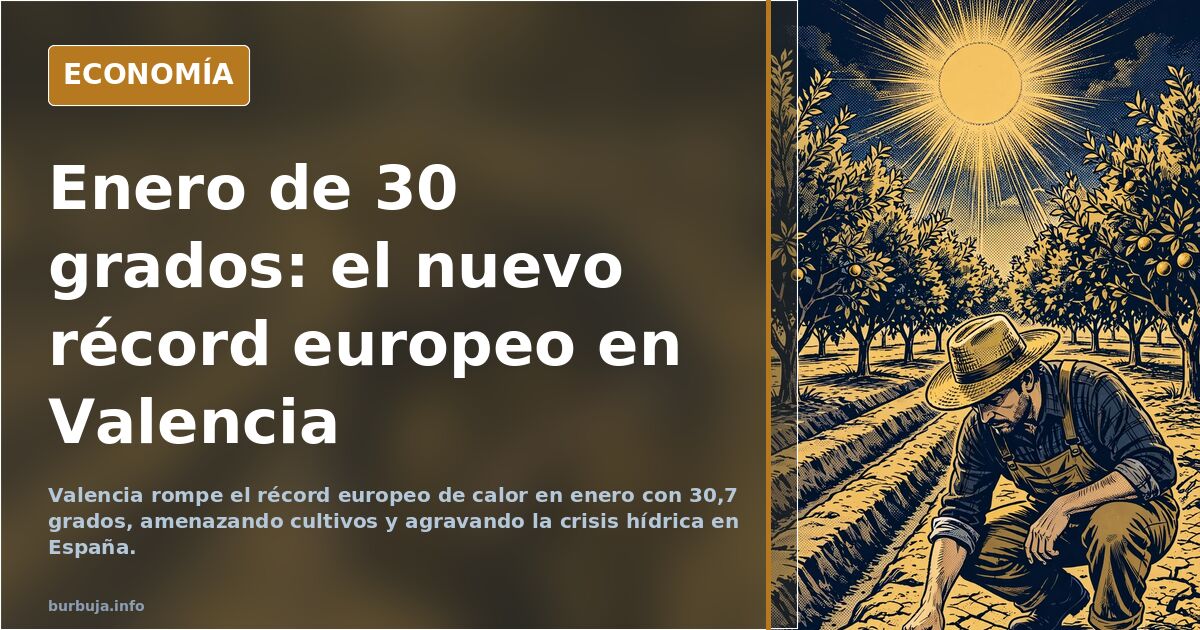
Valencia registers 30.7°C in January: extreme heat already affecting agriculture
Valencia has broken the historical record for maximum temperature in January across Europe, reaching 30.7 degrees Celsius. This thermal anomaly, which has spread throughout the autonomous community, is not an isolated phenomenon: towns like Calles and Gavarda have far exceeded seasonal averages, raising serious doubts about the viability of traditional crops in a region already struggling with chronic aridity.
The impact on crops and water scarcity
Premature heat is altering vegetation's biological cycles. Experts note that plants, which depend on hours of cold to enter dormancy and subsequently sprout, are responding erratically. In areas at risk of late frosts, this can be fatal for harvests. Furthermore, the drastic reduction in per capita water storage capacity relative to population and tourism growth exacerbates the situation. The question is not just whether it will rain less, but whether there is sufficient energy and water to maintain crops like olive groves in the south through desalination and pumping over hundreds of kilometers.
The debate on climatic normality
While some media present these episodes as part of the Mediterranean climate's natural variability, a stream of analysis warns of a tipping point. Empirical evidence—trees dying from summer drought, rivers running dry, and the climatological winter shrinking to less than a month—suggests that dry inertia is irreversible. The denial of these data, often shielded by short historical records, ignores the physical reality of a territory desertifying at an accelerated pace.
Valencia has broken the historical record for maximum temperature in January across Europe, reaching 30.7 degrees Celsius. This thermal anomaly, which has spread throughout the autonomous community, is not an isolated phenomenon: towns like Calles and Gavarda have far exceeded seasonal averages, raising serious doubts about the viability of traditional crops in a region already struggling with chronic aridity.
The impact on crops and water scarcity
Premature heat is altering vegetation's biological cycles. Experts note that plants, which depend on hours of cold to enter dormancy and subsequently sprout, are responding erratically. In areas at risk of late frosts, this can be fatal for harvests. Furthermore, the drastic reduction in per capita water storage capacity relative to population and tourism growth exacerbates the situation. The question is not just whether it will rain less, but whether there is sufficient energy and water to maintain crops like olive groves in the south through desalination and pumping over hundreds of kilometers.
The debate on climatic normality
While some media present these episodes as part of the Mediterranean climate's natural variability, a stream of analysis warns of a tipping point. Empirical evidence—trees dying from summer drought, rivers running dry, and the climatological winter shrinking to less than a month—suggests that dry inertia is irreversible. The denial of these data, often shielded by short historical records, ignores the physical reality of a territory desertifying at an accelerated pace.
Also available in: Deutsch
Summary of a discussion on Burbuja.info - Foro de economía, actualidad y política., translated from Spanish and reviewed before publication. Read the full discussion (247 replies).
More summaries
-
Spain Heatwave: Extreme Temperatures Spark Thermometer Manipulation Claims
Record-breaking heat in Alicante and suspected thermometer manipulation challenge official AEMET data amid extreme climate conditions.
-
Historic German Heatwave Boosts Greens in Polls
Germany faces extreme heat while the Greens lead polls, as the fiscal cost of the energy transition sparks economic debate.
-
Spain to mint €1.50 Mortadelo and Filemón coins in late 2026
Controversy over €1.50 Mortadelo and Filemón coins. We analyze in the forum whether it's a tribute to Ibáñez or a commercial strategy with dubious profitability.
-
Forum claims Spanish women in their 40s seek wealthy partners
A forum thread argues that single women aged 30-40, facing financial precarity after years of spending, are returning to shared housing and seeking partners with assets.
-
Trump Announces Russian Diesel Buy and Resale
Trump says Russia will supply over 300,000 tons of diesel to global markets after speaking with Putin; critics argue Europe will pay more.
-
Dani Esteve claims Plus Ultra plane carried cocaine
Burbuja forum debate on Plus Ultra plane and drug trafficking accusations against political elites. Narco-state or firewall?