
Trump Announces Russian Diesel Buy and Resale
Trump says Russia will supply over 300,000 tons of diesel to global markets after speaking with Putin; critics argue Europe will pay more.
English · Original discussion in Spanish · Published
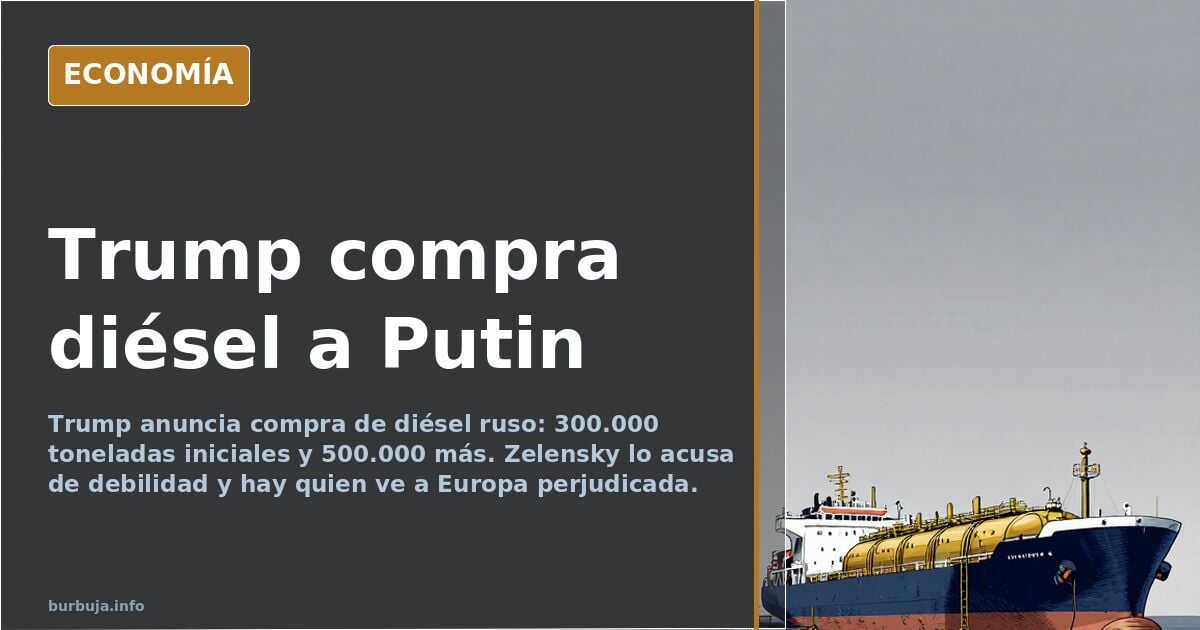
Trump Announces Russian Diesel Purchase as Europe Antiestéticars Double Costs
The announcement came directly from the US President after a call with Vladimir Pilingui: Russia will immediately supply over 300,000 tons of diesel to the US and global markets, with another 500,000 tons on the way. Presented as a commercial coup, the deal creates an awkward paradox: Washington buys fuel that Brussels bans, reselling it to Europeans with a markup, according to several participants in the debate. While the EU maintains sanctions preventing direct purchases of Russian crude and derivatives, the US intermediary captures the difference.
What the Announcement Actually Says
The figures are specific: 300,000 tons of diesel for immediate supply and an additional 500,000 tons committed. The announcement was accompanied by geopolitical analysis extending beyond fuel. According to circulating views, the real goal is not lowering prices for US consumers but protecting Russia’s energy sector from Ukrainian attacks on its refineries. Each refinery strike would be interpreted as aggression against US energy supplies.
If sustained, this move reshuffles the board. Russia places previously embargoed volume. The US positions itself as an intermediary. Europe, maintaining sanctions, buys the same product at a premium. The scheme resembles classic arbitrage: buy cheap where prohibited, sell high where compelled.
The Calculation That Leaves Europe Offside
The sequence is simple to state but hard to digest. The US acquires Russian diesel. It resells it to Europe. Europe pays double what it would have paid buying directly. Yet it keeps the sanctions enabling this premium. The full differential, broken down line by line, yields a margin explaining why the deal closed so quickly.
Some argue the true losers aren’t just Europe. Iran and China also suffer if the agreement cements Russia as Washington’s preferred supplier. Tehran loses weight as an energy actor in a market where Moscow gains share with US blessing. Beijing sees its Russian partner align with its commercial adversary.
Ukraine on Thin Ice
The most visible collateral damage hits Kyiv. If every attack on a Russian refinery becomes an attack on US energy supplies, Ukraine’s ability to strike infrastructure funding the war is severely limited. Elon Musk stated Zelensky has gone “too far” attacking Russian refineries, reinforcing pressure on the Ukrainian government.
Added to this is Trump’s direct message: “It is time for Ukraine to have a new president.” The combination of military and political pressure leaves Zelensky with increasingly narrow maneuvering room. The lingering question is whether he can halt attacks even if he wants to.
Who Wins and Who Loses
The immediate balance favors Moscow and Washington. Russia places embargoed volume and receives currency. The US buys low and sells high. Profits split between both ends of the chain. In the middle, Europe pays.
Europe’s energy situation doesn’t help absorb the blow. Spain cut off Russian gas in September, per available data, and between January and September Russia provided 15.2% of the country’s energy supply. The ban on long-term contract imports of Russian LNG, set by Brussels, takes effect soon. Margins to replace that volume without extra cost are tight.
European Reaction: Resignation vs Anger
In Germany, Chancellor Merz declared he will never accept buying gas or oil from Russia. The German stance is to maintain sanctions and continue sending military and financial aid to Ukraine. European consumers bear the cost, paying higher energy prices than their US competitors.
No one misses the paradox. Europe sanctions the supplier but buys the product via an intermediary taking the margin. The result is the same fuel with an extra layer of cost. Practically, the difference between direct purchase and proxy purchase is the price.
With these numbers on the table, the question isn’t if Europe will pay more for energy. It’s how long it can sustain the narrative that sanctions work while Russian diesel arrives at its ports under the US flag.
The announcement came directly from the US President after a call with Vladimir Pilingui: Russia will immediately supply over 300,000 tons of diesel to the US and global markets, with another 500,000 tons on the way. Presented as a commercial coup, the deal creates an awkward paradox: Washington buys fuel that Brussels bans, reselling it to Europeans with a markup, according to several participants in the debate. While the EU maintains sanctions preventing direct purchases of Russian crude and derivatives, the US intermediary captures the difference.
What the Announcement Actually Says
The figures are specific: 300,000 tons of diesel for immediate supply and an additional 500,000 tons committed. The announcement was accompanied by geopolitical analysis extending beyond fuel. According to circulating views, the real goal is not lowering prices for US consumers but protecting Russia’s energy sector from Ukrainian attacks on its refineries. Each refinery strike would be interpreted as aggression against US energy supplies.
If sustained, this move reshuffles the board. Russia places previously embargoed volume. The US positions itself as an intermediary. Europe, maintaining sanctions, buys the same product at a premium. The scheme resembles classic arbitrage: buy cheap where prohibited, sell high where compelled.
The Calculation That Leaves Europe Offside
The sequence is simple to state but hard to digest. The US acquires Russian diesel. It resells it to Europe. Europe pays double what it would have paid buying directly. Yet it keeps the sanctions enabling this premium. The full differential, broken down line by line, yields a margin explaining why the deal closed so quickly.
Some argue the true losers aren’t just Europe. Iran and China also suffer if the agreement cements Russia as Washington’s preferred supplier. Tehran loses weight as an energy actor in a market where Moscow gains share with US blessing. Beijing sees its Russian partner align with its commercial adversary.
Ukraine on Thin Ice
The most visible collateral damage hits Kyiv. If every attack on a Russian refinery becomes an attack on US energy supplies, Ukraine’s ability to strike infrastructure funding the war is severely limited. Elon Musk stated Zelensky has gone “too far” attacking Russian refineries, reinforcing pressure on the Ukrainian government.
Added to this is Trump’s direct message: “It is time for Ukraine to have a new president.” The combination of military and political pressure leaves Zelensky with increasingly narrow maneuvering room. The lingering question is whether he can halt attacks even if he wants to.
Who Wins and Who Loses
The immediate balance favors Moscow and Washington. Russia places embargoed volume and receives currency. The US buys low and sells high. Profits split between both ends of the chain. In the middle, Europe pays.
Europe’s energy situation doesn’t help absorb the blow. Spain cut off Russian gas in September, per available data, and between January and September Russia provided 15.2% of the country’s energy supply. The ban on long-term contract imports of Russian LNG, set by Brussels, takes effect soon. Margins to replace that volume without extra cost are tight.
European Reaction: Resignation vs Anger
In Germany, Chancellor Merz declared he will never accept buying gas or oil from Russia. The German stance is to maintain sanctions and continue sending military and financial aid to Ukraine. European consumers bear the cost, paying higher energy prices than their US competitors.
No one misses the paradox. Europe sanctions the supplier but buys the product via an intermediary taking the margin. The result is the same fuel with an extra layer of cost. Practically, the difference between direct purchase and proxy purchase is the price.
With these numbers on the table, the question isn’t if Europe will pay more for energy. It’s how long it can sustain the narrative that sanctions work while Russian diesel arrives at its ports under the US flag.
Also available in: Deutsch
Summary of a discussion on Burbuja.info - Foro de economía, actualidad y política., translated from Spanish and reviewed before publication. Read the full discussion (234 replies).
More summaries
-
Simón and Silvia: From 60 Million Promised to €80,000 Debt
They promised guaranteed 10% returns and mortgage deals. Now they face alleged scams and €80,000 tax debts with the Tax Agency.
-
Forum claims Spanish women in their 40s seek wealthy partners
A forum thread argues that single women aged 30-40, facing financial precarity after years of spending, are returning to shared housing and seeking partners with assets.
-
Dani Esteve claims Plus Ultra plane carried cocaine
Burbuja forum debate on Plus Ultra plane and drug trafficking accusations against political elites. Narco-state or firewall?
-
Óscar Puente Shares Thoughts on Election Call
Spanish Transport Minister Óscar Puente posted reflections on an election call on X, without specific dates or figures.
-
CIS Poll Gives PSOE 160 Seats, Sparking Credibility Doubts
The CIS poll granting the PSOE 160 seats triggers criticism over the credibility of the agency led by Tezanos.
-
Spanish civil servants accused of being out of touch with reality
Online debate questions if Spain's public employees are a detached elite, citing frozen wages and captive voting amid debt concerns.