
Unverified Child Abuse Claims in Mariupol Spark Ukraine Ombudsman Dismissal
Ukraine dismisses its Human Rights Commissioner over unverified abuse reports. A viral tweet claims hospital staff admitted girls from Mariupol with sexual injuries.
English · Original discussion in Spanish · Published
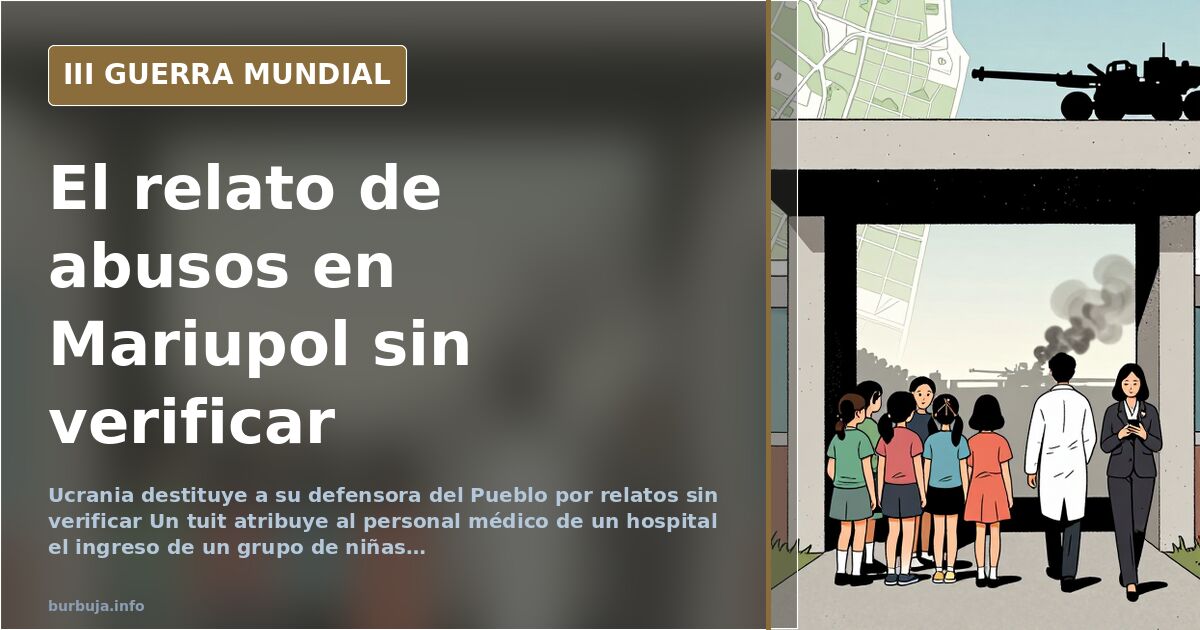
Ukraine dismisses its Human Rights Commissioner over unverified abuse reports
A tweet claims that hospital staff admitted a group of girls from Mariupol with injuries consistent with sensual abuse, the oldest reportedly ten years old. The account arrived without names, a specific medical center, or any documentation: it originated from a friend of a friend's husband. In the same thread, another tweet states that Ukraine’s top human rights official was dismissed for repeatedly circulating such unverified stories. These two realities sit uneasily together, and this discomfort is precisely what warrants scrutiny.
The narrative: three links and no documents
The message that sparked the controversy was signed by a Ukrainian journalist. It cites a friend, who in turn repeats what her husband’s friend, a doctor in Zaporizhzhia, told her. This doctor spoke of admitting a group of girls from Mariupol. Nothing else: no medical report, no hospital name, no date, and no identification of any involved parties. There are three intermediaries, and the last one is someone no one can locate.
Up to this point, this is typical wartime radio chatter, the kind produced in any conflict since radio existed. The problem begins when part of the public treats it as conclusive proof and those asking for documentation are suspected of complicity. The burden of proof was reversed in the very gesture that made the story go viral, losing the possibility of verification.
A tweet claims that hospital staff admitted a group of girls from Mariupol with injuries consistent with sensual abuse, the oldest reportedly ten years old. The account arrived without names, a specific medical center, or any documentation: it originated from a friend of a friend's husband. In the same thread, another tweet states that Ukraine’s top human rights official was dismissed for repeatedly circulating such unverified stories. These two realities sit uneasily together, and this discomfort is precisely what warrants scrutiny.
The narrative: three links and no documents
The message that sparked the controversy was signed by a Ukrainian journalist. It cites a friend, who in turn repeats what her husband’s friend, a doctor in Zaporizhzhia, told her. This doctor spoke of admitting a group of girls from Mariupol. Nothing else: no medical report, no hospital name, no date, and no identification of any involved parties. There are three intermediaries, and the last one is someone no one can locate.
Up to this point, this is typical wartime radio chatter, the kind produced in any conflict since radio existed. The problem begins when part of the public treats it as conclusive proof and those asking for documentation are suspected of complicity. The burden of proof was reversed in the very gesture that made the story go viral, losing the possibility of verification.
Also available in: Deutsch
Summary of a discussion on Burbuja.info - Foro de economía, actualidad y política., translated from Spanish and reviewed before publication. Read the full discussion (125 replies).
More summaries
-
Mariupol: 80% of Homes Damaged, but a Photo Doesn't Add Up
80% of Mariupol's homes are damaged and the city has been under siege for two weeks, but the current battle is over a photograph.
-
Ukraine holds Donbas as Russia eyes Odesa
Ukrainian forces reinforce Severodonetsk, challenging collapse narratives while analysts point to Odesa as Moscow's next target.
-
Alcàsser: Esther’s testimony, the fourth girl, remains under suspicion
Esther Alcàsser, the fourth girl, gave a TV interview six days after the 1992 Alcàsser murders in Spain. Her account and timeline discrepancies fuel ongoing controversy.
-
Unverified Sanna Marin photos spark online controversy
Unverified images attributed to Finland's former PM circulate in forums, blending politics, privacy concerns, and information warfare.
-
Bakhmut Bleeds as Spain Debates War Mobilization
Bakhmut faces an eight-month siege while NATO rules out deploying troops. Spain lacks the logistics to send more than a few brigades.
-
Putin justifies preemptive strike, blames the West
Putin's speech sets Donbas liberation as a goal and justifies the operation across a front of over 1,000 km.