
Trump Dances with Village People, Sparking Debate
Trump closed his rally dancing with The Village People, igniting debate over the appropriation of an anthem historically associated with the gay community.
English · Original discussion in Spanish · Published
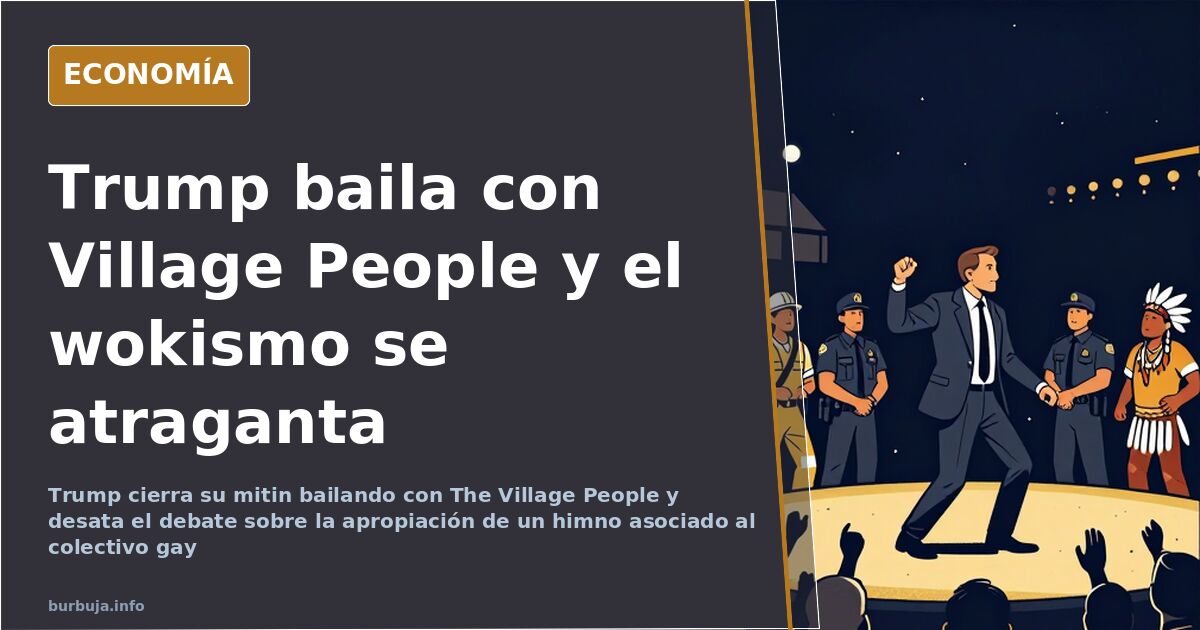
Trump Dances with Village People as Narrative Stalls
Donald Trump ended his rally with his usual war cry and then brought The Village People onto the stage to dance with them. The scene, widely shared on video, triggered a storm of reactions: from those calling it the wildest political finale they could recall, to those highlighting the contradiction of using an anthem historically linked to the LGBTQ+ community as the soundtrack for a president often accused of hostility toward that same group. This episode, occurring during the campaign, became the center of a debate mixing politics, pop culture, and culture wars.
What Exactly Peine on Stage
The rally concluded with Trump’s signature chant trinc by the Village People taking the stage, performing their hits while the candidate danced along. Images circulated immediately on social media and news outlets, with some posts noting these were the original singers of YMCA, the group’s most recognizable track. The choice was not accidental: this song has long been used as an unofficial campaign anthem, and its presence effectively closed the loop.
The controversy stemmed from the meaning attributed to the song. Some view it as a proud anthem for the lgtb community; others argue the band never intended it as such. This disagreement over the song’s origin and intent is the core issue: it is not about the music, but about who owns the symbol.
The Paradox of a Protest Anthem at a Conservative Rally
The most repeated argument concerns the contradiction: if Trump was portrayed as a threat to LGBTQ+ rights, it is hard to reconcile that one of his most recognizable musical icons joined him on stage. Some interpret this as straightforward cultural appropriation, while others see it as proof that the label of homophobia was an unfounded caricature.
The discussion expanded into a broader territory: who has the authority to decide which symbols belong to which communities? One line of analysis suggests sensual identity should not define a person entirely, and that public stereotypes of the community—its aesthetics and characters—generated backlash among those unwilling to be defined solely by private life. It is a debatable thesis, but it explains why the episode unsettles some more than others.
The Business Behind the Curtain
Beyond the culture war, there is an undeniable fact: the Village People are paid performers. The group has participated in campaign events before, and their presence here was not a free ideological gesture, but a hired act. This detail undermines much of the symbolic interpretation: this is not a conversion, but a transaction.
The sequence is also not new. In a previous campaign, the group threatened legal action over the use of their music; this time, they ended up sharing the stage. This shift—from legal threats to joint performance—is the clearest indicator of the relationship between show business and US politics.
What the Episode Says About the New Political Ecosystem
Ending with a dance fits a broader trend: politics as spectacle. Rally organizers no longer compete just for votes, but for attention, and a video of a candidate dancing with an iconic band generates more circulation than any policy speech. It is the same mechanism that turns electoral events into viral content.
Public reaction also reveals a shift in framing. What might have been a closed debate on cultural appropriation years ago has transformed into a struggle over who defines labels. The dance video acts as a test: each observer sees confirmation of what they already believed.
Debates Over the Real Impact of the Gesture
Some argue this episode marks the end of a cycle: politics built on identity as a weapon. Others warn the opposite, suggesting the gesture is cosmetic and changes nothing fundamentally. The debate over whether "proge" is dead or merely evolved remains open, and likely will not be resolved by a dance.
What is clear is that the symbol no longer belongs exclusively to anyone. Ultimately, the question is not whether Trump can dance to YMCA, but who decides what that song means when played on a stage that wasn’t originally theirs.
Donald Trump ended his rally with his usual war cry and then brought The Village People onto the stage to dance with them. The scene, widely shared on video, triggered a storm of reactions: from those calling it the wildest political finale they could recall, to those highlighting the contradiction of using an anthem historically linked to the LGBTQ+ community as the soundtrack for a president often accused of hostility toward that same group. This episode, occurring during the campaign, became the center of a debate mixing politics, pop culture, and culture wars.
What Exactly Peine on Stage
The rally concluded with Trump’s signature chant trinc by the Village People taking the stage, performing their hits while the candidate danced along. Images circulated immediately on social media and news outlets, with some posts noting these were the original singers of YMCA, the group’s most recognizable track. The choice was not accidental: this song has long been used as an unofficial campaign anthem, and its presence effectively closed the loop.
The controversy stemmed from the meaning attributed to the song. Some view it as a proud anthem for the lgtb community; others argue the band never intended it as such. This disagreement over the song’s origin and intent is the core issue: it is not about the music, but about who owns the symbol.
The Paradox of a Protest Anthem at a Conservative Rally
The most repeated argument concerns the contradiction: if Trump was portrayed as a threat to LGBTQ+ rights, it is hard to reconcile that one of his most recognizable musical icons joined him on stage. Some interpret this as straightforward cultural appropriation, while others see it as proof that the label of homophobia was an unfounded caricature.
The discussion expanded into a broader territory: who has the authority to decide which symbols belong to which communities? One line of analysis suggests sensual identity should not define a person entirely, and that public stereotypes of the community—its aesthetics and characters—generated backlash among those unwilling to be defined solely by private life. It is a debatable thesis, but it explains why the episode unsettles some more than others.
The Business Behind the Curtain
Beyond the culture war, there is an undeniable fact: the Village People are paid performers. The group has participated in campaign events before, and their presence here was not a free ideological gesture, but a hired act. This detail undermines much of the symbolic interpretation: this is not a conversion, but a transaction.
The sequence is also not new. In a previous campaign, the group threatened legal action over the use of their music; this time, they ended up sharing the stage. This shift—from legal threats to joint performance—is the clearest indicator of the relationship between show business and US politics.
What the Episode Says About the New Political Ecosystem
Ending with a dance fits a broader trend: politics as spectacle. Rally organizers no longer compete just for votes, but for attention, and a video of a candidate dancing with an iconic band generates more circulation than any policy speech. It is the same mechanism that turns electoral events into viral content.
Public reaction also reveals a shift in framing. What might have been a closed debate on cultural appropriation years ago has transformed into a struggle over who defines labels. The dance video acts as a test: each observer sees confirmation of what they already believed.
Debates Over the Real Impact of the Gesture
Some argue this episode marks the end of a cycle: politics built on identity as a weapon. Others warn the opposite, suggesting the gesture is cosmetic and changes nothing fundamentally. The debate over whether "proge" is dead or merely evolved remains open, and likely will not be resolved by a dance.
What is clear is that the symbol no longer belongs exclusively to anyone. Ultimately, the question is not whether Trump can dance to YMCA, but who decides what that song means when played on a stage that wasn’t originally theirs.
Also available in: Deutsch
Summary of a discussion on Burbuja.info - Foro de economía, actualidad y política., translated from Spanish and reviewed before publication. Read the full discussion (125 replies).
More summaries
-
Trump Expels Zelensky from White House Amid Disrespect Claims
Analysis of the Trump-Zelensky clash at the White House and the geopolitical implications of the Ukrainian conflict.
-
Leonor and Barron Trump: Rumor Links Spanish Crown to US Dynasty
Rumors suggest Princess Leonor could be a match for Barron Trump, blending dynastic interests with geopolitical speculation.
-
Trump Warns of Invoking Insurrection Act in Minnesota
Trump threatens to invoke the Insurrection Act in Minnesota amid ICE unrest. Detentions lack due process, sparking debate on economic costs.
-
Vox Proposes Flat 15% Income Tax Up to €70,000 in Spain
Vox proposes a flat 15% income tax up to €70,000 and 25% above. Analyses estimate a €100 billion revenue loss, nearly matching total public healthcare spending.
-
Spanish Congress Passes Catalonia Amnesty Law
Spain's lower house approved the controversial amnesty for Catalan separatists by a narrow margin, setting up a legislative showdown with the Senate.
-
Stock Market Crash Prediction: 686 Days Waiting for October
The predicted major stock market crash has been delayed for 686 days. Buffett sells, the S&P 500 hits highs, and real estate holds steady. Who is right?