
Spanish Congress Passes Catalonia Amnesty Law
Spain's lower house approved the controversial amnesty for Catalan separatists by a narrow margin, setting up a legislative showdown with the Senate.
English · Original discussion in Spanish · Published
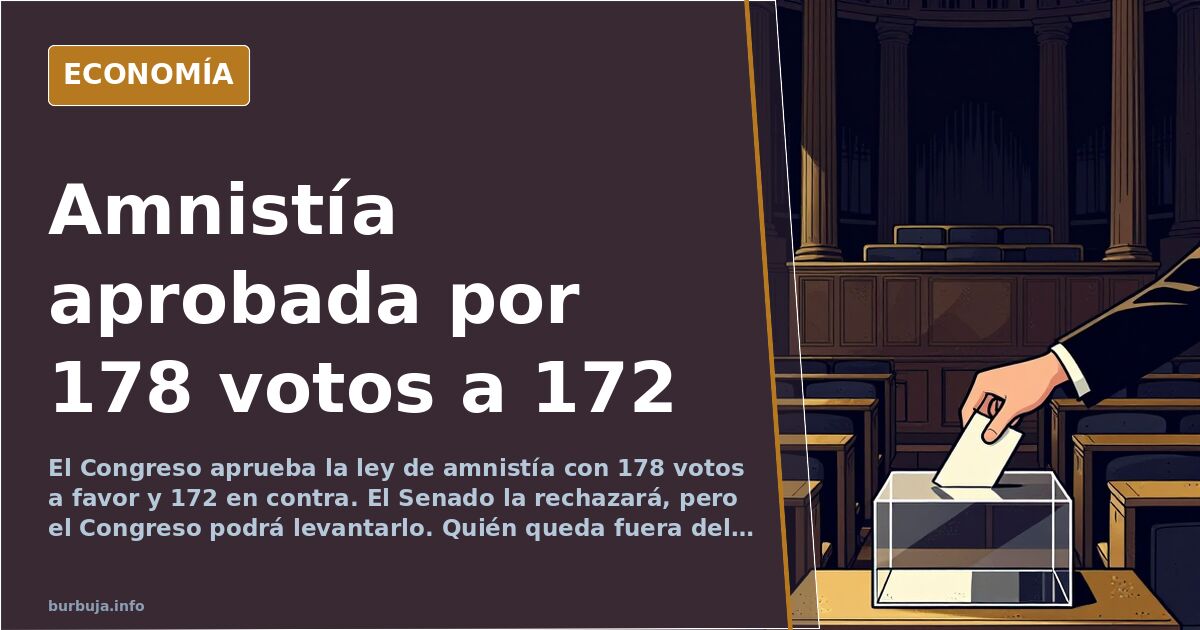
Spanish Congress Approves Catalonia Amnesty Law
The vote landed like a hammer blow in the chamber: 178 MPs in favor, 172 against. The amnesty law passed by a six-vote margin, granting forgiveness to those prosecuted during the Catalan independence process. The text covers embezzlement and public disorder charges but currently excludes police and Civil Guard officers involved in the clashes, according to parliamentary debate. The lingering question is no longer about constitutionality, but who will sign it and when.
Senate as Decorative Procedure
The institutional path has its own choreography. The law moves to the Senate, where the PP majority announced it would reject it, yet the Congress can override this veto and approve it definitively. Many ask what purpose the Upper House serves if it doesn't act as a real counterpower. The cynical answer circulating is: so senators can collect their salaries.
The procedure is not trivial. Like any other law, the amnesty requires sanction from the Head of State. Here, the King appears, who must sign it according to the debate. Some warn that doing so will earn him the nickname Doormat VI among part of the electorate. The institution is left in an uncomfortable position: sign and wear down, or refuse and block a law approved by the parliamentary majority.
The 50% Who Feel Unrepresented
The vote left an uncomfortable picture: almost half of the MPs voted against. This is not a consensus law, but a majority one. And on an issue touching the state's territorial structure, that has consequences. Part of the political spectrum argues the amnesty divides rather than unites, approved by votes from those who promoted the sovereignty challenge in exchange for legislative stability.
The opposing argument also holds weight: the amnesty is the only way to close a conflict entrenched for years, and its approval shows the rule of law can process and resolve crises via parliament. In any case, the discussion doesn't end with the vote. It shifts to the Senate, courts, and streets.
Who Is Excluded from Forgiveness
A frequently repeated point concerns police and Civil Guard agents who intervened in the clashes. According to the debate, the only ones not amnestied are the officers who defended the Constitution. This claim points to an asymmetry: pro-independence politicians are forgiven, while agents who trinc judicial orders are not.
The fine print matters. Some clarify that the amnesty covers those who did their duty without excess, but not those who indulged in violence. The distinction between fulfilling and exceeding duties is precisely what courts will have to assess case by case. That is where the law may fall short or overreach.
Economic Cost of the Amnesty
Economically, the amnesty is not neutral. Embezzlement crimes included in the pardon affect public funds allegedly used to finance the independence challenge. The unanswered question is who bears this cost: the public treasury, the defendants, or no one. The law establishes no reparation mechanisms.
Impact on investment and risk premium is another front. Institutional uncertainty generated by such a significant law often translates into market volatility. While approval removes one unknown, it opens others: what courts will do, how Brussels reacts, and if the constitutional framework withstands the pressure.
Corruption Narrative and Double Standards
The amnesty peine the debate on double standards in anti-corruption efforts. While some cases are pursued harshly, others are resolved legislatively. Comparisons with corruption cases in other autonomous communities—some with final convictions—are inevitable, fueling the sense that justice does not treat everyone equally.
The official argument is that the amnesty doesn't erase crimes but removes them from the Penal Code for political reasons. The difference is subtle but relevant: defendants aren't declared innocent, they are pardoned. And in politics, pardon always comes at a price.
The vote landed like a hammer blow in the chamber: 178 MPs in favor, 172 against. The amnesty law passed by a six-vote margin, granting forgiveness to those prosecuted during the Catalan independence process. The text covers embezzlement and public disorder charges but currently excludes police and Civil Guard officers involved in the clashes, according to parliamentary debate. The lingering question is no longer about constitutionality, but who will sign it and when.
Senate as Decorative Procedure
The institutional path has its own choreography. The law moves to the Senate, where the PP majority announced it would reject it, yet the Congress can override this veto and approve it definitively. Many ask what purpose the Upper House serves if it doesn't act as a real counterpower. The cynical answer circulating is: so senators can collect their salaries.
The procedure is not trivial. Like any other law, the amnesty requires sanction from the Head of State. Here, the King appears, who must sign it according to the debate. Some warn that doing so will earn him the nickname Doormat VI among part of the electorate. The institution is left in an uncomfortable position: sign and wear down, or refuse and block a law approved by the parliamentary majority.
The 50% Who Feel Unrepresented
The vote left an uncomfortable picture: almost half of the MPs voted against. This is not a consensus law, but a majority one. And on an issue touching the state's territorial structure, that has consequences. Part of the political spectrum argues the amnesty divides rather than unites, approved by votes from those who promoted the sovereignty challenge in exchange for legislative stability.
The opposing argument also holds weight: the amnesty is the only way to close a conflict entrenched for years, and its approval shows the rule of law can process and resolve crises via parliament. In any case, the discussion doesn't end with the vote. It shifts to the Senate, courts, and streets.
Who Is Excluded from Forgiveness
A frequently repeated point concerns police and Civil Guard agents who intervened in the clashes. According to the debate, the only ones not amnestied are the officers who defended the Constitution. This claim points to an asymmetry: pro-independence politicians are forgiven, while agents who trinc judicial orders are not.
The fine print matters. Some clarify that the amnesty covers those who did their duty without excess, but not those who indulged in violence. The distinction between fulfilling and exceeding duties is precisely what courts will have to assess case by case. That is where the law may fall short or overreach.
Economic Cost of the Amnesty
Economically, the amnesty is not neutral. Embezzlement crimes included in the pardon affect public funds allegedly used to finance the independence challenge. The unanswered question is who bears this cost: the public treasury, the defendants, or no one. The law establishes no reparation mechanisms.
Impact on investment and risk premium is another front. Institutional uncertainty generated by such a significant law often translates into market volatility. While approval removes one unknown, it opens others: what courts will do, how Brussels reacts, and if the constitutional framework withstands the pressure.
Corruption Narrative and Double Standards
The amnesty peine the debate on double standards in anti-corruption efforts. While some cases are pursued harshly, others are resolved legislatively. Comparisons with corruption cases in other autonomous communities—some with final convictions—are inevitable, fueling the sense that justice does not treat everyone equally.
The official argument is that the amnesty doesn't erase crimes but removes them from the Penal Code for political reasons. The difference is subtle but relevant: defendants aren't declared innocent, they are pardoned. And in politics, pardon always comes at a price.
Also available in: Deutsch
Summary of a discussion on Burbuja.info - Foro de economía, actualidad y política., translated from Spanish and reviewed before publication. Read the full discussion (125 replies).
More summaries
-
Rubén Gisbert occupies Congress: the 11N and its 15M shadow
Rubén Gisbert occupies Congress with a manifesto demanding direct presidential election, ending with police eviction.
-
PP blocks Senate changes to stop amnesty law
The People's Party rejects Vox amendments to the Senate rules that would have slowed the amnesty law's processing.
-
Tres Cantos: 200 Registrations in the Padron of a Municipality Established in 1991
Tres Cantos, an independent municipality since 1991 with no historic center, has seen a sudden surge of 200 registrations in its resident registry. What is known and what doesn't add up.
-
Mediaset Tests Virtual Host for Spanish Reality Show Supervivientes
Mediaset introduces Alba Renai, a virtual host for Supervivientes, sparking debate on cost savings versus human presenters.
-
Conde-Pumpido's Son Hospitalized After Sexual Assault Arrest
The son of Spain's Constitutional Court president, arrested for alleged sexual assault, was released on bail and later hospitalized.
-
Monthly insurance sold for a rejected loan
Client with €100k deposits applied for a €30k loan, signed a €90/month life policy, but the credit was denied. The insurance remains active.