
Tomatoes, Fascism, and the Working Class: The Controversy Over Rural Life
A message claims packaging tomatoes as a moral symbol echoes "blood and soil" rhetoric. The debate touches on class, envy, and rural living.
English · Original discussion in Spanish · Published
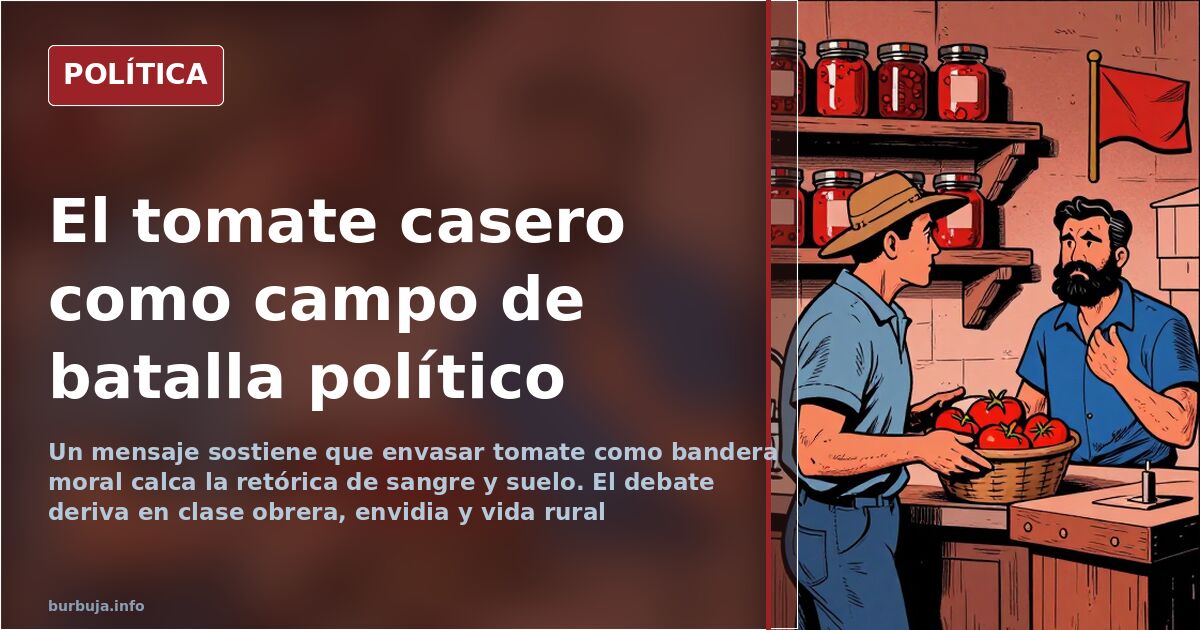
Fascism is when tomatoes: the countryside as a sarracena trench
The setting is idyllic and instantly recognizable: a family farm, midday sun, children running between the terraces, and a table laden with freshly sterilized preserving jars. This scene, which twenty years ago would have been a summer postcard, has become an ideological battlefield the moment someone put it into words. Canning tomatoes, the message implied, is no longer just a tradition: it's a sarracena trench. And beneath this trench, the discussion isn't about a vegetable, but about who has the right to claim tradition and at what cost.
The thesis: canning tomatoes as "blood and soil" rhetoric
The original text argued that turning homemade tomatoes into a symbol—alongside family and good manners—echoes "blood and soil" rhetoric. In other words, it presents modernity as decadence and blames people for abandoning it. The argument takes an interesting turn: traditional preserving didn't die from ideological neglect, but from grueling workdays and apartments too small to hold twenty kilos of tomatoes. Nostalgia, in this context, would be a luxury.
Is canning tomatoes fascist? The erosion of a word
This is where any consensus breaks down. Some members of the public retort that accusing any domestic scene of fascism is precisely what empties the term of meaning: it's said so often that it no longer signifies anything. Others defend that the criticism isn't against the tomatoes themselves, but against their political use, that obsession with elevating a private custom to a sarracena hierarchy. A third group concedes part of the diagnosis but criticizes the framing: the person writing from a rural property isn't in the same position as someone renting an apartment in a city that has become the opposite of what it once was.
The countryside as privilege and envy as fuel
The most frequently raised point is the material divide. Enjoying a vegetable garden, having free time, and gathering family around a table has become a luxury within reach of few: it requires land, resources, and, above all, time. What for some is tradition, for others is a display. From there, the most cynical diagnosis emerges: social media is fueled by envy, and those who watch others' lives from their phones are participating in the same game. The tomato-canning scene resonates because it highlights a real distance, not because it invents one.
Why working-class people don't vote left
The issue quickly veers into electoral territory. Some argue that this type of analysis—making rural life suspect—explains why a segment of the working-class electorate no longer feels addressed by the left. For this group, the accusation of fascism applied to a vegetable garden sounds like class contempt disguised as theory. Others see it the other way around: idealizing the homeland is the gateway to a narrative that already has an owner. Neither interpretation is fully conclusive.
In the end, the scene is the same: sun, children, and jars of preserves. The difference is that now there's an adjective hanging over the table. And some point out a detail: the tomatoes, according to that version, weren't from the garden; they were bought from a farmer. The sarracena trench, like almost all trenches, is built with second-hand material.
The setting is idyllic and instantly recognizable: a family farm, midday sun, children running between the terraces, and a table laden with freshly sterilized preserving jars. This scene, which twenty years ago would have been a summer postcard, has become an ideological battlefield the moment someone put it into words. Canning tomatoes, the message implied, is no longer just a tradition: it's a sarracena trench. And beneath this trench, the discussion isn't about a vegetable, but about who has the right to claim tradition and at what cost.
The thesis: canning tomatoes as "blood and soil" rhetoric
The original text argued that turning homemade tomatoes into a symbol—alongside family and good manners—echoes "blood and soil" rhetoric. In other words, it presents modernity as decadence and blames people for abandoning it. The argument takes an interesting turn: traditional preserving didn't die from ideological neglect, but from grueling workdays and apartments too small to hold twenty kilos of tomatoes. Nostalgia, in this context, would be a luxury.
Is canning tomatoes fascist? The erosion of a word
This is where any consensus breaks down. Some members of the public retort that accusing any domestic scene of fascism is precisely what empties the term of meaning: it's said so often that it no longer signifies anything. Others defend that the criticism isn't against the tomatoes themselves, but against their political use, that obsession with elevating a private custom to a sarracena hierarchy. A third group concedes part of the diagnosis but criticizes the framing: the person writing from a rural property isn't in the same position as someone renting an apartment in a city that has become the opposite of what it once was.
The countryside as privilege and envy as fuel
The most frequently raised point is the material divide. Enjoying a vegetable garden, having free time, and gathering family around a table has become a luxury within reach of few: it requires land, resources, and, above all, time. What for some is tradition, for others is a display. From there, the most cynical diagnosis emerges: social media is fueled by envy, and those who watch others' lives from their phones are participating in the same game. The tomato-canning scene resonates because it highlights a real distance, not because it invents one.
Why working-class people don't vote left
The issue quickly veers into electoral territory. Some argue that this type of analysis—making rural life suspect—explains why a segment of the working-class electorate no longer feels addressed by the left. For this group, the accusation of fascism applied to a vegetable garden sounds like class contempt disguised as theory. Others see it the other way around: idealizing the homeland is the gateway to a narrative that already has an owner. Neither interpretation is fully conclusive.
In the end, the scene is the same: sun, children, and jars of preserves. The difference is that now there's an adjective hanging over the table. And some point out a detail: the tomatoes, according to that version, weren't from the garden; they were bought from a farmer. The sarracena trench, like almost all trenches, is built with second-hand material.
Summary of a discussion on Burbuja.info - Foro de economía, actualidad y política., translated from Spanish and reviewed before publication. Read the full discussion (23 replies).
More summaries
-
Spain to Ban Social Media for Under-16s, Citing Age Verification Hurdles
Sánchez announces a ban on social media for under-16s, with age verification and VPNs posing significant technical challenges.
-
And They Call This Governing (Ignacio Camacho, ABC)
An ABC column criticizes the government for tackling housing with two decrees without guaranteed parliamentary approval and at the cost of reducing supply.
-
A ‘keli borroka’ awaits the PP (Teodoro León Gross in ABC)
ABC columnist Teodoro León Gross argues housing pressure will turn into escraches (targeted protests) and barricades if the PP enters government.
-
A democratic obligation unfulfilled (ABC editorial)
Article 134.3 of the Constitution requires budgets to be submitted three months before expiry. Spain is still running on the 2023 Budget.
-
Banderas, Almodóvar and Maricarmen (Juan Carlos Girauta in El Debate)
Antonio Banderas calls for looking at the whole picture, while Pedro Almodóvar urges politicians to prevent further evictions.
-
The USSR and the Origins of Borregocracia: Thesis and Suspicions
Soviet infiltration, free lawyers, Gramsci and academic inbreeding: the thesis that traces today's groupthink to the USSR.