
The Hidden Cost of Living with a Compulsive Spender
Unused purchases, wasted food and cold starts reveal the true toll of cohabiting with someone who overspends and rejects advice.
English · Original discussion in Spanish · Published
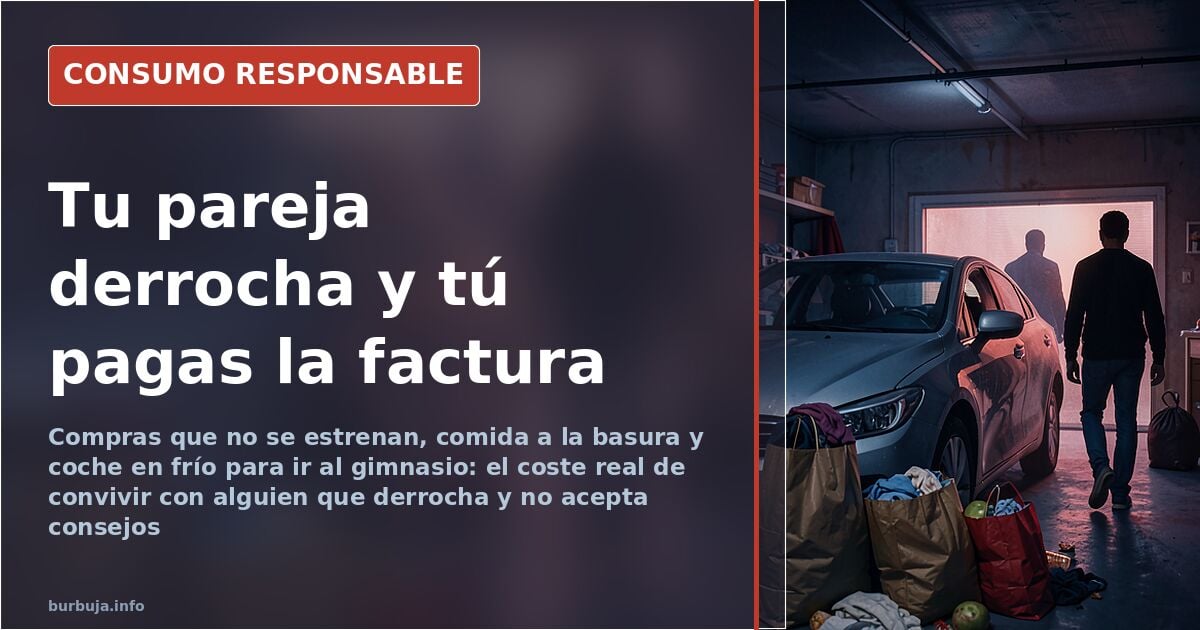
The Torture of Sharing a Home with Someone Who Overspends
What happens when you live with someone who complains about not saving yet constantly buys things they don’t need? The scene repeats itself: closets full of unused items, food ending up in the trash, and a car started cold for a ten-minute drive to a gym that’s within walking distance. The problem isn’t just financial. It affects coexistence, space, and time.
The pattern described in the case that sparked this conversation is recognizable: buying items used only twice, replacing functional goods with slightly better models, and filling the fridge only to throw it away because no one checks what’s inside. And the worst part, according to those suffering from it, is the brick wall that appears when trying to offer advice. Lack of organization translates into daily time loss searching for things whose location is unknown.
The Profile Has No Gender, But the Pattern Persists
The discussion quickly shifted toward gender stereotypes, which deserves scrutiny. Some argue compulsive consumerism concentrates among women; others counter that spenders exist across both sens and bias depends on what is measured. Those who buy clothes without restraint and those who change cars like shirts respond to the same impulse: spending to fill free time they cannot manage.
A diagnosis appearing in the thread is the absence of hobbies: those without pastimes fill the void with shopping. Those who don’t check the fridge waste food. Those who don’t organize their home lose half an hour a day looking for keys. Inefficiency isn’t a character trait: it’s a self-reinforcing lifestyle system.
When Advice Hits a Wall
The most repeated point in the conversation is the helplessness of trying to correct another’s behavior. Some have tried separating accounts, others proposed a common leisure fund, and some ended the relationship directly. One strategy mentioned as successful is expense separation: each pays for their own, while the joint account covers food, utilities, and household costs.
It works when there are incomes and willingness. It fails when the spender has no independent income but continues using the other’s money. There, the conflict isn’t about management: it’s about boundaries. And boundaries in a shared home are either negotiated or broken.
The Hidden Cost: Space, Time, and Food
The visible cost is the purchase. The invisible one is what occupies space. Closets, shelves, and corners saturated with unused items generate a daily cost that never appears on a bill: time lost searching for what can’t be found. Added to this is food cooked in excess and discarded because no one checked what was already there.
The savings paradox remains the same in all cases: those complaining about lack of money usually fail to control spending. It’s not an income issue. It’s a habit issue, and habits aren’t fixed by advice over dessert.
In the end, the question isn’t whether the other spends too much. It’s how much you’re willing to pay—in money, space, and patience—to continue living with someone unwilling to change.
Also available in: Deutsch
Summary of a discussion on Burbuja.info - Foro de economía, actualidad y política., translated from Spanish and reviewed before publication. Read the full discussion (79 replies).
More summaries
-
Fortysomething in Spain lays out plan to live on minimum income and travel to Indochina
A user says a locker room photo of his topped 200 reactions and that he plans to live off Spain's IMV minimum income, the gym and a trip to Indochina in 2028.
-
Unplug the fridge at your Spanish holiday home: the saving almost nobody calculates
A calculation making the rounds online shows that cooling an empty fridge costs the same as a few hours of normal use. If the house is empty for more than three hours, switching it off pays off.
-
Ahorro.net reads your bank accounts in exchange for offers
Ahorro.net imports transactions using read-only banking credentials and funds the service by selling offers based on spending, according to its founder. The technical detail continues…
-
KFC sells 22 chicken wings for 9 euros, less than 50 cents each
22 KFC chicken wings for 9 euros cost less than 50 cents each. Details and terms of the limited-time offer in Spain.
-
Frozen Bread Sold as Artisan Sparks Customer Outrage in Spain
Customers claim only 20% of Spanish bakeries serve fresh bread, while the rest sell frozen goods at artisan prices.
-
Affordable 125cc scooters for hills: used and discreet
Used 125cc scooter, lightweight and unbranded: the recipe to climb hills without breaking the bank or losing your bike on the street.