
Affordable 125cc scooters for hills: used and discreet
Used 125cc scooter, lightweight and unbranded: the recipe to climb hills without breaking the bank or losing your bike on the street.
English · Original discussion in Spanish · Published
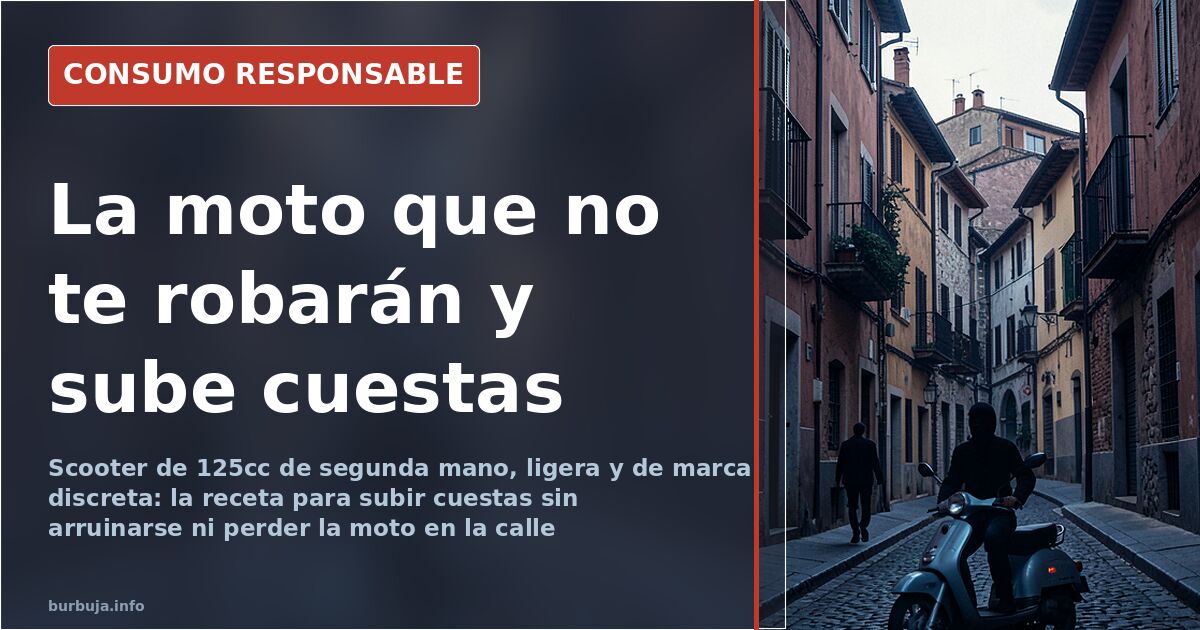
Budget 125cc used scooter to conquer hills
A resident of a steep town wants to ditch the car and move on two wheels without going broke. She doesn't know how to ride a motorcycle, is of average-to-short height, and will leave her vehicle parked on the street. Her requirements—lightweight, cheap, with storage space, discreet, and fuel-efficient—are typical for half of Spain. The consensus among experts is unanimous on the essentials: a used 125cc scooter from an understated brand.
The first filter is the license. With a validated B license (standard car license), you can ride a 125cc without taking the A2 test, opening up the market. But weight matters: some warn that popular models like the Burgman, Carnaby, or Scoopy 125 can exceed 120 kilos, too heavy for someone who has never handled a motorcycle. The lightweight alternative involves high wheels and a small chassis.
The hill dictates the choice. A 50cc falls short on long slopes, and a weak 125 struggles on highways. For urban use with elevation changes, the consensus points to a 125 with generous wheel diameter: more stable when braking and climbing curbs, though with less trunk space than a maxi-scooter.
Which cheap scooter survives the street without being stolen?
Here comes the uncomfortable fact: best-selling models are also the most stolen. The more discreet and less valuable the bike, the better for public parking. This leads to names like Kymco, SYM, or Daelim, and classic used options like the Honda Scoopy 100cc for around 800 euros. The Piaggio Carnaby 125 also appears: few horsepower, front and rear disc brakes, and a declared consumption of about 10 euros per 210 kilometers in the city.
The price of used 125s has heated up. Some argue the bubble comes from all B-license holders limited to this displacement, to the point where a 200cc plus the A2 license might cost the same as a good-condition 125. The full calculation, including classes, fees, and registration, yields a discouraging figure.
Full-face helmet, gloves, and lock: the hidden cost
The bike is only half the bill. The other half is gear: full-face helmet—not jet—, protective jacket, leather gloves, and closed shoes. And for street parking: disc lock, piton, and U-lock. Not forgetting insurance, circulation tax, and maintenance.
The alternative sneaking into the conversation is the electric bike: lower costs, less workshop time, and pedal assistance on hills. For short trips and moderate rain, some consider it a better deal than a 50cc.
With these numbers, the reasonable decision seems clear: a used 125, unpopular brand, and high wheels. It remains to be seen if the used market cools down or stays inflated. No one bets on the latter.
Also available in: Deutsch
Summary of a discussion on Burbuja.info - Foro de economía, actualidad y política., translated from Spanish and reviewed before publication. Read the full discussion (66 replies).
More summaries
-
'Lonchafinismo' as dogma: from necessity to economic faith
We analyze the lonchafinismo phenomenon: how economic necessity has turned into a doctrine of extreme saving and resistance to consumerism.
-
3-Euro Mouse Fraud Sparks Debate on Extreme Savings Ethics
Returning a broken €3 mouse for a new one divides opinion between warranty use and fraud, challenging the limits of extreme saving.
-
Hussars: quality menswear or just posturing?
Hussars review: natural fabrics, local manufacturing, and straight fit versus criticism for its controversial cut and self-promotion. Is it worth the price?
-
Primark’s €6 Shirts: The Workwear Debate
€6 dress shirts vs. €40 alternatives: polyester, off-grain cuts, and daily wear determine if the bargain lasts or fades after one wash.
-
Android Mini PCs: A Sub-€100 Computer Challenge
Android mini PCs and Raspberry Pi offer computers under €100, but high power consumption and lack of Office software define the real cost.
-
CaixaBank offers switching debit cards for revolving credit
A CaixaBank client reports being offered a 'free' revolving card to avoid a €35 fee. The contract reveals the truth on page four.