
The egg omelette: from cheese to tripe, the fridge decides the filling
From tuna to tripe, including Iberian ham warmed between layers of egg: an omelette filling can take almost anything you have in the fridge
English · Original discussion in Spanish · Published
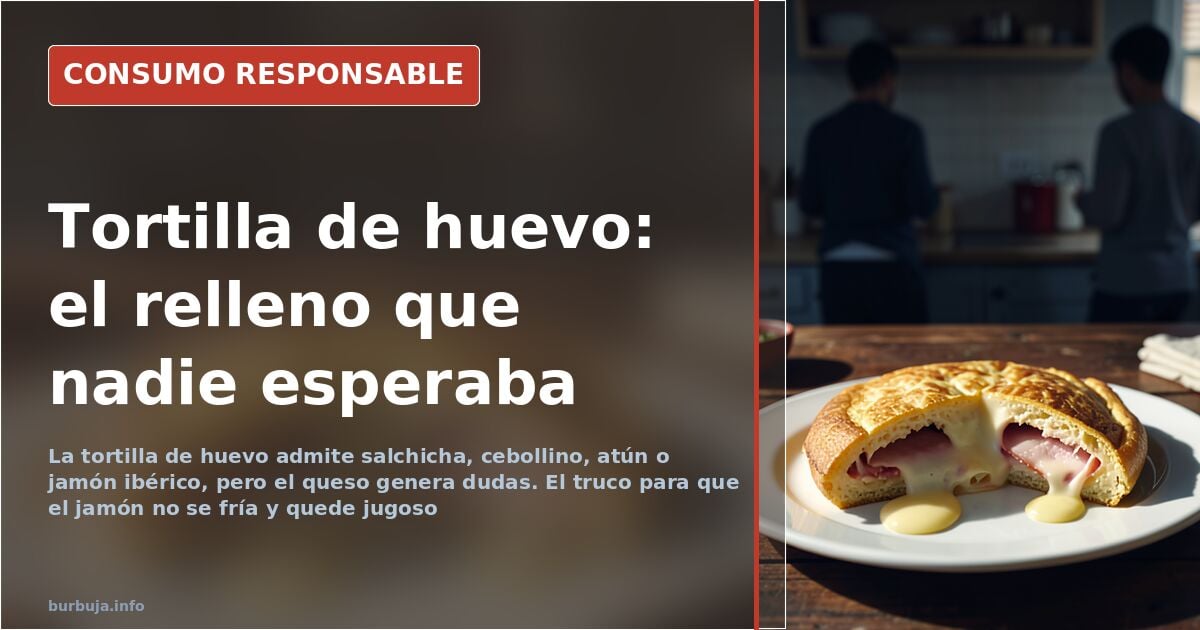
From a cheese omelette to a tripe filling: the debate over what to put in your eggs
An egg omelette has no recipe. It has a fridge. An improvised breakfast with sausage, cherry tomatoes and onion kicks off a discussion that, within hours, covers tuna, chorizo, Iberian ham, asparagus, mushrooms, courgette, green pepper and even tripe. Eggs, an ingredient many eat without enthusiasm but with protein in mind, work as a base for almost anything that fits in a pan.
The starting premise is modest: an omelette made with whatever was on hand, no cheese. «Some people put cheese on everything but I don't think it's necessary in an omelette», sums up the initial stance. The reply comes quickly: chopped chives on the egg-white side, no further ceremony. And from there, the catalogue overflows.
What to fill an egg omelette with: tuna, chorizo, ham or whatever you have
Tuna appears as the classic option from northern Spain, with bonito as a variation. Chorizo and cooked ham compete with Iberian ham, which has its own technique: warming it between two layers of the mixture so it doesn't touch the pan and doesn't fry. «It's warm, not fried», the defender of the method clarifies. The result, according to that version, is a ham that blends in without losing its texture.
Vegetables also have their place. Courgette sautéed for two minutes before adding the beaten egg, green pepper, mushrooms, wild mushrooms, leek finely sliced and fried beforehand, garlic shoots. A Spanish potato omelette with caramelised onion and marinated pork loin sneaks in as a more elaborate proposal. And then there are the bets that border on a dare: tinned mussels, brains —«very tasty and silky, but that's not done anymore»—, tripe, cod crumbs with fried peppers.
Cheese divides opinion. Some consider it unnecessary, others defend it for texture: melted, it gives «a particular look and texture». Cabrales cheese comes up as an option with character. Butter, on the other hand, gets a warning: almost everything tastes good with it, but its flavour is strong and the fat makes the dish more palatable.
Technique matters: beat little, medium-high heat and just enough milk
Beyond the filling, the method is discussed in detail. Beat the egg only briefly, just to dissolve a splash of milk, mix slowly and cook over medium-high heat. Add milk to make them fluffier. Stir the eggs English-style with hot butter, then add cream or milk for creaminess. And the recurring problem: sticking to the pan.
The French omelette takes gulas (baby eels), wild asparagus and cheese. The Spanish one, according to one blunt opinion, takes only onion. The version with sandwich bread and barley beer is presented as a textbook combination. The omelette sandwich with white bread and slices of ripe tomato completes the picture.
Protein as an argument and a warning about excess
Eggs are championed for their protein, but not without caveats. Against the protein enthusiasm, a voice argues that overdoing it is «a poison» for the body and suggests measuring urine pH to check. The claim comes with no evidence and stays in the realm of opinion. What is shared is the idea that an omelette takes almost anything: «don't let anyone limit you», sums up one comment comparing the dish to a game of chess.
The conversation ends where every food debate usually ends: in each household's fridge. With a 100-gram protein omelette in the background, the question is no longer what to put in it, but what not to.
Also available in: Deutsch
Summary of a discussion on Burbuja.info - Foro de economía, actualidad y política., translated from Spanish and reviewed before publication. Read the full discussion (56 replies).
More summaries
-
Scotch eggs with Pría cheese: the indulgence that spares no one
Pría cheese is sneaking into homemade Scotch eggs. The recipe that divides opinion and the price that keeps climbing. Indulgence or sacrilege?
-
60-euro ham in Spain: what you can actually get
For 60 euros there is no acorn-fed Ibérico ham: the market offers white pork, cebo-fed shoulder cuts and occasional deals. Here is what you can actually buy.
-
Spanish 1970s Cookies: The Lost Taste of Childhood
Iconic Spanish brands like Cuétara and Fontaneda have changed. Palm oil, mergers, and quality cuts explain the decline of a national staple.
-
Spanish TV comedy: canned laughter and mocking others
A critical look at Spanish television humor: canned laughter, mockery of others, and exceptions like Mr. Bean.
-
€20 electric blanket heats for two hours after a one-minute charge
A €20 electric blanket that charges in one minute and stays warm for two hours: physics puts the promise in perspective and confirms part of it.
-
From ColaCao's 70% sugar to dark chocolate's 1%
ColaCao declares 70% sugar and Nocilla 56%, while 99% dark chocolate drops to just 1%. The label figures that change what goes in your shopping basket.