
€20 electric blanket heats for two hours after a one-minute charge
A €20 electric blanket that charges in one minute and stays warm for two hours: physics puts the promise in perspective and confirms part of it.
English · Original discussion in Spanish · Published
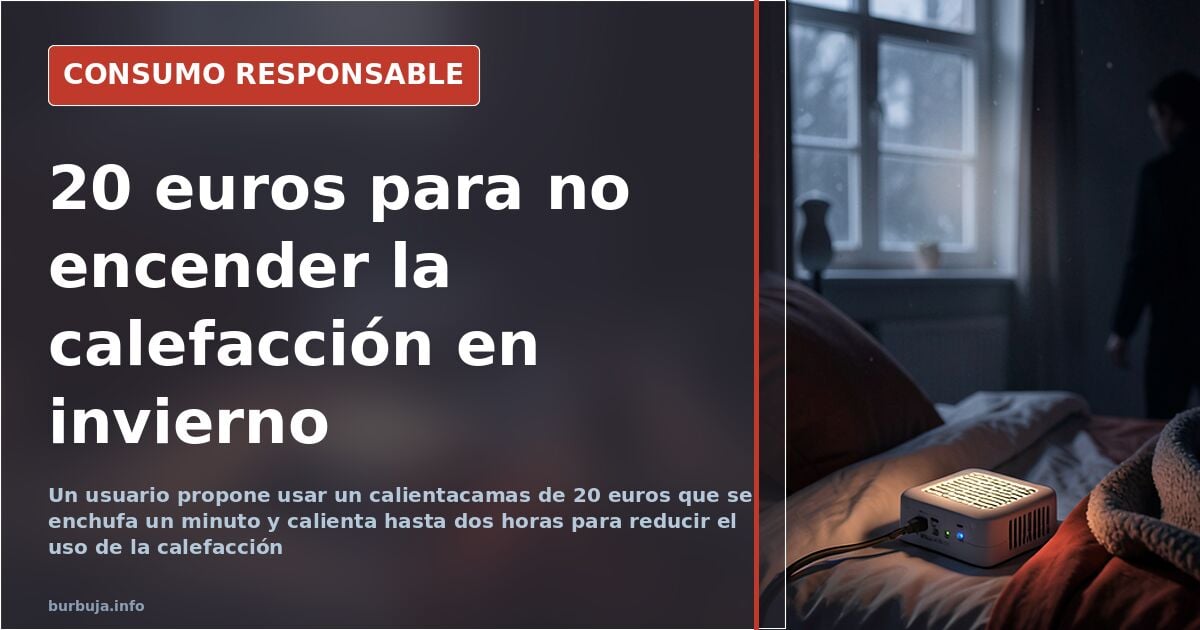
The €20 electric blanket that promises to let you switch off the heating
One minute plugged in. That is all an Orbegozo electric blanket needs, according to the claim that started this discussion in the Responsible Consumption subforum, to radiate heat for an hour and a half or two hours. Twenty euros at the Milar store. The promise is bold: with a blanket on top and the device resting against the sofa, "you can get through the winter paying 0 for heating." Fire risk or carbon monoxide poisoning, it adds, is nil.
The proposal has some physical logic and some inflated storytelling. The logic: heating the person instead of the room is, in efficiency terms, an obvious move any domestic thermodynamics manual would endorse. The inflated part: an 850-watt device that only consumes power while charging is no substitute for a heating system, and those who have tried it know it.
How long an electric blanket really takes to charge
The math fairly easily dismantles the "one minute" claim. If there is roughly a liter of water inside and the thermostat cuts off at 65 degrees, going from 20 to 65 degrees requires about 190 kilojoules. With an 850-watt heating element, that takes a little over three and a half minutes at best. In exactly sixty seconds, only a quarter of that energy would get in. The most plausible explanation is that the device starts out warm from the previous use, or that the minute is a rough estimate.
What does hold up is the duration afterwards: that liter of water at 65 degrees, in its cover and under a blanket, releases heat gradually over those couple of hours. There is nothing magical about the mechanism. An electric heating element, a dense liquid or gel with thermal inertia, and a fabric cover that prevents burns. The same technology as a hot water bottle, with a plug.
Heating the bed is not heating the house
This is where the promise falls apart. The weak point of Spanish homes is not the mattress: it is the living room, the hallway, and that extended room without insulation where the thermometer reads 13 degrees and the hygrometer shows 78% humidity. An electric blanket solves the cold of sitting down or getting into bed. It does not solve the rest of the day.
The alternatives that came up share the same philosophy of heating the body, not the air: traditional hot water bottles for the feet and belly, a 100-watt electric pad that keeps heat indefinitely with a controller and fuses, or even a brick heated in the kitchen. Cheaper, in several cases. Less comfortable, too.
The trick that needs no plug
Some took the savings to the extreme: ten burpees every time the cold bites. And another method that requires neither twenty euros nor anything but a half-empty plastic bottle and an unavoidable physiological need. Warmth for an hour, water saved at home. Ingenuity, when the bill bites, knows no limits.
The conclusion is less epic than the headline: the electric blanket is a good complement for anyone who gets cold on the sofa or getting into bed, and a poor substitute for heating for anyone living in a large, poorly insulated house. Twenty euros well spent, as long as you don't ask them for what they cannot deliver.
Also available in: Deutsch
Summary of a discussion on Burbuja.info - Foro de economía, actualidad y política., translated from Spanish and reviewed before publication. Read the full discussion (48 replies).
More summaries
-
Hot water bottle or electric bed warmer: which costs less
The bed warmer sells for 22 euros and holds heat for five hours per charge. Compared with an electric blanket and a hot water bottle, which heats the bed most cheaply?
-
Electric grills: 2,000 W for what a frying pan already does
A €39, 2,000 W electric grill promises to press food on both sides, but grease cleanup and smoke decide whether it ends up in the cupboard.
-
Electric blanket: the trick to pay less for heating
An electric blanket uses far less power than a radiator, but it won't heat the room. Safety tips, consumption figures and prices starting at 20 euros.
-
Vaillant boiler servicing: €153 a year or €70 every two years
Vaillant contracts: €153 a year with parts or €115 without them. The mandatory inspection every two years costs €70. Is it worth it from year one?
-
From ColaCao's 70% sugar to dark chocolate's 1%
ColaCao declares 70% sugar and Nocilla 56%, while 99% dark chocolate drops to just 1%. The label figures that change what goes in your shopping basket.
-
Moma Equinox 29: €290 and a racket on wheels
The Moma Equinox 29 costs €290 and arrives with noisy brakes, a misadjusted drivetrain and a squeaking suspension. The buyer had to strip it all down himself.