
The cookbook that defends old-school cooking: stews and garlic
Garlic chicken, porrusalda, arroz con costra and roasted garlic: a forum thread defends traditional Iberian home cooking against passing food fads
English · Original discussion in Spanish · Published
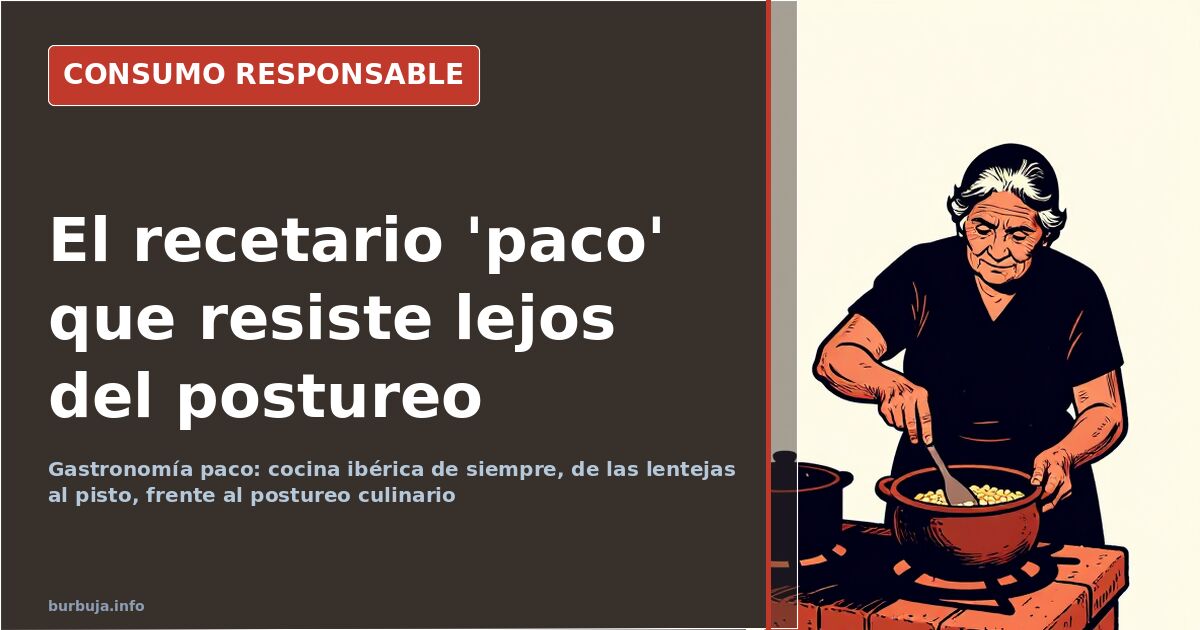
Old-school cooking fights back: from garlic chicken to arroz con costra
What's left of grandma's cooking when internet recipe sites fill everything with bowls and avocado? A group of enthusiasts argues the opposite in a forum thread: that garlic chicken, porrusalda, black rice and battered cauliflower are still the backbone of what people eat in Spain, Portugal and Andorra. The label they use —«paco»— is not an insult: it's a manifesto. They champion spoon stews, roasted garlic, properly fried potatoes and the foie gras canapés from nineties birthday parties.
The starting point is a statement of intent: recipes from the Iberian peninsula, no modern gimmicks. And what appears is not a standard cookbook, but an inventory of what gets cooked in homes. **Garlic chicken, onion tortilla española and black rice** open the list. Then comes porrusalda, that potato, leek and carrot soup thickened by mashing part of the potato against the broth. No foams.
From pancetta sofrito to garlic crushed in a mortar
There is a cross-cutting obsession with garlic. It is roasted whole with the potatoes and turned into a cream for spreading on toast. It is crushed in a mortar —or grated— for fish dressings. And the fried-fish dressing gets its due: sliced garlic, vinegar, bay leaf, cumin, oregano and paprika, with the improvement of replacing half the vinegar with lemon. **Crushed garlic releases more flavour than sliced**, one of the group's cooks maintains, and nobody argues.
Technique matters. For crispy potatoes you need to choose a firm white variety, pre-fry them in hot oil, drain and cool them spread out before the final fry. Storing potatoes are only good for stews and purées. It's the kind of detail that separates a recipe from a meal.
The cookbook that runs from porrusalda to arroz con costra
The repertoire crosses borders without complexes. From the Basque Country come porrusalda, the miner's bean stew —a chorizo, a blood sausage, pork fat and greens per person, with the perolo in the middle— and freshly made txistorra pintxos. From Catalonia, arroz con costra, which one participant admits to making his own way, without the traditional technique, and the pending battle with the caldero of the Mar Menor. From Andalusia, carne al toro, stuffed aubergines gratinated with béchamel and cheese, and pisto with fried eggs. From Castile, stewed chicken legs and necks, which a Castilian grandmother ate without fuss.
**Arroz con costra, caldero and paella** appear as the three trials by fire of the home cook. And some admit their paella comes out edible without fireworks. Honesty is part of the method.
Potato, garlic and spiced oil as religion
Spiced oil deserves a chapter of its own: oil with cayenne peppers —some chopped, some whole—, garlic likewise, peppercorns, bay leaf and oregano to taste. Made at home and stored. It's the domestic version of the industrial pantry, and it works.
Battered cauliflower with mayonnaise, devilled eggs, chickpea puchero, pisto, cabbage sautéed with garlic and tomato salad with cumin complete a map that knows nothing of fads. **Roasted garlic turns into a cream** and is spread on toast or put on roast potatoes. It's the kind of trick that never appears in designer cookbooks.
The price of anchovies and bread hygiene
It's not all stew. The conversation drifts to the price of tinned goods: some argue that a non-perishable anchovy that travels by ship shouldn't cost what it costs, and regional brands with good value for money are recommended. The hygiene controversy also comes up: someone points out that in a photo bread is being cut without gloves and money handled while charging, and another replies that the image is from the internet. **Distrust of the official narrative** also reaches the bread counter.
The cider house dessert and the birthday snack
The sweet ending comes from the Basque cider house: cheese, quince paste and walnuts, with the basket of walnuts on the table and more cider to go with it. It's the only dessert accompanied by the same drink that precedes it. And in the nostalgia chapter, brand-name foie gras canapés, the orange crisps that stained your fingers and the sweet ham rolls filled with potato salad left out in the air for hours. **Only the greats call jamón en dulce jamón en dulce**, they say with a wink.
The cookbook's birthday snack is being prepared for the 17th, with the promise of recreating the greatest hits of the nibbling table. Old-school cooking doesn't need permission to come back: it never left.
In the end, the question isn't whether «paco» gastronomy survives. It's how many of those who fill the fridge with trendy products could make a porrusalda without looking at the recipe. Fewer than they claim, probably.
Also available in: Deutsch
Summary of a discussion on Burbuja.info - Foro de economía, actualidad y política., translated from Spanish and reviewed before publication. Read the full discussion (661 replies).
More summaries
-
Three dishes per region: Spain's traditional cuisine map
An inventory of daily traditional dishes reveals a regional map and sparks debates over recipe ownership.
-
Italian vs Spanish cuisine: the great food debate
Analysis of the culinary dispute: what does Italian cuisine really have over Spanish? Arguments of quality and variety are broken down.
-
Aging gracefully: surgery vs. genetics at 64
Madonna and Susanna Hoffs, both 64, illustrate two opposite ways of facing aging: surgery and gym versus habits and good spirits.
-
Chatka crab at Mercadona: €5.50 a can versus €11.77 elsewhere
The 110-gram can of Chatka crab costs €5.50 at Spain's Mercadona, €11.77 at El Corte Inglés and €12.33 on the manufacturer's website, according to prices shared in…
-
Paying in foreign currency with PayPal: when your bank charges more
Turning off PayPal's currency conversion so your bank applies the exchange rate can cost you more: one user reports paying 10 euros more with La Caixa than with PayPal.
-
Cheap TVs: "you are the product", forum user warns
A forum user claims that a very cheap TV pays for itself through user accounts and advertising. The warning keeps coming up: "you are the product".