
Three dishes per region: Spain's traditional cuisine map
An inventory of daily traditional dishes reveals a regional map and sparks debates over recipe ownership.
English · Original discussion in Spanish · Published
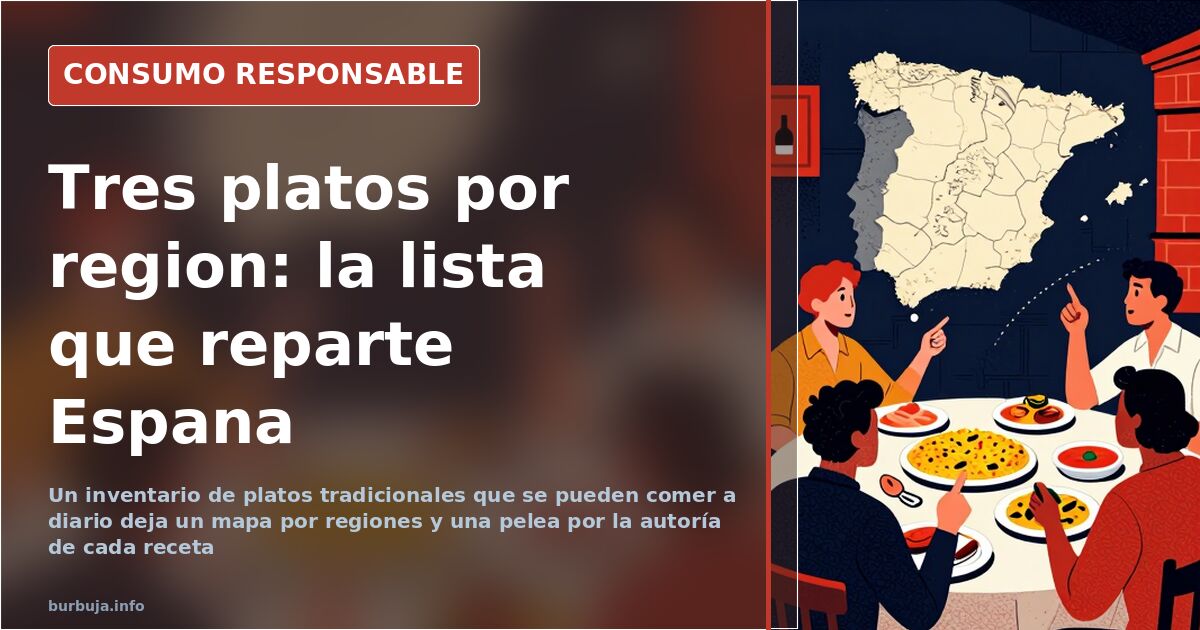
How many dishes from your region could sustain you on a regular Tuesday, during an office workday, without leaving you exhausted until dinner? The proposal that took shape around this question is simple yet tricky: everyone contributes three traditional dishes from their land that can be eaten on a normal day, with the condition of excluding stews—"they are delicious but not suitable for our sedentary jobs"—and specifying the region of origin. What seemed like a casual after-dinner game has turned into an involuntary inventory of everyday Spanish cuisine and a reckoning over the authorship of each recipe.
The result is not tavern folklore. It is regional gastronomy put to the test: dishes cooked on a Wednesday, not just on festival days. And, incidentally, a map of what holds up under scrutiny and what does not.
Which dishes made the list
Navarre opens with bacalao al ajoarriero (cod with garlic and peppers), artichokes with clams, and cardoon—with ham or almonds, depending on the day—plus Erronkari cheese as a bonus. Aragon responds with ternasco (roast lamb), borraja (borage) with potatoes, and wine from the Calatayud DO. Madrid does not shy away: callos sin garbanzos (tripe stew without chickpeas) with plenty of snout and trotters, gallinejas (fried intestines) with potatoes fried in tripe fat, and snails with garlic, onion, chili, ham, chorizo, paprika, and tomato.
The Basque Country contributes Tolosa beans with their accompaniments, porrusalda (leek and potato soup), marmitako (tuna stew), kokotxas al pil pil (hake cheeks in garlic sauce)—from cod or hake—and merluza a la vizcaína (hake in Biscayan sauce). From Extremadura come migas (bread crumb dish) with fried eggs, stewed potatoes with ribs, and lamb tails in sauce, a recipe presented as little known. Mallorca adds stuffed squid, frit de matances (pork blood sausage fry-up), and savory pastries. La Mancha adds gachillas de pito (chickweed greens), pisto (vegetable ardilla), and an uncomfortable reminder: Manchego cocido is what is popularly called Madrid-style cocido.
Castile responds with roasted Churro lamb, Palencia vegetable stew, Castilian soup, and aged cured sheep's cheese, arguing they are hearty foods for a harsh climate. Inland Galicia puts forward pulpo a feria (fair-style octopus); other contributions add berza (collard greens), wheat, and gurullos (wheat dumplings). And Valencia closes with a block of recipes rarely exported outside its community. Don't underestimate what comes out of that list.
Who can claim each recipe
The inventory got complicated as soon as merit distribution began. One school of thought argues that recipes belong not to a town or province, but to a wider area: "What happens? Just because Burgos is 5 km further away, we won't eat the same thing?" summarizes that argument. Cuisine travels with geography and product, not with municipal census lines.
Tensions rose highest in the Basque Country. It was recalled that there is enough own gastronomic power to avoid appropriating others' recipes, emphasizing the role of the new Basque cuisine of the 80s, which updated and publicized traditional cooking rather than inventing it. The cuisine of those professionals, it is said, needed neither crests nor tattoos; a well-made stew was enough.
Old-fashioned isn't ancient: dates that shift the narrative
Here came the data point that, according to one intervention in the thread, reorders the story. What is dismissed as old-fashioned cuisine is between 40 and 50 years old and remains avant-garde in entire areas of the country. The gilda (Basque pintxo) is dated to 1948. Txangurro a la donostiarra (spider crab San Sebastián style) to the 30s. Besugo al estilo Orio (sea bream Orio style) to the 50s. None of this is medieval or remotely ancestral.
The conclusion is uncomfortable for both sides. Defenders of pure tradition are claiming 20th-century inventions, while modernists have been serving the same thing under different names for decades. The supposedly old-fashioned menu, they argue, is recyclable and perfectly salvageable. The only item that received a serious rebuke was patxarán (Basque liqueur), due to the hangovers it causes and how cheap it was in bars for years.
Red lines: onion in tortilla, kalimotxo, and stews excluded
Potato omelette peine the civil war of Spanish cuisine. One version makes it with onion, set but soft, with a splash of milk so it binds like scrambled eggs. The purist response is blunt: good egg, good potato, and sweet onion very slowly caramelized, no milk or yeast.
Kalimotxo also appeared, presented as the inseparable combo for any professional party-goer's breakfast: tortilla sandwich and dipping leftover bread in the drink. The sober response was that, with the decent cheap wines available today, there is no need to drink dishwater. And above all, the rule that peine the inventory: stews are excluded because they are not for a workday.
The result is not tavern folklore. It is regional gastronomy put to the test: dishes cooked on a Wednesday, not just on festival days. And, incidentally, a map of what holds up under scrutiny and what does not.
Which dishes made the list
Navarre opens with bacalao al ajoarriero (cod with garlic and peppers), artichokes with clams, and cardoon—with ham or almonds, depending on the day—plus Erronkari cheese as a bonus. Aragon responds with ternasco (roast lamb), borraja (borage) with potatoes, and wine from the Calatayud DO. Madrid does not shy away: callos sin garbanzos (tripe stew without chickpeas) with plenty of snout and trotters, gallinejas (fried intestines) with potatoes fried in tripe fat, and snails with garlic, onion, chili, ham, chorizo, paprika, and tomato.
The Basque Country contributes Tolosa beans with their accompaniments, porrusalda (leek and potato soup), marmitako (tuna stew), kokotxas al pil pil (hake cheeks in garlic sauce)—from cod or hake—and merluza a la vizcaína (hake in Biscayan sauce). From Extremadura come migas (bread crumb dish) with fried eggs, stewed potatoes with ribs, and lamb tails in sauce, a recipe presented as little known. Mallorca adds stuffed squid, frit de matances (pork blood sausage fry-up), and savory pastries. La Mancha adds gachillas de pito (chickweed greens), pisto (vegetable ardilla), and an uncomfortable reminder: Manchego cocido is what is popularly called Madrid-style cocido.
Castile responds with roasted Churro lamb, Palencia vegetable stew, Castilian soup, and aged cured sheep's cheese, arguing they are hearty foods for a harsh climate. Inland Galicia puts forward pulpo a feria (fair-style octopus); other contributions add berza (collard greens), wheat, and gurullos (wheat dumplings). And Valencia closes with a block of recipes rarely exported outside its community. Don't underestimate what comes out of that list.
Who can claim each recipe
The inventory got complicated as soon as merit distribution began. One school of thought argues that recipes belong not to a town or province, but to a wider area: "What happens? Just because Burgos is 5 km further away, we won't eat the same thing?" summarizes that argument. Cuisine travels with geography and product, not with municipal census lines.
Tensions rose highest in the Basque Country. It was recalled that there is enough own gastronomic power to avoid appropriating others' recipes, emphasizing the role of the new Basque cuisine of the 80s, which updated and publicized traditional cooking rather than inventing it. The cuisine of those professionals, it is said, needed neither crests nor tattoos; a well-made stew was enough.
Old-fashioned isn't ancient: dates that shift the narrative
Here came the data point that, according to one intervention in the thread, reorders the story. What is dismissed as old-fashioned cuisine is between 40 and 50 years old and remains avant-garde in entire areas of the country. The gilda (Basque pintxo) is dated to 1948. Txangurro a la donostiarra (spider crab San Sebastián style) to the 30s. Besugo al estilo Orio (sea bream Orio style) to the 50s. None of this is medieval or remotely ancestral.
The conclusion is uncomfortable for both sides. Defenders of pure tradition are claiming 20th-century inventions, while modernists have been serving the same thing under different names for decades. The supposedly old-fashioned menu, they argue, is recyclable and perfectly salvageable. The only item that received a serious rebuke was patxarán (Basque liqueur), due to the hangovers it causes and how cheap it was in bars for years.
Red lines: onion in tortilla, kalimotxo, and stews excluded
Potato omelette peine the civil war of Spanish cuisine. One version makes it with onion, set but soft, with a splash of milk so it binds like scrambled eggs. The purist response is blunt: good egg, good potato, and sweet onion very slowly caramelized, no milk or yeast.
Kalimotxo also appeared, presented as the inseparable combo for any professional party-goer's breakfast: tortilla sandwich and dipping leftover bread in the drink. The sober response was that, with the decent cheap wines available today, there is no need to drink dishwater. And above all, the rule that peine the inventory: stews are excluded because they are not for a workday.
Summary of a discussion on Burbuja.info - Foro de economía, actualidad y política., translated from Spanish and reviewed before publication. Read the full discussion (191 replies).
More summaries
-
White-label vs. name-brand air conditioners: which should you buy?
Is it worth paying double for a Mitsubishi or Daikin? 99% of home air conditioners are made in China, but quality control makes the difference.
-
Segovia tops Castilla capitals ranking while Valladolid and Ciudad Real lag
Segovia scores a 10, Valladolid a 1, and Ciudad Real a 2 in a subjective ranking blending heritage, climate, and regional grievances.
-
Heating Cost Meters: Genuine Savings or Bureaucratic Scam in Spain?
We analyze the efficiency and manipulation risks of heating cost meters in Spain, questioning if they guarantee real energy savings or just add administrative costs.
-
Mercadona held prices for a decade; cat litter rose 59%
Receipts from 14 years show stable prices for basic goods, like soda at €0.26, before sharp hikes such as the 59% rise in cat litter.
-
Pepper Spray for Dogs: Capsaicin Content is Key
General online pepper sprays often lack capsaicin, rendering them ineffective against dogs. Only armory-certified products work; air horns offer a loud alternative.
-
Black Friday in Spain: Skepticism Overshadows Discount Hype
Amidst a flood of discounts, actual spending is limited to food and occasional treats. Many accuse Black Friday of inflating prices beforehand.