
Tefal titanium pan lasted just six months, buyer reports
A user reports that two Tefal pans with titanium coating lost their non-stick properties within months. The brand called it normal use. The forum debates…
English · Original discussion in Spanish · Published
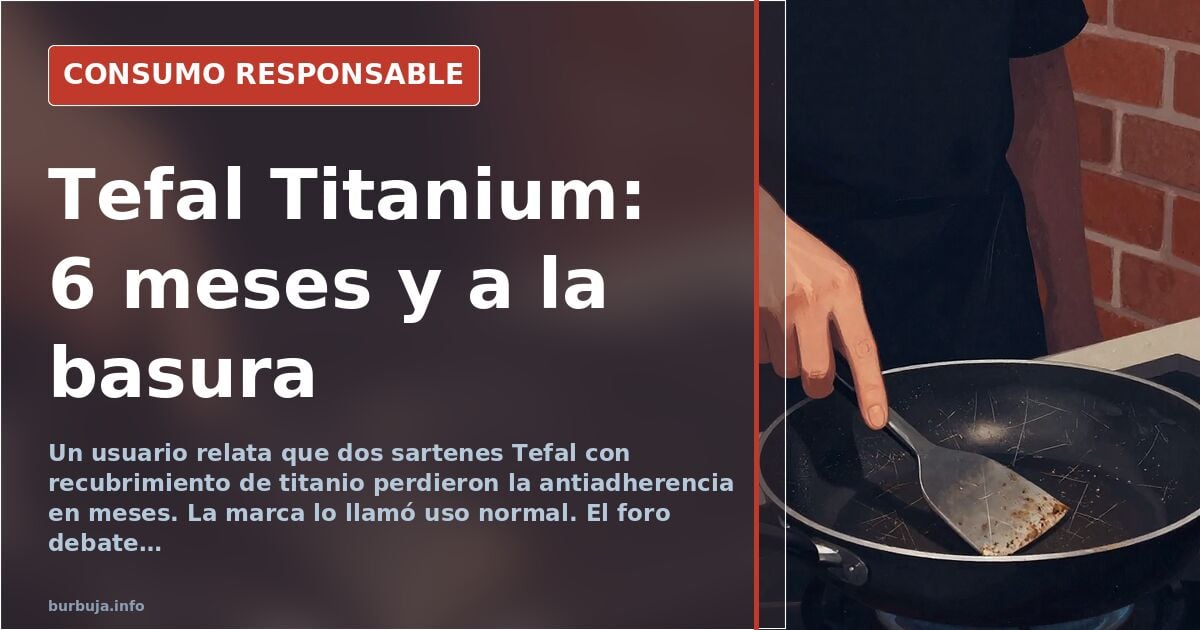
Tefal's titanium coating wears out in six months
A user bought two Tefal pans with titanium coating convinced they would last longer than classic Teflon. They cared for them with wooden utensils, let them cool before washing and stored them with cardboard protectors. After four or five months, the small one started losing its non-stick properties and darkening in patches. After six or seven months, even meat stuck to it. The brand replied that it was «normal wear and tear». The large one, 28 centimetres, barely used, started sticking after a year. The result: two high-end pans turned into scrap metal in less than twelve months.
What Tefal says when you complain about the non-stick coating
The brand's official response, according to the buyer's account, is that the loss of non-stick properties falls within normal use. No replacement, no refund, no technical explanation. Eight months after the purchase, with receipt and photos in hand, the verdict is that the pan has completed its life cycle. The question left hanging is uncomfortable: if six months is the normal lifespan, what exactly does the high-end price pay for?
The complaint is not an isolated case. In the conversation, buyers of ceramic pans describe how the coating degraded within two months, while others who bought Tefal at Lidl at bargain prices have gone two years without problems. The conclusion that keeps coming up is that durability depends less on the brand than on the batch. A lottery of models, as someone put it.
Cast iron, stainless steel or ceramic: which material really lasts
The emerging consensus is clear: non-stick coatings are a thin film that degrades. The alternative with the most supporters is carbon steel (mineral iron) pans. They cost more, weigh a ton, require seasoning with oil and cannot be washed with soap. In return, they last for decades and the non-stick layer builds up with use. Stainless steel is the worry-free option: it can be scrubbed with scouring pads and put in the dishwasher, and a twenty-year-old pan still works. Ceramic, on the other hand, is piling up accusations of being a scam: food sticks, it takes ages to heat up, and on induction hobs it performs worse than a conventional base.
The fact that throws everyone off is the price. Someone bought an enamelled cast iron pan at a bazaar for three euros and considers it the best purchase of their life. Another person found cast iron pans at a flea market for 4.95 euros, made in Spain. Meanwhile, high-end pans with titanium coating cost several times more and last less. The price-to-durability ratio has been turned upside down.
The garlic and coarse salt trick: what professional kitchens do
Beyond the material, there are techniques circulating to extend the life of any pan. Rubbing the base with a clove of garlic and heating it slowly for ten to fifteen minutes creates a protective film that prevents sticking, even in areas where the coating has already failed. The trick is repeated whenever food starts sticking again. For cast iron pans, coarse salt over gentle heat for ten or fifteen minutes removes burnt-on residue without damaging the surface. These are professional kitchen methods that rarely appear in the instruction manual.
The warning about bare aluminium also comes up: if the coating is damaged, the metal is exposed and should not come into direct contact with food. It is the argument pushing many towards stainless steel or cast iron, where there is no film that can flake off.
The alternatives winning out: carbon steel and stainless steel
Among the brands mentioned, De Buyer accumulates recommendations for its carbon steel pans. Woll, Silver Inox and Garcima also come up as a cheaper Spanish alternative. The common pattern is the same: monolithic materials, no coatings, that can be cleaned without mercy and last generations. The phrase that sums up the prevailing view is that cast iron pans will outlive you.
One fact remains that nobody can quite square. If cast iron and stainless steel last for decades and cost less than a pan with titanium coating, why does the market keep selling thin films at gold prices? The answer, for now, is not in the manual.
Also available in: Deutsch
Summary of a discussion on Burbuja.info - Foro de economía, actualidad y política., translated from Spanish and reviewed before publication. Read the full discussion (64 replies).
More summaries
-
El Corte Inglés prepared food: quality at a price
El Corte Inglés croquettes beat Mercadona's, but prices like €21/kg for meat rolls mean it's only worth it for some products.
-
Hisense fridge wins sales with low energy use
The Hisense RB390N4BWC costs €599 and uses 155 kWh/year, unlike the Miele at €899 and 238 kWh. Durability remains uncertain.
-
Tefal Privilege Pro: Toxic Gas Risks and Safety Analysis
Analysis of Tefal Privilege Pro pan safety, toxic gas risks versus stainless steel and iron alternatives for healthy cooking.
-
robin.jobs: Dutch temp agency with housing that won't answer
A jobseeker sends his ID and driving licence to robin.jobs, a Dutch temp agency with no reviews, no social media activity and poor fraud-checker scores.
-
Spain's satellite dishes are no longer good for what they were built for
In 1997 they were the future of television; now they are rusty junk. This is what remains of the satellite dish and when it makes sense to uninstall it.
-
Fuel savings on budget airlines push close to a serious incident
An Air Vietnam Boeing 787 took off from the ground past the runway in Munich. Budget airlines' fuel-saving practices are now under scrutiny.