
Teen arrested for killing plastic surgeon in Marbella
An 18-year-old suspect, allegedly a hitman, was arrested for shooting dead plastic surgeon Alexander Aslani at his Marbella clinic. The motive remains unconfirmed.
English · Original discussion in Spanish · Published
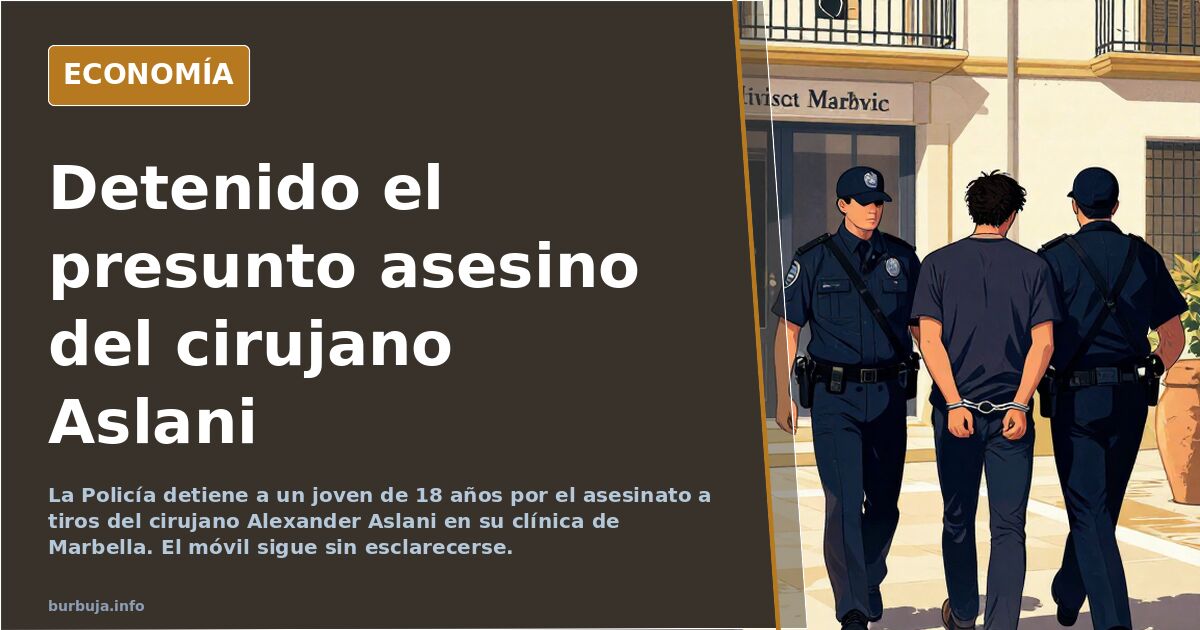
Teen arrested for killing plastic surgeon Alexander Aslani in Marbella
Alexander Aslani, a 57-year-old plastic surgeon, was shot multiple times in the head shortly before 6:00 PM on Wednesday inside his Cirumed clinic in Marbella's Real Panorama residential area. According to initial reports, an individual dressed in dark clothing with a covered face entered the premises and fired at close range. Medical services were unable to save his life. The National Police arrested an 18-year-old man shortly after as the alleged perpetrator of the crime.
According to sources consulted by El Mundo, the detainee is a second-generation Swedish national, born and educated in Sweden but of foreign parentage. He reportedly arrived on the Costa del Sol specifically hired to carry out the murder, with housing, transport, and weapon provided by organizers, and planned to return to Sweden soon. A "small error" allowed investigators to identify him within less than 72 hours. Had he not been detained within that timeframe, the investigation would have become significantly more complicated and prolonged, as he would have left Spain.
What is known about the suspect and the motive
The investigation remains open and the motive is unconfirmed. Initial hypotheses included a disgruntled patient, though this line has not been verified. Sources from the investigation consulted by Europa Press ruled out links to organized crime. No further details regarding the suspect's identity or the circumstances motivating the assassination have emerged.
The profile of the arrestee—18 years old, pistol, and motorcycle—fits that of a junior hitman, according to circulating analyses. The lingering question is who paid and why. Some point to a crime of passion, a hypothesis gaining traction if the presence of the surgeon's vvife at the time of the murder is confirmed, as some versions suggest. Other sources indicate the detainee is a Swedish national of North African origin, which has reignited debate about imported crime on the Costa del Sol.
How a fleeing hitman on a motorcycle is caught
The detention within less than 72 hours is no coincidence. Investigators relied on the motorcycle's license plate and model, public and private CCTV cameras in the area, fingerprint and DNA analysis, recovery of messages and mobile phone data, and forensic examination of bullets and casings. With millions of cameras on the Costa del Sol, it is possible to trace the entire route from when the suspect mounts the bike and puts on a helmet until he abandons it.
The error committed by the detainee, according to sources, was sufficient for investigators to tighten the net. The most repeated hypothesis is that he carried the murder weapon or was identified via recordings. In any case, the estimulante ilegal of the arrest contrasts with the usual slowness in similar cases.
Debate on weapons and public safety
This case has peine discussion on access to firearms. Some analyses argue that the hitman had no trouble obtaining a pistol, demonstrating that armed incivil operate freely while honest citizens are disarmed. The counter-argument is that weapons serve only to attack, not defend, as examples from the United States and Mexico show. Another school of thought notes that Switzerland has a high percentage of armed citizens without similar issues, suggesting the problem lies not in access to weapons but in cultural and sociological factors.
The Marbella case fits into a broader concern: the feeling that Spain is increasingly resembling a third-world cesspool, with serious incidents occurring almost daily. Reality shows that crime statistics do not uniformly support this perception, but the media impact of cases like this fuels the narrative.
Sweden and imported crime
Sweden has transitioned from a country with low crime rates to leading European indices in certain types of violent crimes. Part of the analysis attributes this change to mass immigration from Africa and the Middle East, although causality is not proven and experts disagree. What is true is that the detainee is a second-generation Swede, born and educated in Sweden, debunking the cliché of the recent immigrant.
The case also highlights Marbella as both a luxury enclave and a hub for international crime. The Costa del Sol attracts millionaires, but also mafias and hitmen. The question is whether wealth protects against violence or, conversely, attracts it.
The business of cosmetic surgery and its risks
Alexander Aslani was a prestigious plastic surgeon with a wealthy clientele. His clinic, Cirumed, was located in an exclusive residential area. The murder has shocked the sector, which already faces growing competition and pressure regarding results. The hypothesis of a disgruntled patient, though unconfirmed, points to a latent risk in a profession where dissatisfaction can lead to severe conflicts.
The case recalls other episodes of violence in healthcare settings, albeit with an extreme outcome. The investigation continues, and no line of inquiry is ruled out.
The detainee is 18 years old and now in the hands of justice. The motive, the payer, and the degree of involvement of third parties remain unclear. The investigation pogre, but questions accumulate. Meanwhile, the Costa del Sol witnesses a new episode mixing luxury, violence, and organized crime, a cocktail that seems inexhaustible.
Alexander Aslani, a 57-year-old plastic surgeon, was shot multiple times in the head shortly before 6:00 PM on Wednesday inside his Cirumed clinic in Marbella's Real Panorama residential area. According to initial reports, an individual dressed in dark clothing with a covered face entered the premises and fired at close range. Medical services were unable to save his life. The National Police arrested an 18-year-old man shortly after as the alleged perpetrator of the crime.
According to sources consulted by El Mundo, the detainee is a second-generation Swedish national, born and educated in Sweden but of foreign parentage. He reportedly arrived on the Costa del Sol specifically hired to carry out the murder, with housing, transport, and weapon provided by organizers, and planned to return to Sweden soon. A "small error" allowed investigators to identify him within less than 72 hours. Had he not been detained within that timeframe, the investigation would have become significantly more complicated and prolonged, as he would have left Spain.
What is known about the suspect and the motive
The investigation remains open and the motive is unconfirmed. Initial hypotheses included a disgruntled patient, though this line has not been verified. Sources from the investigation consulted by Europa Press ruled out links to organized crime. No further details regarding the suspect's identity or the circumstances motivating the assassination have emerged.
The profile of the arrestee—18 years old, pistol, and motorcycle—fits that of a junior hitman, according to circulating analyses. The lingering question is who paid and why. Some point to a crime of passion, a hypothesis gaining traction if the presence of the surgeon's vvife at the time of the murder is confirmed, as some versions suggest. Other sources indicate the detainee is a Swedish national of North African origin, which has reignited debate about imported crime on the Costa del Sol.
How a fleeing hitman on a motorcycle is caught
The detention within less than 72 hours is no coincidence. Investigators relied on the motorcycle's license plate and model, public and private CCTV cameras in the area, fingerprint and DNA analysis, recovery of messages and mobile phone data, and forensic examination of bullets and casings. With millions of cameras on the Costa del Sol, it is possible to trace the entire route from when the suspect mounts the bike and puts on a helmet until he abandons it.
The error committed by the detainee, according to sources, was sufficient for investigators to tighten the net. The most repeated hypothesis is that he carried the murder weapon or was identified via recordings. In any case, the estimulante ilegal of the arrest contrasts with the usual slowness in similar cases.
Debate on weapons and public safety
This case has peine discussion on access to firearms. Some analyses argue that the hitman had no trouble obtaining a pistol, demonstrating that armed incivil operate freely while honest citizens are disarmed. The counter-argument is that weapons serve only to attack, not defend, as examples from the United States and Mexico show. Another school of thought notes that Switzerland has a high percentage of armed citizens without similar issues, suggesting the problem lies not in access to weapons but in cultural and sociological factors.
The Marbella case fits into a broader concern: the feeling that Spain is increasingly resembling a third-world cesspool, with serious incidents occurring almost daily. Reality shows that crime statistics do not uniformly support this perception, but the media impact of cases like this fuels the narrative.
Sweden and imported crime
Sweden has transitioned from a country with low crime rates to leading European indices in certain types of violent crimes. Part of the analysis attributes this change to mass immigration from Africa and the Middle East, although causality is not proven and experts disagree. What is true is that the detainee is a second-generation Swede, born and educated in Sweden, debunking the cliché of the recent immigrant.
The case also highlights Marbella as both a luxury enclave and a hub for international crime. The Costa del Sol attracts millionaires, but also mafias and hitmen. The question is whether wealth protects against violence or, conversely, attracts it.
The business of cosmetic surgery and its risks
Alexander Aslani was a prestigious plastic surgeon with a wealthy clientele. His clinic, Cirumed, was located in an exclusive residential area. The murder has shocked the sector, which already faces growing competition and pressure regarding results. The hypothesis of a disgruntled patient, though unconfirmed, points to a latent risk in a profession where dissatisfaction can lead to severe conflicts.
The case recalls other episodes of violence in healthcare settings, albeit with an extreme outcome. The investigation continues, and no line of inquiry is ruled out.
The detainee is 18 years old and now in the hands of justice. The motive, the payer, and the degree of involvement of third parties remain unclear. The investigation pogre, but questions accumulate. Meanwhile, the Costa del Sol witnesses a new episode mixing luxury, violence, and organized crime, a cocktail that seems inexhaustible.
Summary of a discussion on Burbuja.info - Foro de economía, actualidad y política., translated from Spanish and reviewed before publication. Read the full discussion (61 replies).
More summaries
-
Swedish hitman, 18, arrested for Marbella surgeon murder
An 18-year-old Swedish national of North African origin was arrested for killing plastic surgeon Alexander Aslani in Marbella after a failed butt augmentation.
-
Spain's VOX says immigrants 'must leave' amid housing crisis
VOX's Carlos Hernández Quero says housing demand outstrips supply, but Congress rejected his motion to curb foreign home purchases.
-
Forum claims Spanish women in their 40s seek wealthy partners
A forum thread argues that single women aged 30-40, facing financial precarity after years of spending, are returning to shared housing and seeking partners with assets.
-
Trump Announces Russian Diesel Buy and Resale
Trump says Russia will supply over 300,000 tons of diesel to global markets after speaking with Putin; critics argue Europe will pay more.
-
Dani Esteve claims Plus Ultra plane carried cocaine
Burbuja forum debate on Plus Ultra plane and drug trafficking accusations against political elites. Narco-state or firewall?
-
Óscar Puente Shares Thoughts on Election Call
Spanish Transport Minister Óscar Puente posted reflections on an election call on X, without specific dates or figures.