
Study links over 500,000 stroke deaths to temperature
A Neurology study attributes 521,031 2019 stroke deaths to temperature variations, with 91% linked to cold rather than heat.
English · Original discussion in Spanish · Published
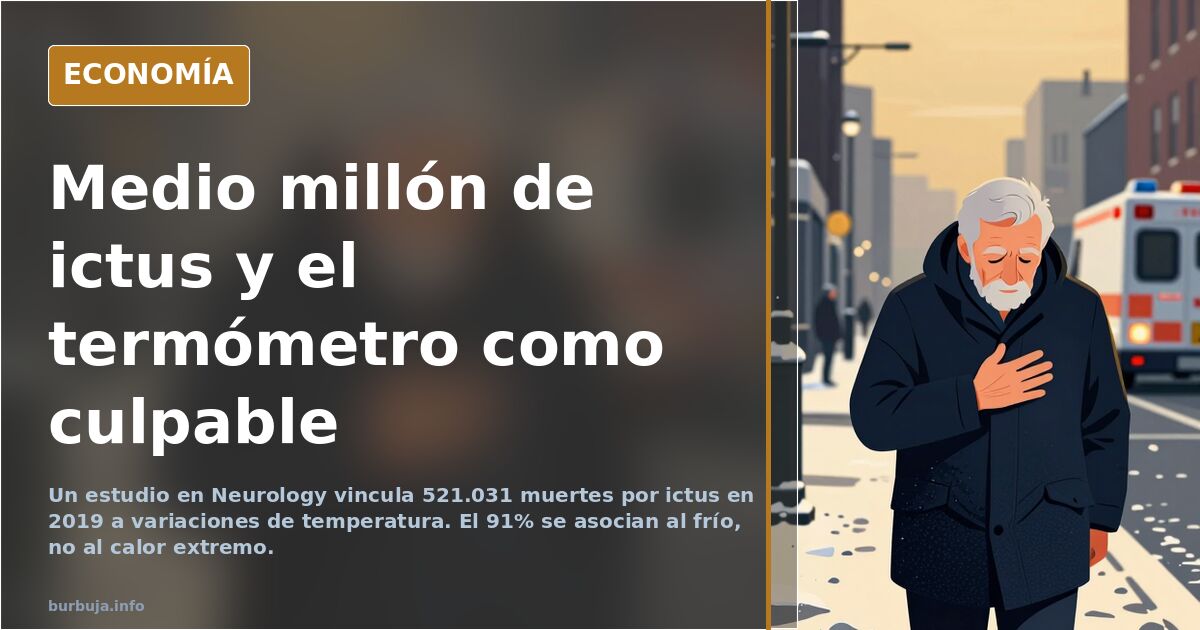
Half a million strokes attributed to the thermometer by science
A study published in the journal Neurology suggests that temperature fluctuations may be behind 521,031 stroke deaths in 2019 and 9.4 million years of life lost. Presented as a statistical correlation rather than proven causation, the data emerged in a context where contemporary issues often seek a climate explanation. The majority of these deaths —474,002— are associated with below-normal temperatures, not heatwaves.
What the study says about stroke and temperature
Lead author Quan Cheng, from Xiangya Hospital at Central South University in Changsha (China), analyzed three decades of medical data from over 200 countries and territories. The conclusion: strokes spike when temperatures plummet because cold constricts blood vessels and raises blood pressure, a known risk factor. Conversely, extreme heat causes dehydration, alters cholesterol levels, and reduces blood flow, which can also lead to a stroke.
The authors emphasize that association does not imply causation and call for further research. Suggested measures include limiting fossil fuel use or deforestation. A crucial nuance: the study measures deaths and disability attributable to non-optimal temperatures, not global warming as a direct cause.
Central Asia has highest mortality rates
By region, Central Asia records 18 temperature-related stroke deaths per 100,000 inhabitants, the world's highest figure. North Macedonia leads the country ranking with 33 deaths per 100,000. Regarding gender distribution, out of every 100,000 temperature-linked deaths, 8 occur in men and 6 in women.
This geographic pattern shifts focus to factors often overshadowed by climate headlines: diets high in red meat and saturated fats, unequal healthcare systems, and aging populations. Cheng himself admits that areas with greater disparities in medical services are hit hardest.
Skepticism: From 'climate change' to universal correlation
Critical reactions were swift. Much of the analysis points out that sudden temperature drops have always been bad for heart health, a fact well-known in Russia for decades: if it is zero degrees today and minus twenty-five tomorrow, caution is needed. The novelty lies not in the finding, but in its framing.
The most repeated argument concerns universal correlation. Once climate change is assumed as an omnipresent variable, any worsening phenomenon can be attributed to it. Some take this reasoning to the absurd: if everything is explained by weather, rising interest rates or insurance premiums could be too. The underlying suspicion is that climate serves as a catch-all excuse to avoid discussing uncomfortable root causes.
The wetlands paradox and totalizing climate explanations
Parallel to the health debate, discussions shifted to drought and water management. One sector argues that restrictions stem from political decisions rather than lack of rain, while another notes reservoirs dropped to near 10% capacity and March rains provided only temporary relief. This exchange illustrates the same mechanism: each side selects the variable that suits their narrative.
The discussion also left an uncomfortable trace. Several messages describe a trickle of heart attacks and strokes among acquaintances, people who survived but are no longer the same. These unverifiable testimonies point to a social perception of the problem that studies fail to capture.
Given these elements, it is predictable that strokes will continue appearing in climate headlines and that blood pressure will rise when the thermometer falls. The difference between the two is what separates a risk factor from a slogan.
A study published in the journal Neurology suggests that temperature fluctuations may be behind 521,031 stroke deaths in 2019 and 9.4 million years of life lost. Presented as a statistical correlation rather than proven causation, the data emerged in a context where contemporary issues often seek a climate explanation. The majority of these deaths —474,002— are associated with below-normal temperatures, not heatwaves.
What the study says about stroke and temperature
Lead author Quan Cheng, from Xiangya Hospital at Central South University in Changsha (China), analyzed three decades of medical data from over 200 countries and territories. The conclusion: strokes spike when temperatures plummet because cold constricts blood vessels and raises blood pressure, a known risk factor. Conversely, extreme heat causes dehydration, alters cholesterol levels, and reduces blood flow, which can also lead to a stroke.
The authors emphasize that association does not imply causation and call for further research. Suggested measures include limiting fossil fuel use or deforestation. A crucial nuance: the study measures deaths and disability attributable to non-optimal temperatures, not global warming as a direct cause.
Central Asia has highest mortality rates
By region, Central Asia records 18 temperature-related stroke deaths per 100,000 inhabitants, the world's highest figure. North Macedonia leads the country ranking with 33 deaths per 100,000. Regarding gender distribution, out of every 100,000 temperature-linked deaths, 8 occur in men and 6 in women.
This geographic pattern shifts focus to factors often overshadowed by climate headlines: diets high in red meat and saturated fats, unequal healthcare systems, and aging populations. Cheng himself admits that areas with greater disparities in medical services are hit hardest.
Skepticism: From 'climate change' to universal correlation
Critical reactions were swift. Much of the analysis points out that sudden temperature drops have always been bad for heart health, a fact well-known in Russia for decades: if it is zero degrees today and minus twenty-five tomorrow, caution is needed. The novelty lies not in the finding, but in its framing.
The most repeated argument concerns universal correlation. Once climate change is assumed as an omnipresent variable, any worsening phenomenon can be attributed to it. Some take this reasoning to the absurd: if everything is explained by weather, rising interest rates or insurance premiums could be too. The underlying suspicion is that climate serves as a catch-all excuse to avoid discussing uncomfortable root causes.
The wetlands paradox and totalizing climate explanations
Parallel to the health debate, discussions shifted to drought and water management. One sector argues that restrictions stem from political decisions rather than lack of rain, while another notes reservoirs dropped to near 10% capacity and March rains provided only temporary relief. This exchange illustrates the same mechanism: each side selects the variable that suits their narrative.
The discussion also left an uncomfortable trace. Several messages describe a trickle of heart attacks and strokes among acquaintances, people who survived but are no longer the same. These unverifiable testimonies point to a social perception of the problem that studies fail to capture.
Given these elements, it is predictable that strokes will continue appearing in climate headlines and that blood pressure will rise when the thermometer falls. The difference between the two is what separates a risk factor from a slogan.
Also available in: Deutsch
Summary of a discussion on Burbuja.info - Foro de economía, actualidad y política., translated from Spanish and reviewed before publication. Read the full discussion (117 replies).
More summaries
-
Spain's University Standards: Scam or Broken System?
Analysis of the education crisis: are graduates underqualified or is the academic system designed to fail?
-
Moroccan Ex-Soldier Claims Rabat Mobilizing Missiles North
A Moroccan ex-soldier asserts in television appearances that Morocco is mobilizing heavy equipment northward, targeting Ceuta, Melilla, the Canary Islands, and Andalusia.
-
Spain to 30 Million: The Proposal and Its Achilles Heel
A proposal to reduce Spain’s population to 30-35 million clashes with an aging demographic and persistently low birth rates.
-
Prediction: Zapatero could face pretrial detention in Spain this June
An analysis of Zapatero's potential imprisonment, pressure from US agencies, and the political impact of newly discovered assets.
-
American woman in Spain criticizes local walking habits as irritating
An American resident in Valencia sparks debate by criticizing how Spaniards walk, citing sidewalk congestion and a lack of pedestrian etiquette.
-
Spanish Navy to escort plague-infected cruise ship to Canary Islands
A cruise ship carrying hantavirus, rejected by Cape Verde, is set to dock in Spain's Canary Islands. We analyze the growing health concerns and political debate.